 Spring Sale!

 Spring Sale + Free Extra Skincare!



menopausal hair shedding
Understanding Menopausal Hair Shedding
Menopausal hair shedding is primarily driven by declining oestrogen and progesterone levels, which shorten the hair's active growth phase and increase sensitivity to androgens. It is common, gradual, and often manageable with the right care.
Hormonal Shifts and Their Impact on Hair
As oestrogen and progesterone decline during perimenopause and menopause, androgens (including testosterone) become comparatively more dominant. Hair follicles sensitive to these hormones can miniaturise over time, producing finer, shorter strands. This process, known as androgenetic alopecia, accounts for much of the diffuse thinning many women notice across the crown and parting.
How the Hair Growth Cycle Changes
Hair grows in cycles: anagen (growth), catagen (transition), and telogen (rest and shed). Oestrogen prolongs the anagen phase, so as levels fall, more follicles shift into telogen simultaneously -- and the increased daily shedding that follows can feel sudden, even when the underlying shift has been gradual. This presents as diffuse thinning rather than defined patches, distinguishing it from conditions such as alopecia areata.
Recognising Common Symptoms
Signs include noticeably more hair on your brush, a wider parting, reduced ponytail thickness, and increased scalp visibility under bright light. Some women also find their scalp becomes drier and more reactive alongside shedding, as sebum production tends to slow with falling oestrogen.
Worth knowing: Menopausal hair shedding is rarely total. Most women retain the majority of their hair, and with consistent care, texture and density can be meaningfully supported.
Supporting Scalp Health During Menopause
The Role of Scalp Environment in Shedding
A healthy scalp creates the conditions in which follicles can function well. Reduced sebum during menopause can leave the scalp dry and occasionally irritated, which may compound shedding. Keeping it clean without stripping it -- a balance sulphate-free formulas handle well -- is a sensible priority.
Nutrition and Lifestyle Factors
Iron, zinc, vitamin D, and adequate protein are all associated with healthy hair cycling. Deficiencies become more common post-menopause and are worth raising with your GP. Phytoestrogen-rich foods such as flaxseed, soya, and legumes may offer modest hormonal support, though evidence remains mixed and individual responses vary considerably.
Stress and Its Connection to Hair Loss
Ongoing stress can push more follicles into the telogen phase, accelerating shedding. It's not always avoidable -- but calm, repeatable habits can support scalp comfort and general wellbeing in ways that add up over time.
Managing Stress for Scalp Wellbeing
Supportive Habits
- Regular, gentle movement (walking, yoga, swimming)
- A consistent sleep routine to support hormonal balance
- Mindful scalp massage to encourage circulation
Habits to Reconsider
- Tight hairstyles that place traction on follicles
- Frequent heat styling without protection
- Skipping meals, which can restrict nutrient availability
Natural Ways to Nourish Menopausal Hair
Gentle Haircare Routines for Balance
Sulphate-free formulas cleanse without disrupting the scalp's natural balance -- something that matters more as sebum production slows. How often you wash is personal; it depends on your scalp's oiliness, activity level, and product use rather than any fixed rule.
Our Seaweed-Based Products for Scalp Support
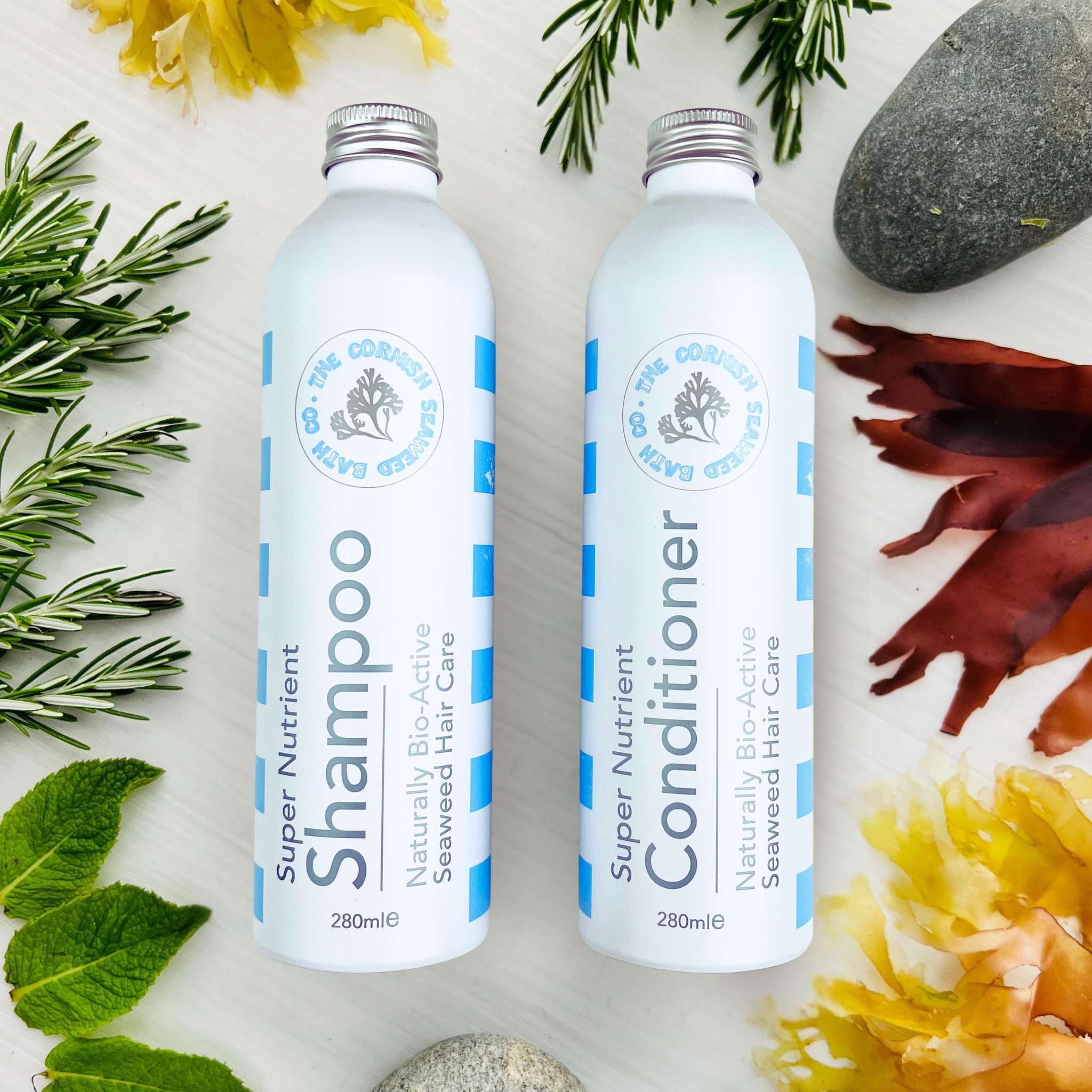
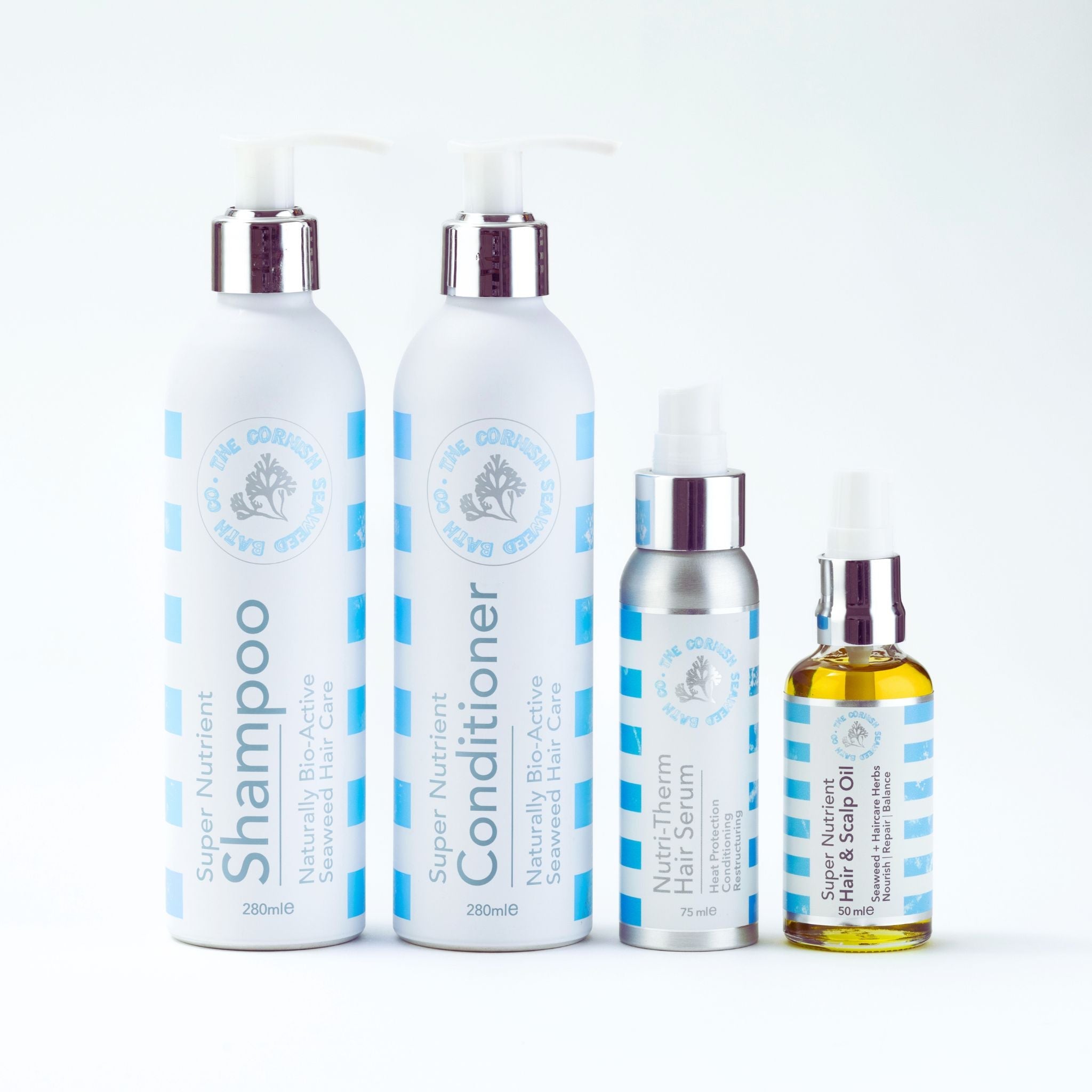
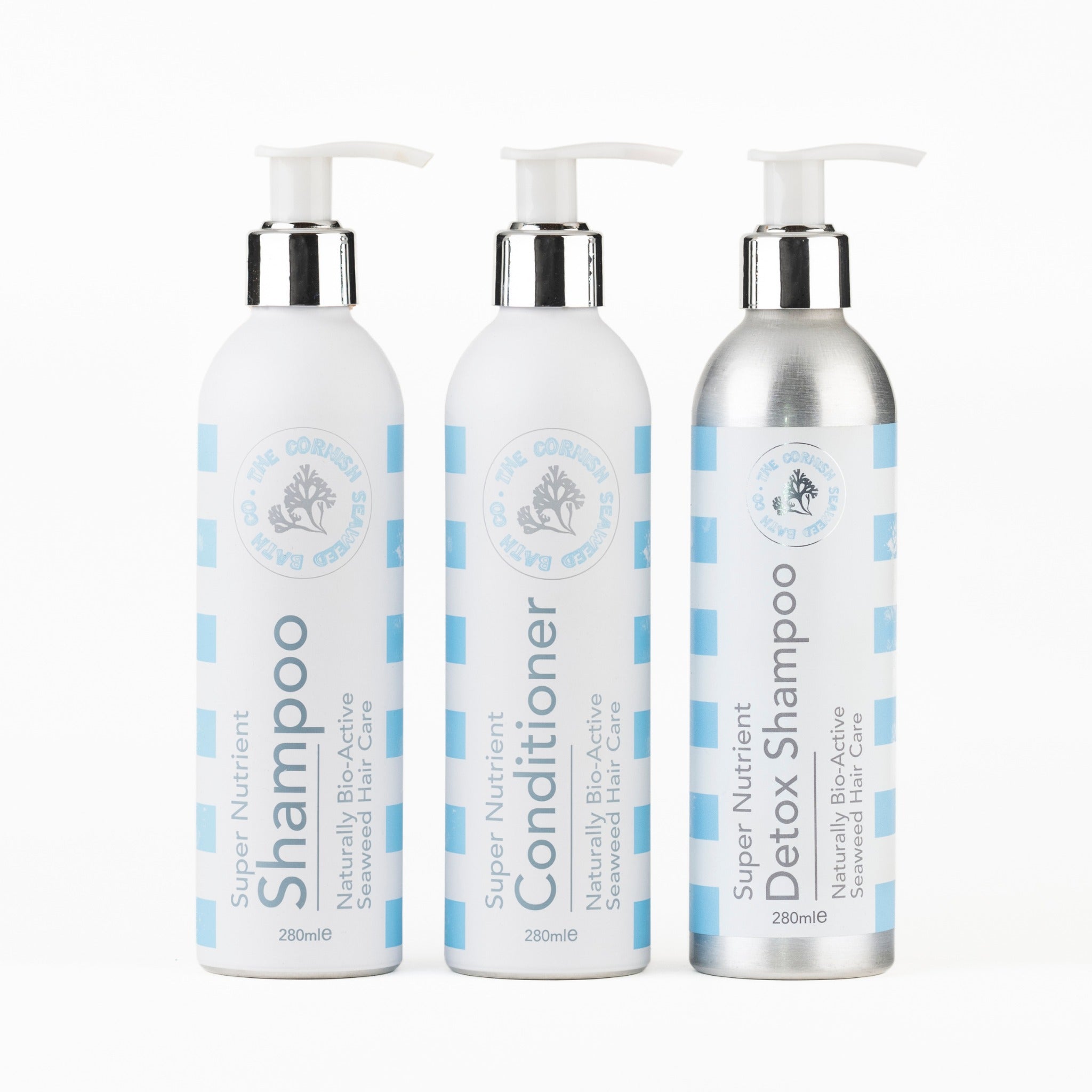
Our Haircare range is formulated with Fucus serratus seaweed alongside botanicals chosen to support scalp comfort and hair condition. For days when a deeper cleanse is needed, our Super Nutrient Detox Shampoo uses natural, sulphate-free cleansers to remove build-up without harsh stripping. Our Super Nutrient Hair and Scalp Oil works well as a pre-wash treatment: apply to the scalp, comb through the lengths, leave for 20 minutes or overnight, then shampoo and condition as normal. Additionally, massaging the scalp with the fingertips may also help encourage hair growth. Browse our full Haircare collection to find what suits your routine.
Medical Options and When to Seek Help
Overview of Treatments Like Minoxidil and HRT
Minoxidil (applied topically) is the most widely studied treatment for female pattern hair loss and is available without prescription. Hormone Replacement Therapy (HRT) may slow shedding for some women by restoring oestrogen levels, though hair response varies and the decision involves broader health considerations best discussed with a doctor.
Advanced Therapies to Consider
Platelet-rich plasma (PRP) therapy and low-level laser therapy show promising results in clinical settings, though access and cost vary. Both are typically used alongside, rather than instead of, other treatments.
Signs to Consult a Doctor
Seek professional advice if shedding is sudden and severe, accompanied by fatigue or weight changes, or if patchy loss appears. A GP can check for thyroid dysfunction, iron deficiency, or other conditions that can present similarly to menopausal hair shedding.
Building a Supportive Haircare Routine
Incorporating Botanicals Thoughtfully
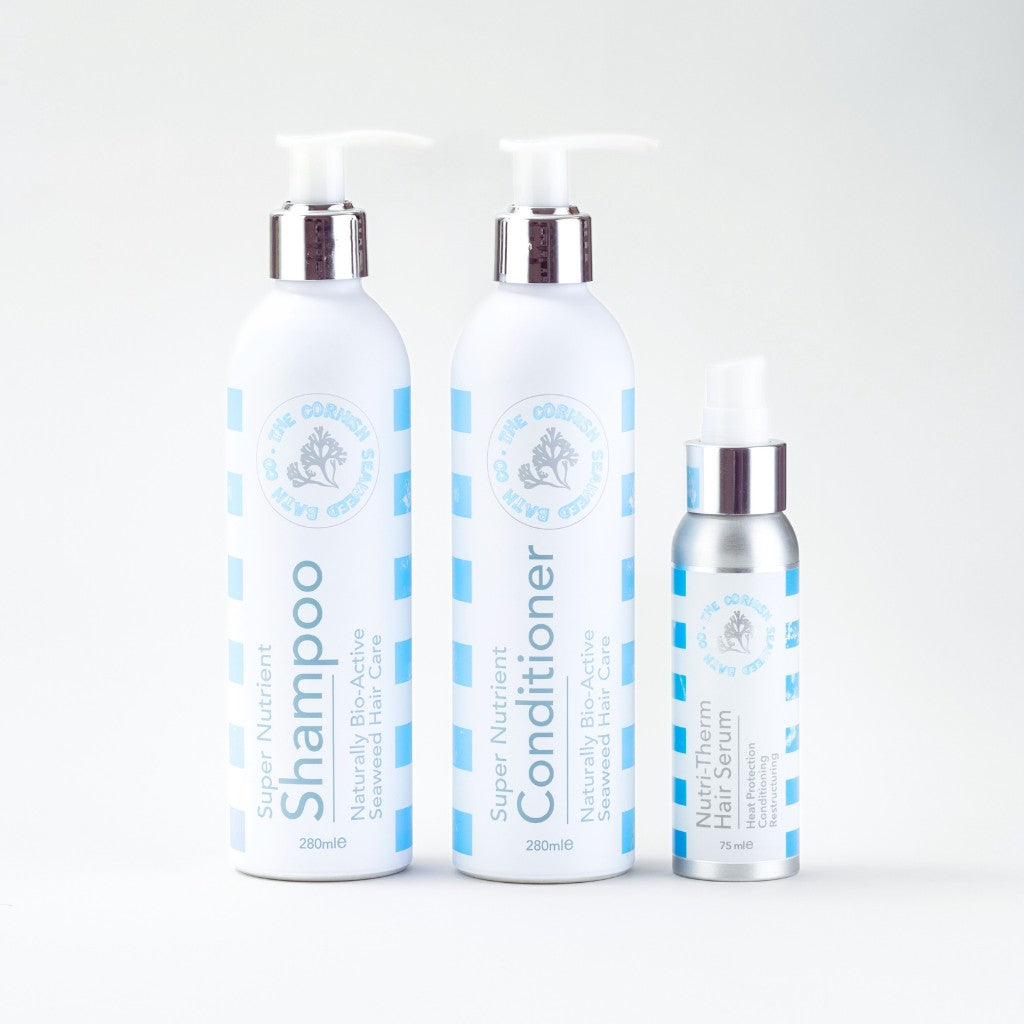
Our Super Nutrient Conditioner is seaweed-enriched and supports moisture and manageability after cleansing. Our Light Hold Hair Mousse, containing bamboo, eclipta, and panthenol, offers gentle styling support without weighing hair down. For heat-styling days, our Nutri-Therm Hair Serum -- applied to damp or towel-dried hair before styling -- provides seaweed-enriched protection under heat. It doubles as a lightweight leave-in on non-heat days, too.
Daily Practices and Long-Term Outlook
Consistency matters more than complexity. A gentle cleanse, a nourishing conditioner, and occasional scalp massage form a reliable foundation. Our Haircare range is designed to work with the scalp rather than against it, making it straightforward to build something sustainable.
Menopausal hair shedding is a recognised, physiological process -- not a personal failing. With informed choices and patient consistency, most women find their hair responds positively over time. If you're unsure where to start, our Haircare collection is a practical place to begin.
Personalising Your Routine
No single approach suits every scalp. Oiliness, stress, diet, and whether you're using HRT or other treatments will all shape what works for you. Start with the fundamentals -- a gentle, sulphate-free shampoo, a nourishing conditioner, and occasional scalp massage -- then adjust based on how your hair responds over several weeks rather than days.
Tailoring the Range to Your Needs
Our Haircare range offers a considered starting point, with formulations built around Fucus serratus seaweed and complementary botanicals. Whether your priority is a thorough cleanse, scalp nourishment, or manageable styling, the range can be adapted to your needs without overcomplicating your routine.
Frequently Asked Questions
What hormonal changes cause menopausal hair shedding?
During perimenopause and menopause, our oestrogen and progesterone levels naturally decline. This shift allows other hormones, like androgens, to become comparatively more dominant, which can lead to hair follicles miniaturising over time. This hormonal change is a primary reason for the diffuse thinning many women notice.
Why might menopausal hair shedding sometimes feel sudden?
While menopausal hair shedding is often a gradual process, the fall in oestrogen can cause more hair follicles to shift into the resting and shedding phase simultaneously. This can lead to a noticeable increase in daily shedding, which might feel like it's happening all at once. It's a recognised, physiological process.
How can nutrition and lifestyle support hair health during menopause, especially with stress?
Supporting your body with adequate iron, zinc, vitamin D, and protein is helpful for healthy hair cycling, and discussing any deficiencies with your GP is wise. Gentle movement, consistent sleep, and mindful scalp massage can also help manage stress, which can contribute to shedding. Our seaweed-based products, like the Super Nutrient Hair and Scalp Oil, can also offer nourishment to your scalp.
Can Hormone Replacement Therapy (HRT) help with menopausal hair shedding?
Hormone Replacement Therapy (HRT) may help slow shedding for some women by restoring oestrogen levels. However, individual hair response varies, and the decision to use HRT involves broader health considerations. It's always best to discuss this option thoroughly with your doctor.
What are the common signs of menopausal hair shedding?
You might notice more hair on your brush, a wider parting, or a reduced ponytail thickness. Increased scalp visibility under bright light is another common sign. Sometimes, a drier or more sensitive scalp can also accompany the shedding.
What gentle haircare practices can support my scalp during menopause?
Choosing sulphate-free formulas helps cleanse your scalp without stripping its natural balance, which is important as sebum production slows. Our Super Nutrient Detox Shampoo offers a gentle, deep cleanse. Our Super Nutrient Hair and Scalp Oil can be used as a pre-wash treatment for scalp nourishment. Consistency in a gentle routine truly matters for supporting your hair.