 Spring Sale!



how to treat dry skin in perimenopause
How to Treat Dry Skin in Perimenopause
Perimenopause brings hormonal shifts that can leave your skin parched, sensitive, and uncomfortable. You're not imagining it: declining oestrogen directly compromises your skin's ability to hold moisture. The dryness has a biological explanation--and natural solutions exist.
Treatment centres on barrier repair through plant-based oils (jojoba, sea buckthorn, tamanu), lukewarm water, mild cleansers, and seaweed-infused products for their mineral density and antioxidant support. Moisturise damp skin immediately after bathing, and nourish from within with omega-3-rich foods.
Why Perimenopause Causes Dry and Itchy Skin
Oestrogen decline and skin barrier function
Oestrogen regulates sebum production and supports the lipid matrix that holds your skin cells together. As levels drop, your barrier weakens, allowing moisture to escape. This thinning makes skin more reactive to wind, central heating, and temperature changes.
Collagen loss and structural changes
You lose roughly 30% of your collagen in the first five years of menopause. The decline begins during perimenopause. This structural protein keeps skin plump and elastic; without it, tissue becomes thinner and less able to retain water.
Moisture retention challenges
Reduced hyaluronic acid production compounds the problem. This molecule binds up to 1,000 times its weight in water. When synthesis slows, your skin can't hold hydration as it once did.
Natural Oils and Botanical Moisturisers for Barrier Repair
Jojoba oil: mimicking skin's natural sebum
Jojoba's molecular structure closely resembles human sebum, so it absorbs readily and signals your skin to regulate oil production rather than overcompensate. It's non-comedogenic and delivers vitamin E for antioxidant protection.
Sea buckthorn and tamanu oils
Sea buckthorn contains rare omega-7 fatty acids that support mucous membranes and skin integrity. Tamanu oil brings anti-inflammatory compounds that soothe irritation. Both penetrate deeply rather than sitting on the surface.
Seaweed-infused moisturisers: minerals and antioxidants
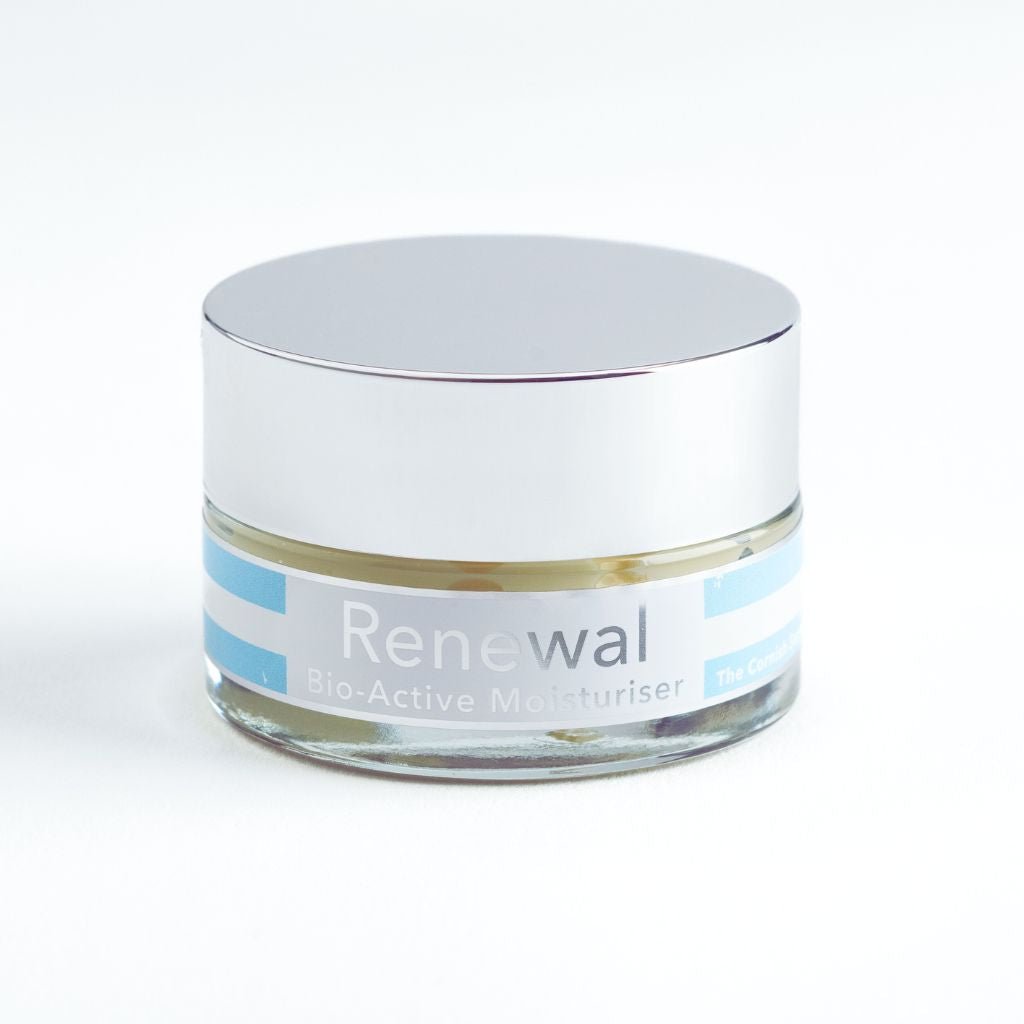
Seaweed delivers iodine, magnesium, and polysaccharides that help skin retain moisture and defend against oxidative stress. Our Mature Skin collection includes the Renewal Bio-Active Moisturiser, which combines Fucus serratus seaweed with angelica sinensis, frankincense resin, and ling zhi mushroom. Ling zhi mushroom supports skin elasticity and calms inflammation--particularly useful for perimenopausal skin that's both dry and reactive.
Soothing Rituals: Baths, Cleansing, and Daily Care
Lukewarm water and mild cleansing
Hot water strips lipids from your skin. Keep showers and baths lukewarm, and choose cleansers that don't foam aggressively. Our Seaweed & Frankincense Body Wash uses coconut, olive, and jojoba oils alongside Fucus serratus to cleanse without sulphates.
Lock in hydration whilst skin is damp
Apply moisturiser or body oil within three minutes of patting skin dry. Damp skin absorbs products more effectively, and sealing in residual water prevents transepidermal water loss. The Super Nutrient Body Oil, with jojoba, rosehip, evening primrose, and frankincense, absorbs quickly.
Seaweed soaps for gentle daily care
Bar soaps made from saponified plant oils (olive, coconut, castor) and seaweed offer a sustainable, low-waste alternative. Our Pure Seaweed Soap contains lime, lemongrass, and bergamot essential oils, whilst the Fragrance Free Seaweed Soap suits highly sensitive skin. Both maintain pH balance and avoid synthetic detergents.
Building a Perimenopause Skincare Routine
Morning routine
Cleanse with lukewarm water and a gentle soap or facial cleanser, then apply a lightweight moisturiser. Our Mature Skin range offers facial oils like the Super Nutrient Facial Oil (jojoba, tamanu, sea buckthorn, seaweed) that absorb quickly and won't interfere with sun protection.
Evening routine
Remove the day's grime with a mild cleanser, then use a richer oil or moisturiser. The Sand Facial Oil (jojoba, virgin coconut, sea buckthorn, seaweed, Roman chamomile, manuka) provides deeper barrier support overnight, when skin repair processes peak.
When to seek professional advice
If dryness persists despite consistent care, or if you develop cracking, bleeding, or signs of infection, consult a dermatologist. Persistent irritation may signal an underlying condition that requires medical attention. For more details, see skin care during menopause.
Nourishment from Within: Diet and Supplements
Omega-3 fatty acids and EPA
Omega-3s, particularly eicosapentaenoic acid (EPA), help regulate sebum production and reduce inflammation that accelerates collagen breakdown. Oily fish like mackerel, sardines, and salmon provide concentrated EPA. If you prefer plant-based sources, seaweed and algae can provide omega-3s without animal products. These compounds support the lipid barrier directly, making skin more supple and less prone to irritation.
Vitamin C and sulphur-rich foods
Collagen production requires vitamin C as a cofactor. Citrus fruits, peppers, and leafy greens become especially important during perimenopause. Sulphur-rich foods like eggs, garlic, and onions provide the amino acids cysteine and methionine, which form structural bonds in collagen and keratin. Together, these nutrients help maintain the scaffolding that keeps skin firm and hydrated.
Plant-based alternatives to fish oils
If you avoid fish, look to algae-based omega-3 supplements. Fish accumulate omega-3s by eating algae, which makes algae oils a direct and sustainable option. Incorporating seaweed into your diet can also deliver iodine and trace minerals that support thyroid function, which influences skin health indirectly. Many women notice increased dryness during this stage; understanding symptoms like menopause dry skin can help you adapt your skincare choices effectively.
Vegan Omega Sources
Flaxseeds, chia seeds, and walnuts provide alpha-linolenic acid (ALA), which your body converts to EPA at a low rate (roughly 5-10%). For more reliable omega-3 intake, choose algae-based supplements that provide pre-formed EPA and DHA.
Practical Implementation Tips
Start with one change at a time
Overhauling your entire routine overnight often leads to confusion about what's actually helping. Begin by swapping your current cleanser for a gentler, seaweed-based option like our Seaweed & Frankincense Body Wash or Pure Seaweed Soap. Once your skin adjusts over two weeks, introduce a facial oil or moisturiser. This staged approach helps you identify any sensitivities early.
Pay attention to absorption timing
If your moisturiser sits on the surface for more than a few minutes, you may be using too much, or your skin may not be damp enough. Apply products to slightly wet skin immediately after cleansing, using gentle pressing motions. Oils like our Sky Facial Oil (Ulva lactuca seaweed, camellia, blue tansy, frankincense) absorb faster on damp skin and deliver nutrients more effectively.
Adjust for indoor heating and seasonal shifts
Central heating strips moisture from the air and your skin. Consider a humidifier in your bedroom during colder months. Your skin's needs will shift slightly with the seasons, but the core principles--gentle cleansing, immediate moisturising, barrier support--remain constant. To learn more about managing dry skin during menopause, consult resources like this detailed article.
Building Long-Term Resilience
Consistency over intensity
Your skin responds better to regular, gentle care than to sporadic intensive treatments. A simple routine of lukewarm cleansing, damp-skin moisturising, and omega-3-rich meals can outperform expensive interventions used inconsistently. Perimenopause lasts several years for most women. Think of your skincare as a sustained practice rather than a quick fix.
Monitor your progress without obsessing
Take a photo of your skin in natural light when you begin a new routine, then check again after four weeks. Skin cell turnover takes roughly 28 days. Look for reduced tightness, fewer flaky patches, and less reactivity to environmental factors rather than dramatic transformation.
When natural approaches need support
Natural skincare works well for most perimenopausal dryness, but some women experience severe barrier damage that requires prescription support. If you develop eczema-like patches, persistent redness, or skin that cracks despite diligent care, a dermatologist can assess whether you need topical steroids or other medical interventions alongside your natural routine.
Remember that perimenopause is a transition, not a permanent state. Your skin will stabilise as hormones settle. The habits you build now--barrier protection, immediate post-bath moisturising, seaweed-infused minerals and antioxidants--will serve you well beyond this phase. Listen to your skin, adjust as needed, and trust that consistent care will restore comfort naturally.
Frequently Asked Questions
How can I soothe dry perimenopausal skin naturally?
To gently care for dry perimenopausal skin, focus on repairing your skin's natural barrier. Incorporate plant-based oils like jojoba or sea buckthorn into your routine, and always moisturise damp skin right after bathing. Nourishing ingredients, especially those found in seaweed, can also offer wonderful support.
What are the signs of dry skin during perimenopause?
During perimenopause, you might notice your skin feeling unusually parched, sensitive, or even uncomfortable. This dryness often comes with a weakened skin barrier, making your skin more reactive to environmental changes. It can also appear thinner and less plump due to collagen and hyaluronic acid loss.
Is perimenopausal dry skin caused by low estrogen?
Yes, the decline in oestrogen during perimenopause directly impacts your skin's ability to retain moisture. Oestrogen helps regulate sebum and supports the lipid matrix that keeps skin cells together, so as levels drop, your skin barrier weakens. This hormonal shift also contributes to collagen loss and reduced hyaluronic acid, making skin drier.
Will dry skin in perimenopause improve over time?
While the hormonal shifts of perimenopause are temporary, the resulting skin dryness often requires ongoing, gentle care. Focusing on barrier repair and consistent nourishment can bring comfort and resilience back to your skin. With a thoughtful routine and supportive ingredients, you can certainly manage and improve the feeling of dryness.
What natural ingredients help with perimenopausal dry skin?
Plant-based oils like jojoba, sea buckthorn, and tamanu are wonderful for supporting your skin's barrier. Seaweed, rich in minerals and antioxidants, is another nourishing ingredient that helps skin retain moisture. Our Pure Seaweed Soap, for example, combines saponified plant oils with wild-harvested Fucus serratus seaweed for gentle daily care.
How can I adjust my bathing routine for perimenopausal dryness?
To protect your delicate skin barrier, opt for lukewarm water instead of hot during showers and baths. Choose mild cleansers that don't foam aggressively, like our Seaweed & Frankincense Body Wash, which cleanses without sulphates. Always apply your chosen moisturiser or body oil within three minutes of gently patting your skin dry to lock in hydration.