 Spring Sale!



natural vs chemical heat protection serums which is better
Understanding Heat Protection Serums: Natural vs Chemical
Choosing between a natural or chemical heat protection serum comes down to what you want the product to do. Both shield hair from thermal damage during styling, but through different mechanisms. Natural serums typically use plant-derived oils and botanicals to coat the hair shaft, whilst synthetic formulations rely on engineered compounds designed for specific heat thresholds. Neither is universally superior -- the right choice is personal.
Natural serums suit those seeking plant-based ingredients with added nourishment. Chemical formulations may offer more measurable heat thresholds. For everyday styling below 200°C, a well-formulated natural serum is a sound choice for most hair types.
What Each Approach Offers
Natural Heat Protection Serums
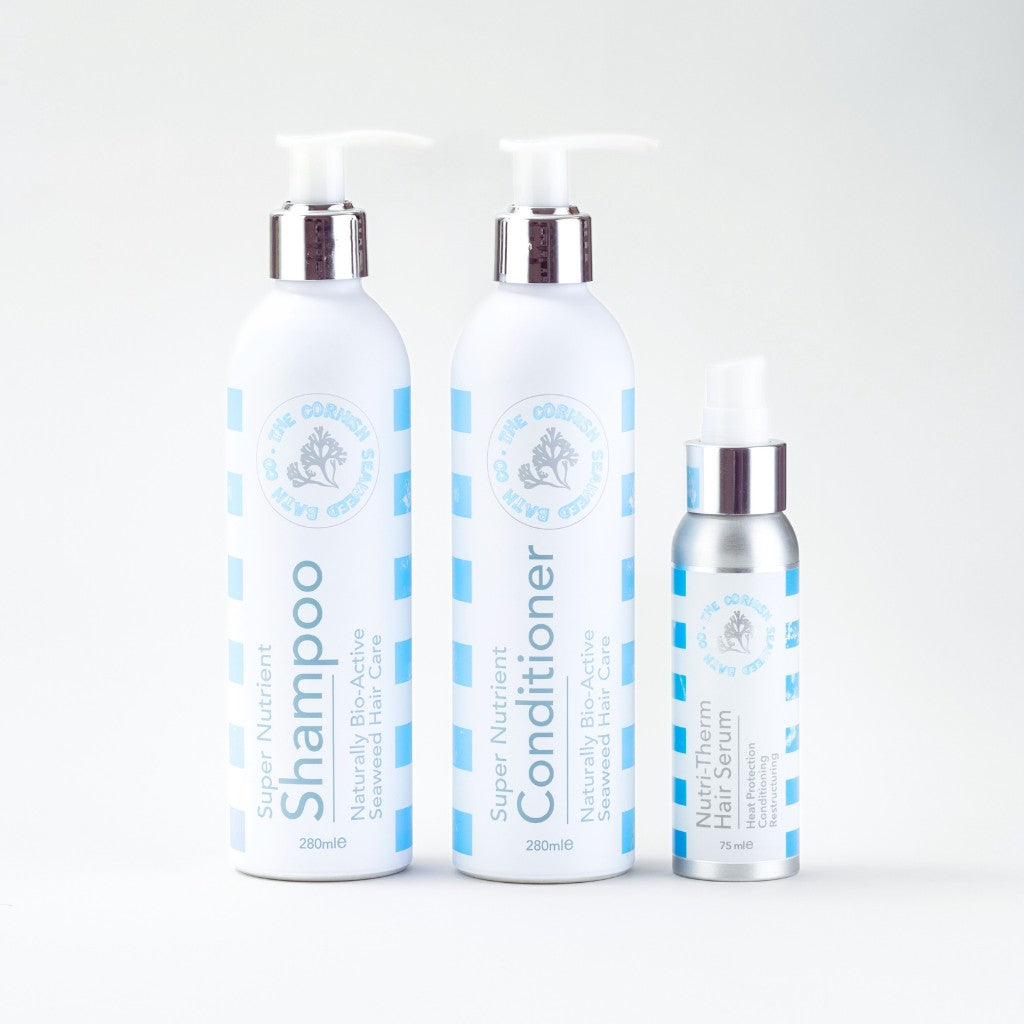
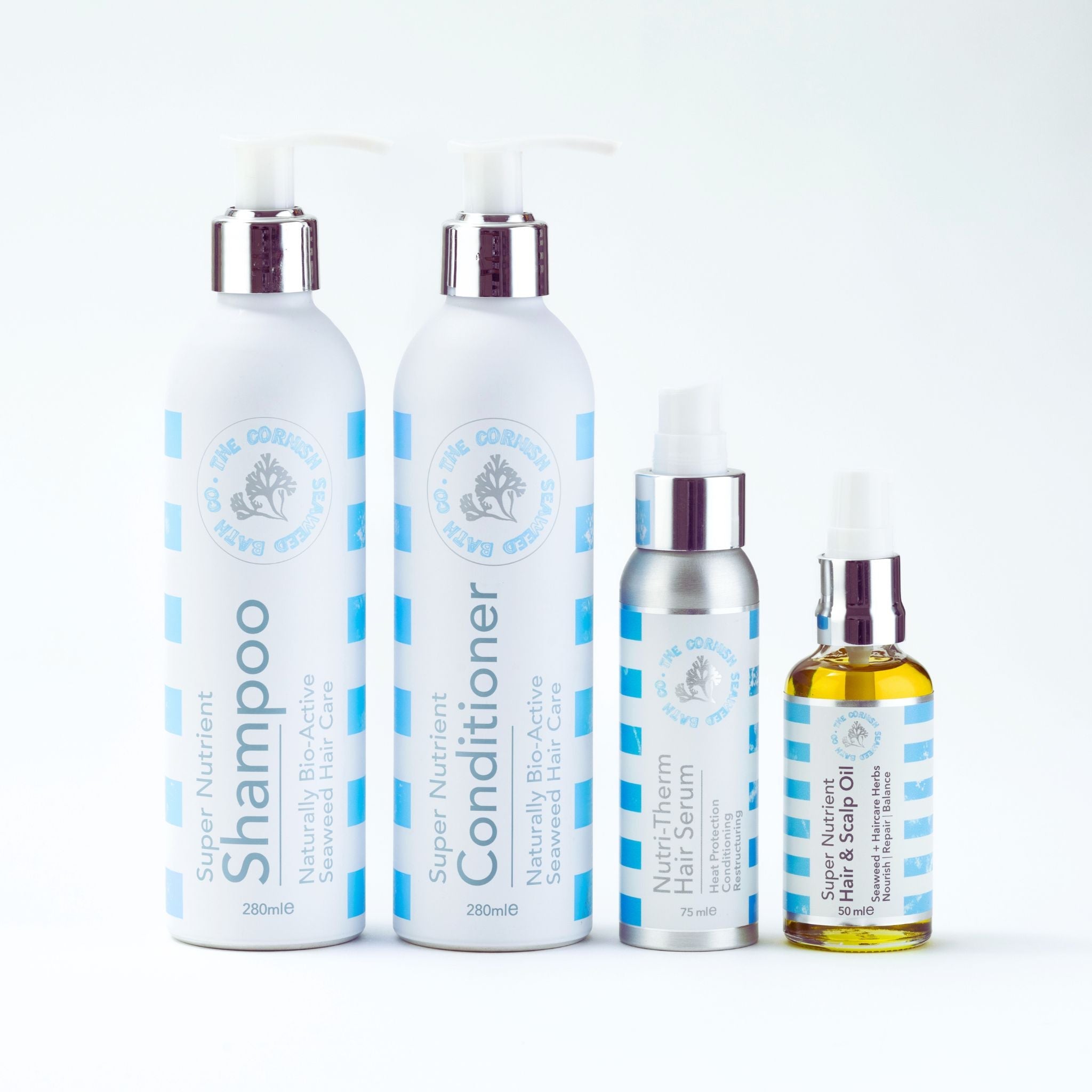
Plant oils such as broccoli seed oil form a lightweight film over the hair cuticle, offering genuine thermal buffering alongside conditioning benefits. If you're looking for a natural heat protector, our Nutri-Therm Hair Serum is designed to do exactly that -- a seaweed-enriched, lightweight leave-in that supports hair under heat stress. It contains broccoli seed oil, bamboo leaf, eclipta, plant proteins, and wild Cornish seaweed (Fucus serratus), with essential oils of clary sage, lavender, ho wood, and rose geranium. Apply a 4-8 pumps to damp or towel-dried hair before heat styling, distributing through the mid-lengths and ends.
Chemical Heat Protection Serums
Synthetic serums often use silicones and film-forming polymers designed to withstand higher temperatures. They can offer a smooth, glossy finish and consistent performance, though some formulations include sulphates or synthetic fragrance that may not suit sensitive scalps.
Natural vs Chemical: At a Glance
Natural
- Plant-derived and often gentler on the scalp
- Nourishing secondary benefits
- Typically free from synthetic fragrance
Chemical
- May contain silicones that can build up over time
- Can include synthetic additives
- May be less suitable for sensitive or reactive scalps
How to Choose the Right Serum
The decision between natural and chemical heat protection serums comes down to three considerations: your styling temperature, scalp sensitivity, and ingredient priorities. Look for serums that list specific plant oils or proteins rather than vague "natural" claims. Our Nutri-Therm Hair Serum reflects this commitment to transparent, plant-based formulation -- every ingredient named, nothing hidden behind catch-all terms.
If you colour-treat your hair or have a reactive scalp, a natural serum with recognisable botanical ingredients is worth prioritising. For very high styling temperatures, check that any serum -- natural or synthetic -- specifies its protective range rather than relying on general marketing language.
Matching Your Serum to Your Styling Habits
Your styling temperature is the most practical starting point. Most plant-oil-based serums offer reliable protection up to around 200°C, which covers the majority of everyday styling tools. If you regularly use a flat iron above that threshold, verify that any serum you choose explicitly states its protective range.
Scalp sensitivity narrows the decision further. Silicone-heavy formulations can accumulate over repeated use, leading to build-up that eventually requires a clarifying wash. If that's a concern, a naturally derived serum with a short, readable ingredient list is a more straightforward option. The same standard applies when reading any heat-serum label: if an ingredient is unfamiliar and not described in plain language, it's worth researching before purchase.
Colour-treated hair benefits particularly from serums containing plant proteins or conditioning oils, as these support the cuticle without stripping colour. Named botanical ingredients -- rather than broad descriptors -- are a reliable marker of a considered formulation. To complement your heat protection routine, explore our full range of nourishing haircare products designed to strengthen and protect your hair.
Reading Labels with Confidence
A few principles apply consistently when reading a heat protection serum label. Named plant oils -- broccoli seed, jojoba, argan -- indicate genuine botanical content. Unnamed "conditioning agents" or lengthy polymer names without explanation suggest a more synthetic approach. Neither automatically disqualifies a product, but specificity is always a good sign.
Fragrance is another consideration. Synthetic fragrance is a common sensitiser, particularly for reactive scalps. Natural serums scented with essential oils carry their own considerations for those with known sensitivities, so reading the full ingredient list remains worthwhile regardless of how a product is marketed.
Our Nutri-Therm Hair Serum is a useful example of a short, purposeful ingredient list. Every ingredient is named and traceable -- a reasonable benchmark when assessing any formulation.
Which Is Better for You?
For most people styling below 200°C with a sensitive or colour-treated scalp, a natural serum built from named plant oils and botanicals is a well-supported choice. The conditioning benefits come alongside thermal protection, and the ingredient list is typically straightforward to assess.
For those using very high heat regularly, verifying a serum's stated protective range matters more than whether it is natural or synthetic. That's an honest distinction worth keeping in mind -- no single category wins outright.
Fine hair tends to respond better to lighter oil-based formulations, whilst thicker or more porous hair can absorb richer botanical blends without being weighed down. As your hair's condition changes -- after a chemical treatment, for instance, or through seasonal shifts -- it's worth revisiting your serum choice accordingly.
Ingredient transparency remains a reliable guide regardless of category. A short, recognisable list signals a considered formulation. Our Nutri-Therm Hair Serum -- naturally derived, hydrating, and smoothing -- reflects that formulation philosophy: clarity, plant-based integrity, and purpose-led ingredients. Apply a small amount to damp or towel-dried hair before heat styling, or use it as a leave-in on non-heat days.
Frequently Asked Questions
What is the healthiest heat protectant for hair?
The "healthiest" heat protectant often depends on your hair's unique needs and your ingredient preferences. For those seeking plant-based ingredients and added nourishment, a natural heat protection serum can be a wonderful choice. These serums often use botanical oils to gently shield your hair while supporting its natural vitality.
How do I choose a heat protection serum that's right for me?
Choosing the right heat protection serum involves considering your styling temperature, scalp sensitivity, and what ingredients you prioritize. For everyday styling below 200°C, a well-formulated natural serum is often a sound choice. If you have a sensitive scalp or colour-treated hair, looking for serums with recognizable botanical ingredients can be particularly beneficial.
Do heat protection serums truly work to protect hair?
Yes, heat protection serums are designed to shield your hair from thermal damage during styling. They work by creating a protective barrier on the hair shaft, either through plant-derived oils or engineered compounds. This barrier helps to buffer your hair from the direct impact of heat, supporting its overall strength.
What ingredients should I look for in a heat protectant serum?
When exploring heat protection serums, look for transparency in the ingredient list. For natural options, seek out named plant oils like broccoli seed oil, bamboo leaf, or wild Cornish seaweed, along with plant proteins. These indicate genuine botanical content that offers both protection and conditioning. If you have a sensitive scalp, consider serums scented with essential oils rather than synthetic fragrances.
Are natural heat protectants effective for styling?
Absolutely, natural heat protectants are quite effective for many styling routines. Plant oils, such as broccoli seed oil, create a lightweight film that provides genuine thermal buffering for your hair. Most plant-oil-based serums offer reliable protection up to around 200°C, covering the majority of everyday styling tools while also offering nourishing benefits.