 Spring Sale!



scalp oil for menopausal itching
Understanding Scalp Itching During Menopause
Menopausal scalp itching is primarily driven by declining oestrogen, which reduces the scalp's natural oil production and moisture retention. A nourishing scalp oil for menopausal itching can help restore comfort by supporting the skin barrier with botanical oils and mineral-rich ingredients.
Hormonal Changes and Their Impact on Scalp Health
Oestrogen plays a quiet but significant role in skin health across the body, including the scalp. As levels decline during perimenopause and menopause, sebaceous glands produce less sebum, leaving the scalp drier, more sensitive, and prone to irritation. This is a physiological shift, not a hygiene concern.
Common Symptoms and Why They Occur
Beyond itching, you may notice increased flaking, tightness, or a general feeling of sensitivity. These symptoms reflect the scalp's reduced ability to retain moisture and maintain its protective barrier. Addressing dryness at the root, rather than masking symptoms, is a more considered approach.
Worth knowing: Scalp skin is thinner than facial skin and contains a high density of hair follicles, making it particularly responsive to hormonal shifts. Targeted nourishment, rather than general moisturising, tends to be more effective.
Why Natural Scalp Oils Offer Gentle Relief
Benefits of Nourishing Oils for Dry, Irritated Scalps
Plant-based oils work by forming a light, breathable layer over the scalp that helps slow moisture loss. Jojoba oil, structurally similar to the scalp's own sebum, absorbs readily without heaviness. Oat kernel oil brings soothing properties suited to reactive or easily irritated skin.
Seaweed and Supporting Botanicals for Scalp Balance
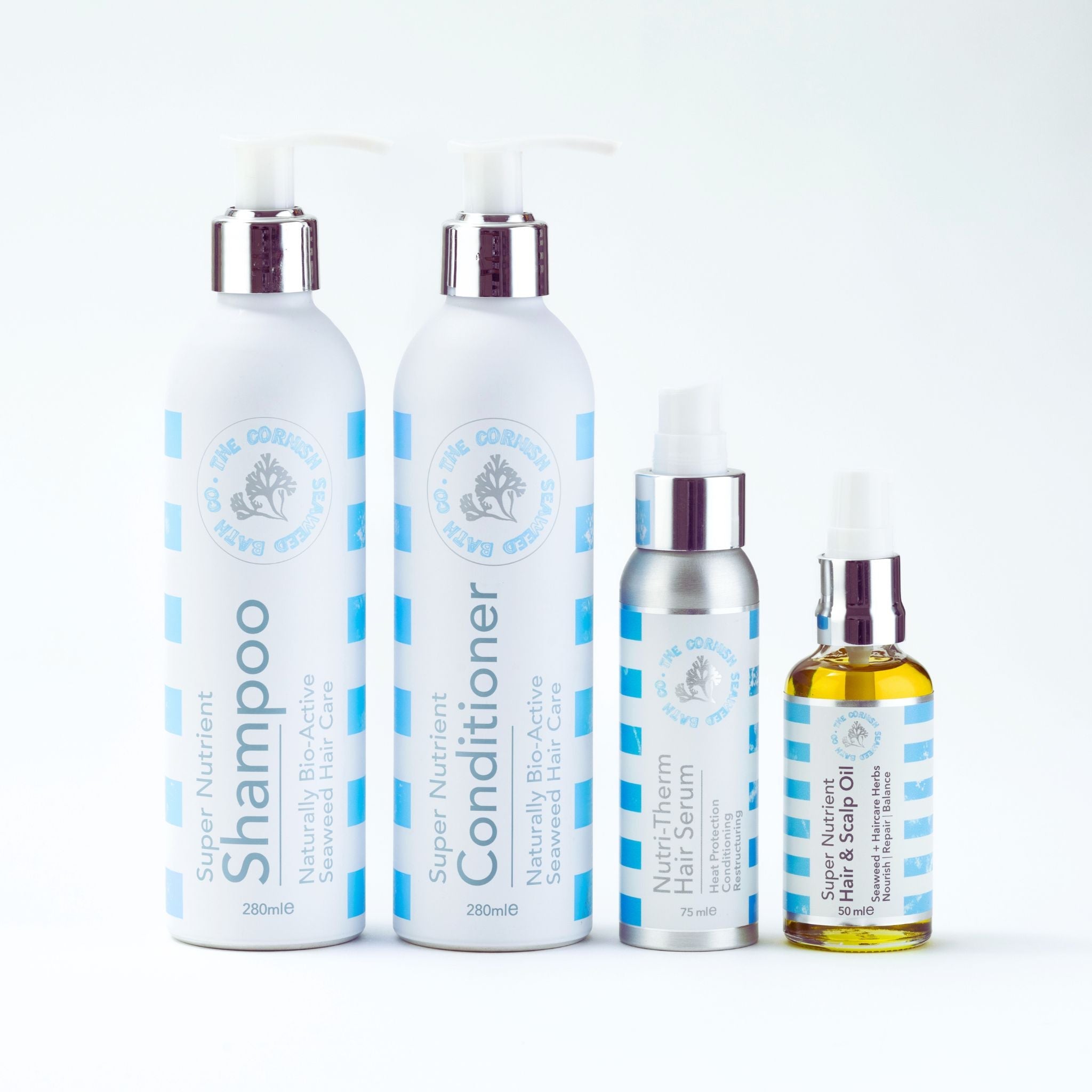
Seaweed (Fucus serratus) is naturally mineral-rich and has long been used in skincare for its supportive properties. When incorporated into a scalp oil, it complements botanical actives to help nourish the scalp environment. Our Super Nutrient Hair and Scalp Oil combines seaweed with tuber fleeceflower root, lovage root, and eucommia bark — botanicals traditionally associated with scalp and hair health.
Discovering the Best Scalp Oil for Menopausal Itching
Key Ingredients in Our Super Nutrient Hair and Scalp Oil
Our Super Nutrient Hair and Scalp Oil is formulated with jojoba oil, oat kernel oil, castor seed oil, broccoli seed oil, and Eco Silk, alongside seaweed (Fucus serratus) and botanical extracts including eucommia bark, tuber fleeceflower root, and lovage root. The essential oil blend — clary sage, lavender, ho wood, and rose geranium — lends a naturally calming scent. Broccoli seed oil provides a natural, lightweight conditioning effect, while Eco Silk supports smoothness without synthetic silicones.
How It Differs from Common Alternatives
Natural Scalp Oils
- Free from synthetic silicones and mineral oils
- Botanical actives address dryness at the source
- Seaweed provides natural mineral support
- Suitable for sensitive, reactive scalps
Synthetic Scalp Treatments
- May contain silicones that coat without nourishing
- Fragrance additives can irritate a sensitive scalp
- Often formulated for dandruff rather than hormonal dryness
How to Apply Scalp Oil for Effective Itch Relief
Step-by-Step Application Guide
Our Super Nutrient Hair and Scalp Oil is used as a pre-wash treatment. Here is how to apply it:
- Pump the oil directly onto the scalp.
- Comb through the lengths of the hair to distribute it evenly. Gently massage using the fingertips to ensure it seeps through.
- Leave it on for at least 20 minutes, or overnight for deeper nourishment.
- Shampoo it out thoroughly, then condition as usual.
Frequency and Complementary Practices
How often you apply it will depend on your scalp's individual needs, including sensitivity and how your scalp responds over time. Some find a weekly treatment sufficient; others with very dry scalps prefer twice weekly. Let your scalp guide the cadence rather than following a fixed rule. The oil works equally well as a daytime or overnight treatment, making it easy to fit around your existing routine.
Supporting Long-Term Scalp Comfort Alongside Oils
Gentle Haircare Routines to Pair with Oils
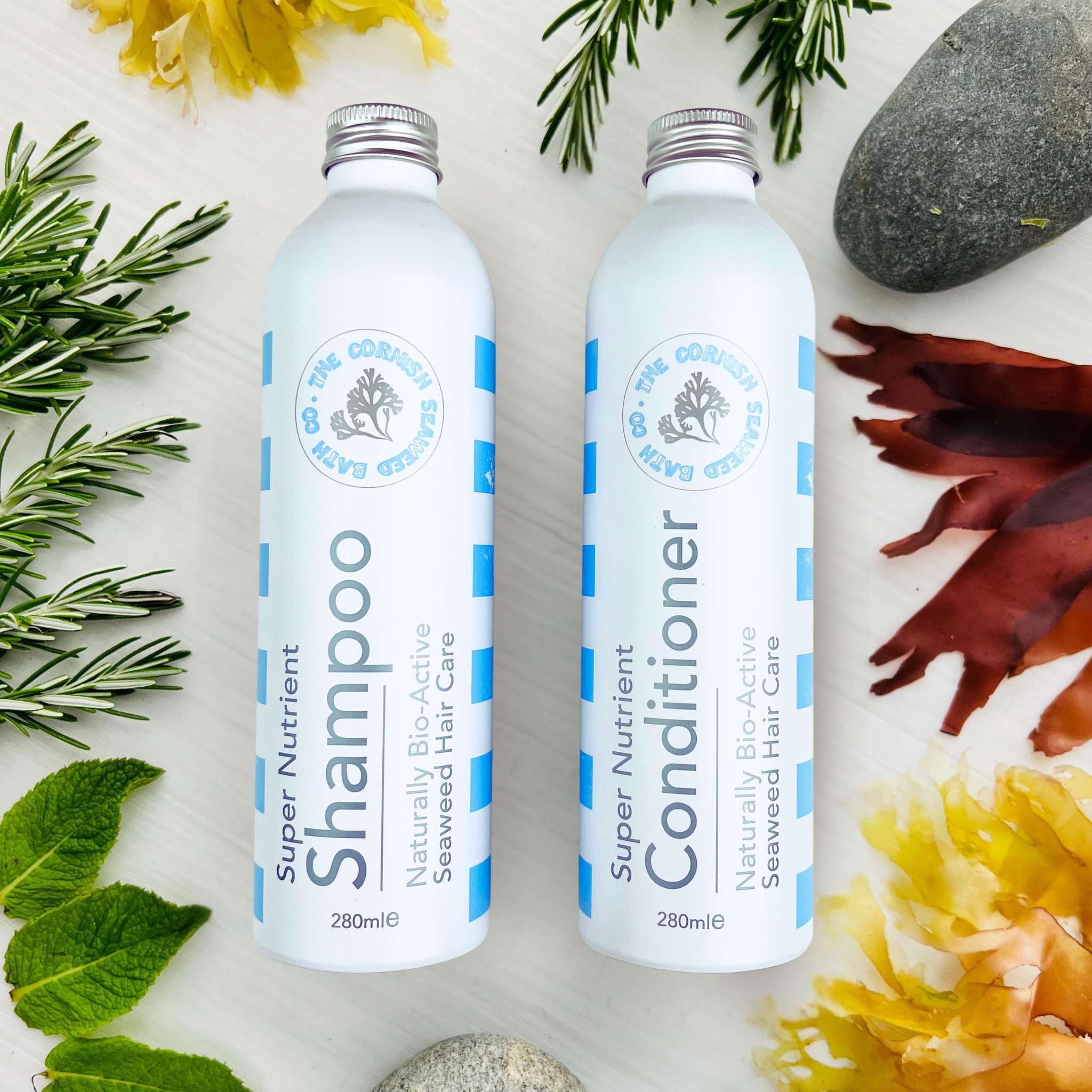
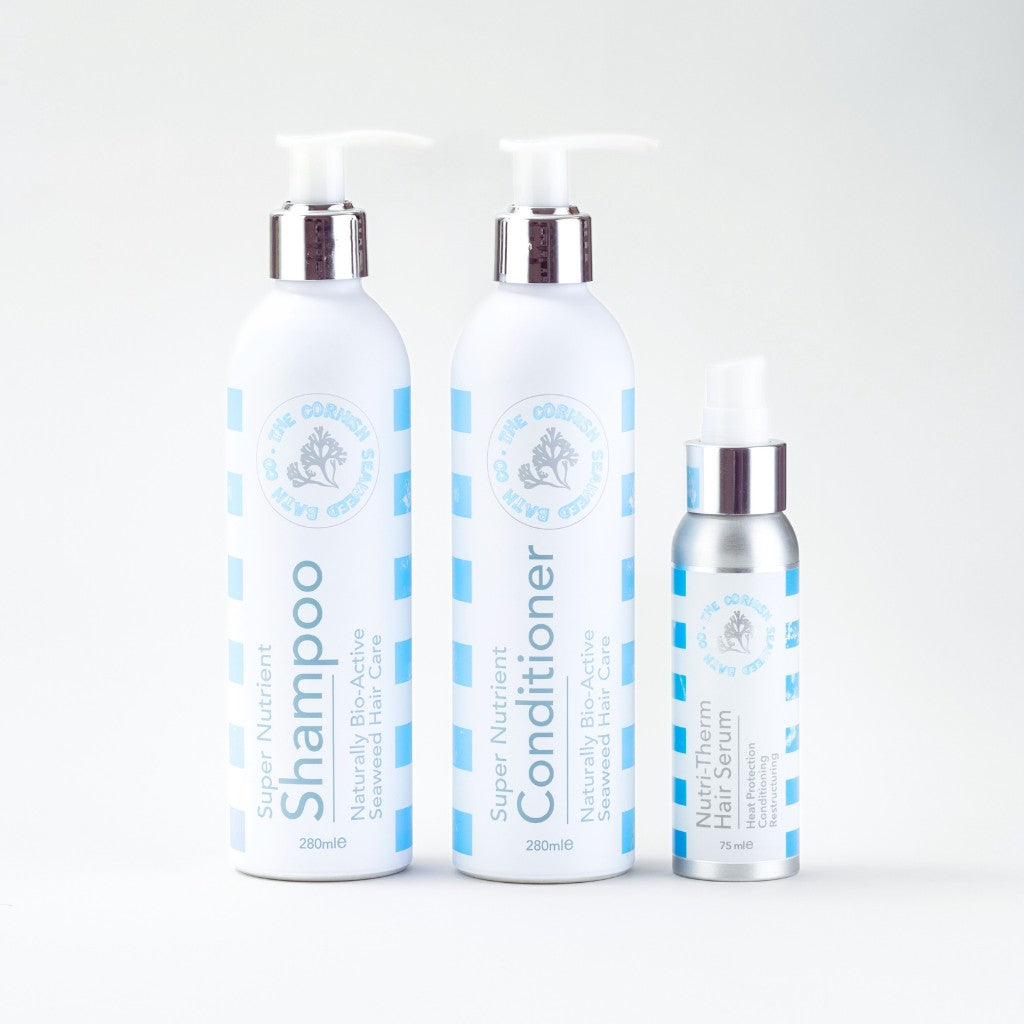
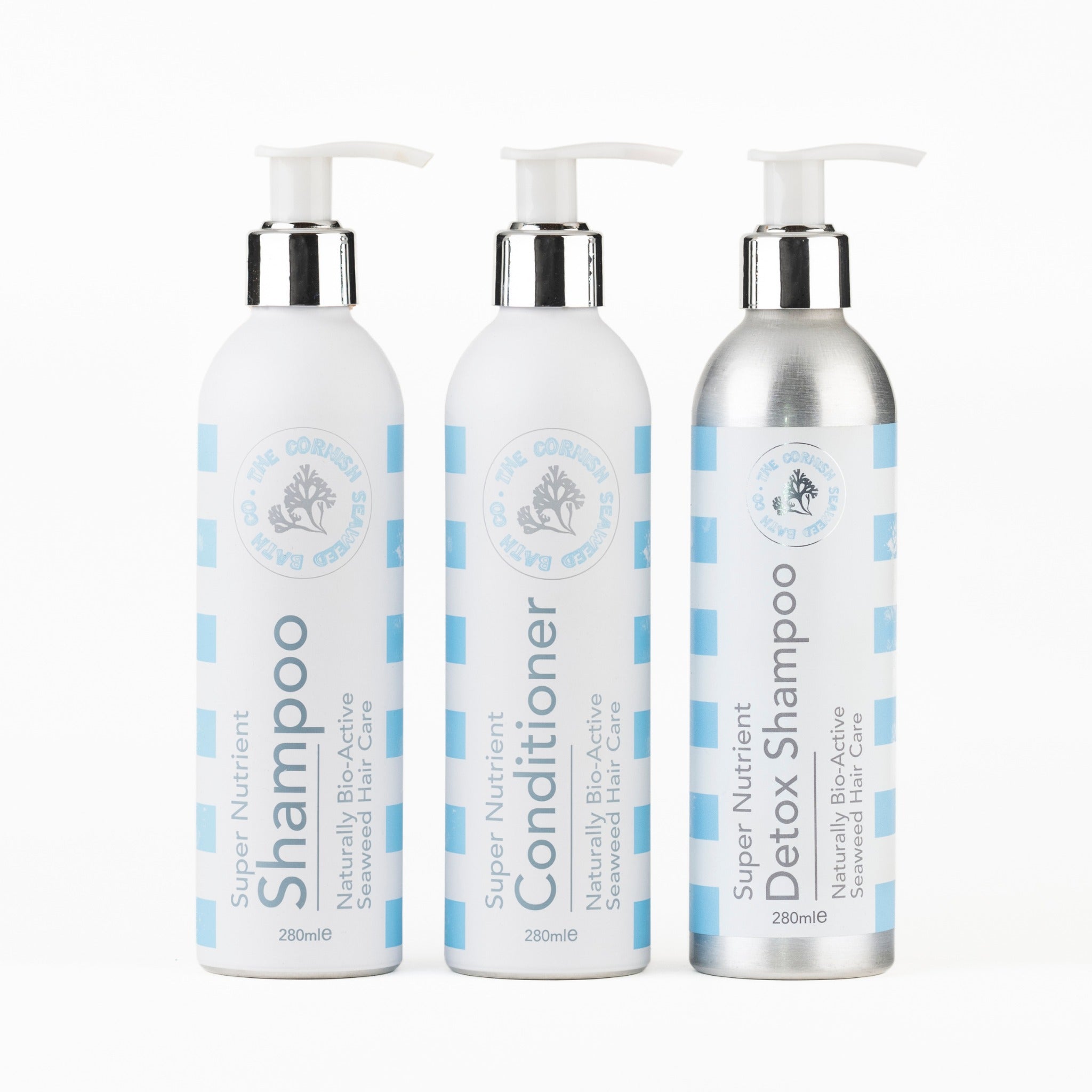
A sulphate-free shampoo helps preserve the scalp's natural moisture balance between oil treatments. Our Super Nutrient Shampoo is formulated without harsh sulphates and is seaweed-enriched to support a nutrient-dense cleanse. Follow with our Super Nutrient Conditioner — left on for one to three minutes before rinsing — which contains seaweed (Fucus serratus), frankincense, and oat oil, alongside argan oil, for lightweight hydration without weight.
Lifestyle Adjustments for Scalp Nourishment
Rinsing with cooler water reduces stripping of natural oils from the scalp. Avoiding prolonged heat styling and choosing softer hair ties also reduces mechanical stress on already sensitive skin. Small, consistent adjustments tend to produce more noticeable results than occasional intensive treatments alone.
A Considered Approach to Menopausal Scalp Care
Caring for an itchy scalp during menopause is less about finding a quick fix and more about building a routine that genuinely supports your scalp's changing needs. The physiological shifts that accompany declining oestrogen are real, and they deserve a thoughtful, botanical response rather than a one-size-fits-all treatment.
Our Super Nutrient Hair and Scalp Oil sits at the heart of that response, combining mineral-rich seaweed with plant oils and traditional botanical extracts chosen specifically for scalp nourishment. Used as a pre-wash treatment alongside a sulphate-free shampoo and conditioner, it forms part of a cohesive routine rather than an isolated product. Recent studies emphasise the importance of combining natural ingredients for scalp health, supporting this approach.
Small, consistent choices accumulate. Cooler rinses, a well-chosen pre-wash scalp oil used at a cadence suited to your scalp, and cleansers that respect the skin barrier will, over time, make a more meaningful difference than any single intensive treatment. Your scalp's needs during menopause are specific; the care you give it should be too.
Frequently Asked Questions
What helps an itchy scalp during menopause?
During menopause, a nourishing scalp oil can offer gentle relief for an itchy scalp. These oils help replenish moisture and support the scalp's natural barrier, which can become compromised due to hormonal shifts. Our Super Nutrient Hair and Scalp Oil, with its blend of botanical oils and seaweed, is designed to provide targeted comfort.
What oil is good for an itchy scalp?
Plant-based oils, like jojoba and oat kernel oil, are wonderful for soothing an itchy scalp. They work by forming a light, breathable layer that helps reduce moisture loss. Our Super Nutrient Hair and Scalp Oil combines these with mineral-rich seaweed and other botanicals to gently nourish and comfort the scalp.
Does a lack of oestrogen cause an itchy scalp?
Yes, a decline in oestrogen during perimenopause and menopause is a primary cause of an itchy scalp. This hormonal shift reduces the scalp's natural oil production, leading to dryness, sensitivity, and irritation. It's a physiological change, not a hygiene concern.
How do you treat your scalp during menopause?
Treating your scalp during menopause involves a thoughtful routine focused on targeted nourishment. We suggest using a dedicated scalp oil as a pre-wash treatment, leaving it on for at least 20 minutes before shampooing. Pairing this with a sulphate-free shampoo and conditioner, like our Super Nutrient range, helps maintain the scalp's moisture balance.
How can I calm menopausal itching?
To calm menopausal itching, consider a gentle routine that supports your scalp's changing needs. A nourishing scalp oil, rich in botanical ingredients like jojoba and oat kernel oil, can help restore comfort by supporting the skin barrier. Using it as a pre-wash treatment, alongside a sulphate-free shampoo and conditioner, can make a noticeable difference.