 Spring Sale!



Zero-Waste Skincare Tips: Your Complete Guide to Sustainable Beauty
Key Takeaways
- Zero-waste skincare focuses on reducing packaging waste through concentrated formulations and recyclable containers
- Multi-purpose products eliminate the need for multiple single-use items in your routine
- Bar soaps and glass-packaged oils represent the most impactful swaps for immediate waste reduction
- Progress matters more than perfection, start with one product swap and build gradually
- Simple, minimal-ingredient formulations often work better for sensitive skin whilst reducing environmental impact
Table of Contents
- Why Zero-Waste Skincare Matters Now
- Understanding Zero-Waste Skincare: Principles and Realities
- Foundations, Building a Practical Zero-Waste Skincare Routine
- Skincare Swaps That Stick, Minimising Packaging Waste Step by Step
- Choosing Truly Zero-Waste Skincare Brands, Signals and Red Flags
- Sustainable Use, Reuse, and Disposal, Getting the Most from Every Product
- Zero-Waste Skincare for Sensitive and Diverse Needs
Why Zero-Waste Skincare Matters Now
Zero-waste skincare tips focus on minimising packaging waste, choosing concentrated formulations, and selecting products with recyclable or compostable containers. The goal isn't perfection, it's progress towards routines that nourish your skin whilst reducing environmental impact.
The beauty industry generates over 120 billion units of packaging annually, with skincare contributing significantly to this waste stream. Zero-waste approaches centre on thoughtful consumption: choosing multi-purpose products, solid formulations, and brands committed to sustainable packaging. This approach reduces landfill burden whilst often simplifying your daily routine.
From our Cornish perspective, we've witnessed how coastal environments suffer from plastic pollution firsthand. Our seaweed harvesting grounds remind us daily why sustainable skincare matters, not just for marine ecosystems, but for the communities that depend on them. Zero-waste skincare aligns with nature's own efficiency, where nothing is wasted and every element serves multiple purposes.
Wild Cornish seaweed exemplifies this natural efficiency. Rich in minerals, amino acids, and antioxidants, it supports skin barrier function and hydration whilst requiring no synthetic processing or complex packaging systems.
Understanding Zero-Waste Skincare: Principles and Realities
What Does 'Zero-Waste' Truly Mean for Skincare?
Zero-waste represents an aspiration rather than an absolute. In skincare, it means choosing products with minimal packaging, selecting formulations that maximise use-per-container, and ensuring packaging can be recycled, composted, or repurposed. The hierarchy follows: refuse unnecessary products, reduce packaging, reuse containers, and recycle responsibly.
Practical zero-waste skincare focuses on concentrated formulations, like facial oils that serve as cleansers, moisturisers, and makeup removers, and solid products that eliminate plastic bottles entirely. Our Sky Organic Facial Oil, for instance, functions as a makeup remover, daily moisturiser, and cuticle treatment, replacing multiple single-purpose products.
Apply 2–4 drops to freshly cleansed, slightly damp skin and press into face and neck. The seaweed-infused base delivers minerals and amino acids whilst the botanically calming aroma from blue tansy, frankincense, and lavender provides a soothing sensory experience.
Zero-Waste vs. Eco-Friendly vs. Sustainable, Key Differences
| Approach | Focus | Packaging Priority | Product Selection |
|---|---|---|---|
| Zero-Waste | Eliminate waste at source | Minimal, recyclable, or compostable | Multi-use, concentrated formulas |
| Eco-Friendly | Reduce environmental impact | Recycled materials, less plastic | Natural ingredients, ethical sourcing |
| Sustainable | Long-term environmental balance | Renewable materials, circular design | Responsibly sourced, regenerative practices |
Why We Need Zero-Waste Routines, Environmental and Personal Impacts
UK households discard approximately 2.5 billion cosmetic containers annually, with skincare packaging representing roughly 40% of this waste. Most contain residual product and mixed materials that complicate recycling. Zero-waste approaches address this by choosing products in glass containers, selecting concentrated formulations, and supporting brands with take-back programmes.
Personal benefits include simplified routines, reduced decision fatigue, and often improved skin health through gentler, multi-purpose formulations. When you adopt zero-waste practices, you're typically choosing products with fewer synthetic additives and more concentrated active ingredients.
Foundations, Building a Practical Zero-Waste Skincare Routine
Assess Before You Add, Auditing Your Current Routine
Begin by laying out every skincare product you own. Categorise by frequency of use: daily, weekly, occasional, or unused. Products used less than monthly should be gifted, donated, or repurposed for household cleaning. This audit reveals redundancies, multiple cleansers, similar serums, or expired products taking up space.
Focus retention on items that serve multiple functions or bring genuine joy to your routine. A facial oil that cleanses, moisturises, and soothes represents better value than three separate products. Our Sand Organic Facial Oil exemplifies this efficiency, combining cleansing capability with deep moisturisation through its jojoba oil, virgin coconut oil, and sea buckthorn oil base. The Roman chamomile and manuka essential oils make it particularly suitable for sensitive, redness-prone skin.
Core Principles: Choose Multi-Use, Concentrated, or Bar Products
Multi-purpose products form zero-waste skincare's foundation. Look for formulations that address multiple concerns, cleansing oils that remove makeup whilst nourishing skin, or moisturisers that provide barrier support. Bar products eliminate plastic bottles entirely whilst often lasting longer than liquid equivalents.
Our Pure Seaweed Soap demonstrates this principle perfectly. One 140g bar provides gentle cleansing for face and body, lasting approximately 6-8 weeks with daily use, equivalent to two 250ml liquid cleansers but with completely recyclable packaging. Use daily on face and/or body by lathering with water and rinsing. The cold-processed formulation includes wild-harvested seaweed alongside saponified olive, coconut, and castor oils, delivering minerals directly to skin without diluting agents.
Introduce Change Mindfully: The 'One-In, One-Out' Method
Replace products only as they're depleted, choosing zero-waste alternatives that match your skin's needs. This prevents waste from discarding functional products whilst gradually transitioning your routine. When your facial cleanser runs out, consider switching to our Fragrance Free Seaweed Soap if you have sensitive skin, or our Renewal Facial Cleanser for those seeking gentle cleansing with botanical support.
Apply 1–2 pumps of the Renewal Facial Cleanser to damp skin, massage gently over face and neck, then rinse with warm water. The seaweed-enriched formula may help support hydration and healthy skin function whilst the palm-free, sulphate-free formulation provides gentle, non-stripping cleansing.
Skincare Swaps That Stick, Minimising Packaging Waste Step by Step
The most impactful zero-waste skincare swaps centre on choosing products with minimal or recyclable packaging. By replacing liquid products in plastic bottles with solid alternatives or glass containers, you can eliminate approximately 70% of your skincare packaging waste immediately.
What can I swap right now? Replace your liquid cleanser with a bar soap, switch single-use cotton pads for a reusable flannel, and choose facial oils in glass bottles over serums in plastic tubes.
Cleansers and Soaps, Solid, Naked, and Natural
Bar soaps eliminate plastic pump bottles entirely whilst often lasting twice as long as liquid equivalents. Our Limited Edition Seaweed Soap provides gentle cleansing for face and body with seaweed alongside saponified olive, coconut, and castor oils, naturally scented with frankincense, cinnamon, and orange essential oils, all wrapped in compostable packaging.
For those preferring unscented options, the Fragrance Free Seaweed Soap contains only saponified plant oils and seaweed. Use daily on face and/or body by lathering with water and rinsing thoroughly.
Store bars on a wooden soap dish with drainage slots, allowing them to dry completely between uses. This extends their lifespan significantly whilst preventing the mushy texture that puts many people off solid cleansers.
Moisturisers and Facial Oils, Ditching Single-Use Plastics
Glass-packaged facial oils and moisturisers represent one of the most effective zero-waste skincare swaps. Our Sea Organic Facial Oil combines seaweed with jojoba oil, tamanu oil, and vitamin E in recyclable glass packaging. After cleansing, apply 2–3 drops to damp skin on face and neck. The simplified, 100% natural formula may support scar care and blemish-prone skin whilst working as a lightweight hydrator under makeup or overnight.
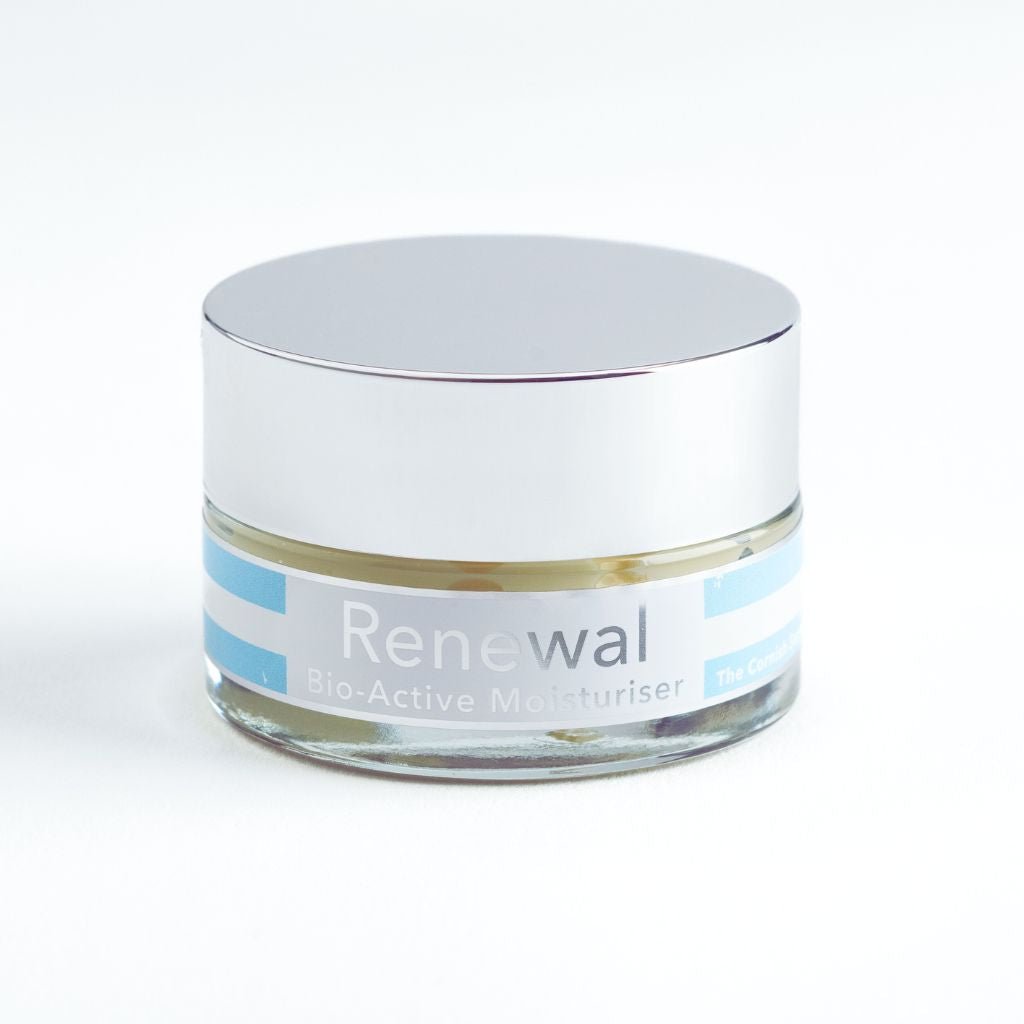
For those preferring traditional moisturiser textures, our Renewal Bio-Active Moisturiser contains angelica sinensis, ling zhi mushroom, and frankincense resin. Apply a small amount to clean, dry skin on face and neck, use alone or layer over a facial oil. The silicone-free formula naturally stimulates skin's own collagen production whilst providing lightweight yet nourishing hydration. Both products arrive in glass containers with metal caps that recycle completely through standard UK household schemes.
Exfoliators, Nature's Scrubs Over Microbeads
Microplastic exfoliators accumulate in waterways and marine environments, making salt-based scrubs the clear environmental choice. Our Organic Body Scrub uses pink Himalayan salt with jojoba oil, seaweed, and warming spices including black pepper, cinnamon, and ginger. The salt dissolves completely during use, leaving no residue in drainage systems.
Use on damp skin in shower or bath, massaging in circular motions before rinsing thoroughly. Limit use to 1–3 times weekly to avoid over-exfoliation, focusing on rough areas like elbows and knees.
Lip and Eye Care, Small But Mighty Packaging
Small-format products often generate disproportionate packaging waste, making ingredient concentration crucial. Our Organic Lip Balm contains organic olive oil, seaweed, angelica sinensis, mint, organic beeswax, and organic cocoa butter with peppermint essential oil in a small metal tin that provides months of use. Apply to lips as needed throughout the day or before bed. The angelica sinensis may support lip healing and moisture retention, particularly beneficial during colder months.
For eye care, our Revitalise Eye Gel combines seaweed with buddleia flower, skullcap flower, chrysanthemum flower, and aloe vera. After cleansing, dab a small amount around the eye contour with the ring finger. The cooling, soothing gel may help reduce puffiness whilst the seaweed-infused formula supports resilience and hydration. Use a grain-of-rice-sized amount, this concentration means one tube lasts approximately four months with daily application.
Choosing Truly Zero-Waste Skincare Brands, Signals and Red Flags
Authentic zero-waste skincare brands demonstrate environmental commitment through transparent ingredient sourcing, recyclable packaging materials, and measurable waste reduction initiatives. Look for companies that provide detailed recycling instructions, use minimal labelling, and source ingredients locally where possible.
| Criteria | Sustainable Approach | Typical Mass Market | Premium "Natural" Brand |
|---|---|---|---|
| Primary Packaging | Glass bottles, metal tins, compostable soap wrapping | Plastic tubes, pump bottles | Glass with plastic components |
| Ingredient Sourcing | Hand-harvested seaweed, local production | Global supply chain | Organic certified, varied origins |
| Multi-use Formulations | Oils for face/cuticles/makeup removal | Single-purpose products | Some multi-use options |
| Packaging Instructions | Clear recycling guidance provided | Minimal recycling information | Some guidance available |
How to spot a genuinely zero-waste brand: Check for specific recycling instructions on packaging, transparent ingredient sourcing information, third-party sustainability certifications, and evidence of refill or return programmes rather than vague environmental claims.
Key Criteria for a Zero-Waste Brand
Genuine zero-waste skincare brands provide detailed information about their packaging materials and local recycling compatibility. Look for glass bottles and metal caps that integrate seamlessly with UK household recycling schemes, whilst soap packaging should consist of compostable materials that break down in home composting systems.
Ingredient transparency extends beyond listing components to explaining sourcing methods. Wild Cornish seaweed undergoes hand-harvesting using traditional techniques that allow natural regeneration, whilst local production facilities minimise transport emissions.
Navigating 'Greenwashing', How to Verify a Brand's Claims
Authentic environmental commitment appears in specific, measurable actions rather than marketing buzzwords. Compare packaging materials directly, glass and metal components recycle indefinitely, whilst "biodegradable plastic" often requires industrial composting facilities unavailable to most UK households.
Read ingredient lists for clarity and simplicity. Our Fragrance Free Seaweed Soap contains only saponified plant oils and seaweed, making it suitable for sensitive skin whilst eliminating potential allergens and synthetic additives that require complex manufacturing processes.
Sustainable Use, Reuse, and Disposal, Getting the Most from Every Product
Maximising product lifespan reduces waste more effectively than choosing perfect packaging. Simple storage and usage techniques can extend skincare product life by 30-50%, whilst creative reuse transforms empty containers into household essentials.
What do I do with empty containers? Glass jars become storage for homemade scrubs or small plants, metal tins work as travel containers for solid products, and pump mechanisms can often be cleaned and transferred to refill bottles.
Getting the Most from Every Drop
Store oil-based products like our Sand Organic Facial Oil away from direct sunlight to prevent oxidation and maintain the beneficial properties of sea buckthorn oil and Roman chamomile. For balms and thick moisturisers, use a small spatula rather than fingers to prevent contamination and extend shelf life.
When liquid products near empty, store bottles upside down for 24 hours before final use. Add a few drops of cooled boiled water to body wash bottles to extract the remaining product without diluting effectiveness significantly.
Reusing and Upcycling Packaging
Glass bottles from facial oils make excellent containers for homemade room sprays or travel-sized portions of liquid products. Remove labels by soaking in warm water with bicarbonate of soda for 30 minutes, then scrub gently with a cloth.
Metal tins from lip balms serve as compact storage for solid shampoo pieces, emergency sewing kits, or small quantities of our Skin Repair Balm for travel. Warm a small amount between fingers and apply to dry, cracked, or irritated areas, massaging until absorbed. Clean containers thoroughly with hot soapy water and dry completely before repurposing.
Responsible Recycling for Skincare Packaging
Separate packaging components before recycling, remove metal caps from glass bottles, and clean all containers thoroughly to prevent contamination of recycling streams. Most UK councils accept glass bottles and metal caps through standard household collections, whilst pump mechanisms require disposal as general waste.
Check your local council's recycling guidelines online, as acceptance varies between regions. Some areas offer collection points for complex packaging like pump dispensers through specialist recycling programmes.
Compost and Dispose with Minimal Impact
Paper and cardboard packaging from products like our soap bars can enter home composting systems alongside kitchen scraps. Remove any plastic tape or labels first, and tear packaging into smaller pieces to accelerate decomposition.
For packaging that cannot be recycled locally, some zero-waste stores and community centres operate collection schemes for difficult-to-recycle items. Research options in your area before defaulting to general waste disposal.
Zero-Waste Skincare for Sensitive and Diverse Needs
Simplified routines often benefit sensitive skin by reducing potential irritants and allowing easier identification of problematic ingredients. Zero-waste skincare for sensitive skin focuses on choosing products with minimal, recognisable ingredients rather than complex formulations with multiple active components.
Sensitive Skin and Minimalism, Why Less Is Often More
Our Fragrance Free Seaweed Soap demonstrates how effective skincare can emerge from simple formulations, containing only saponified olive, coconut, and castor oils alongside seaweed extract. This approach eliminates common triggers like synthetic fragrances, preservatives, and colour additives whilst maintaining cleansing effectiveness.
Use daily on face and/or body by lathering with water and rinsing. Introduce new products individually with week-long intervals between additions. This method allows accurate identification of any ingredients causing reactions whilst building a routine gradually rather than overwhelming sensitive skin with multiple changes simultaneously.
Tailoring Zero-Waste Choices to Life Stage and Skin Needs
Mature skin benefits from concentrated, multi-purpose products that address several concerns efficiently. Our Super Nutrient Facial Oil combines seaweed with jojoba oil, tamanu oil, sea buckthorn oil, and virgin coconut oil with lavender, grapefruit, and palma rosa essential oils. Apply 2–4 drops to clean, slightly damp skin and press into face and neck, use alone or under makeup during the day, or as a reparative treatment at night.
The seaweed infusion provides minerals and amino acids whilst the antioxidant-rich formulation may support skin barrier function. The non-greasy, lightweight finish suits most skin types without synthetic additives.
For targeted repair, our Skin Repair Balm addresses dry, damaged, or inflamed skin with seaweed, frankincense resin, red peony root, and organic shea butter. The waterless, concentrated formula suits all ages and can also be used as a cleansing facial balm, massage onto dry skin, then gently wipe away using a face cloth wrung out in warm water.
Next steps: Start with one product swap that addresses your primary skin concern. Choose our Sea Organic Facial Oil for simplified daily hydration, or begin with our Pure Seaweed Soap to eliminate plastic bottles from your cleansing routine. Build your zero-waste approach gradually, replacing products only as they're depleted whilst focusing on formulations that serve multiple purposes in your routine.
Frequently Asked Questions
What are the key principles of zero-waste skincare and how do they differ from general eco-friendly or sustainable beauty approaches?
Zero-waste skincare centres on minimising packaging waste through concentrated formulations and recyclable or reusable containers, aiming to reduce landfill impact. Unlike broader sustainable beauty, which may focus on ingredient sourcing or carbon footprint, zero-waste prioritises packaging reduction and product efficiency as core goals.
How can multi-purpose and concentrated skincare products help reduce packaging waste in a zero-waste routine?
Multi-purpose and concentrated products reduce the number of individual items needed, thereby cutting down on packaging overall. By using formulations that serve several functions or require smaller amounts per use, you limit container waste and simplify your routine without compromising skin nourishment.
What are some effective product swaps for immediately minimizing packaging waste in skincare?
Switching to bar soaps and facial oils packaged in glass are impactful swaps that reduce single-use plastics and excess packaging. These formats often come in recyclable containers and offer concentrated nourishment, making them practical choices for lowering your skincare waste footprint.
How can zero-waste skincare accommodate sensitive skin while still being environmentally responsible?
Zero-waste skincare can support sensitive skin by favouring simple, minimal-ingredient formulations that avoid unnecessary additives, reducing potential irritation. Choosing products with transparent ingredients and gentle, natural components helps maintain skin comfort while respecting environmental considerations.
A picture tells a thousand words: out of necessity, some images in this blog post have been created using artificial intelligence models. This is to help us bring to life & more comprehensively express the written content within this post. We only using artificially generated images when we don’t have a suitable image available to us.