 Spring Sale!



best shampoo for thinning hair menopause
Understanding Hair Thinning During Menopause: What's Happening and Why
If you've noticed more hair in the shower or a parting that looks wider than it used to, you're not imagining it. Declining oestrogen disrupts the hair growth cycle, producing finer strands and increased shedding. Sulphate-free, botanically rich shampoos offer a supportive approach -- but understanding what's driving the change helps you make better choices.
The Hormonal Shift: Oestrogen, Progesterone, and Androgens
Oestrogen and progesterone support the active growth phase of each hair follicle. As both decline during perimenopause and menopause, follicles spend less time growing and more time resting -- so each new strand comes in finer than the last. Androgens become relatively more prominent at the same time, and for some women, this can shrink follicles across the scalp in a pattern similar to androgenetic hair loss.
Other Factors That Add to the Picture
Hormones rarely act alone. Nutritional deficiencies -- particularly iron, zinc, and B vitamins -- elevated cortisol from disrupted sleep, and thyroid fluctuations common in midlife can all place additional stress on follicles. Scalp circulation may also slow with age, reducing the nutrient supply each follicle depends on.
What to Look For
Diffuse thinning across the crown, a widening parting, and noticeably more hair on your brush or shower floor are the most common signs. Unlike alopecia areata, menopausal hair loss tends to be gradual and widespread rather than patchy.
Key Ingredients That Support Menopausal Hair
Seaweed: Marine Minerals for the Scalp
Fucus serratus, the bladderwrack seaweed at the heart of our Haircare range, is naturally rich in iodine, magnesium, and calcium. These minerals support scalp condition and help maintain a healthy environment for follicles. It's the foundational ingredient across both our shampoos and our conditioner.
Botanical Allies: Strength, Softness, and Moisture
Tuber fleeceflower root and Angelica sinensis appear in both our Super Nutrient Shampoo and Super Nutrient Detox Shampoo, supporting scalp comfort alongside argan oil and oat kernel oil, which add softness without weighing fine hair down. D-panthenol in both formulas helps improve moisture retention along the shaft -- useful when strands are already more fragile than they once were.
Why Sulphate-Free Shampoos Matter
Sulphates cleanse effectively but strip the scalp's natural oils, leaving already-fragile menopausal hair more prone to breakage. Sulphate-free formulas remove build-up while preserving the scalp's moisture balance -- a gentler approach that suits thinning or sensitised hair.
What to Look For -- and What to Leave on the Shelf
Supportive Ingredients
- Argan oil: lightweight conditioning without weighing fine hair down
- Oat kernel oil: soothes a sensitised scalp
- Seaweed (Fucus serratus): mineral-rich scalp support
- D-panthenol: supports hair moisture retention
Ingredients Worth Avoiding
- Sodium lauryl sulphate: strips natural scalp oils
- Synthetic silicones: can build up and weigh fine hair down
- Alcohol-heavy formulas: drying to an already-sensitive scalp
Choosing a Shampoo for Thinning Hair During Menopause
Our Two Shampoo Options -- and How to Choose Between Them
A good shampoo for thinning menopausal hair does more than remove excess sebum. It supports scalp condition, delivers nourishing botanicals to the follicle environment, and leaves strands with enough body to appear fuller. We've formulated two options to suit different scalp needs.
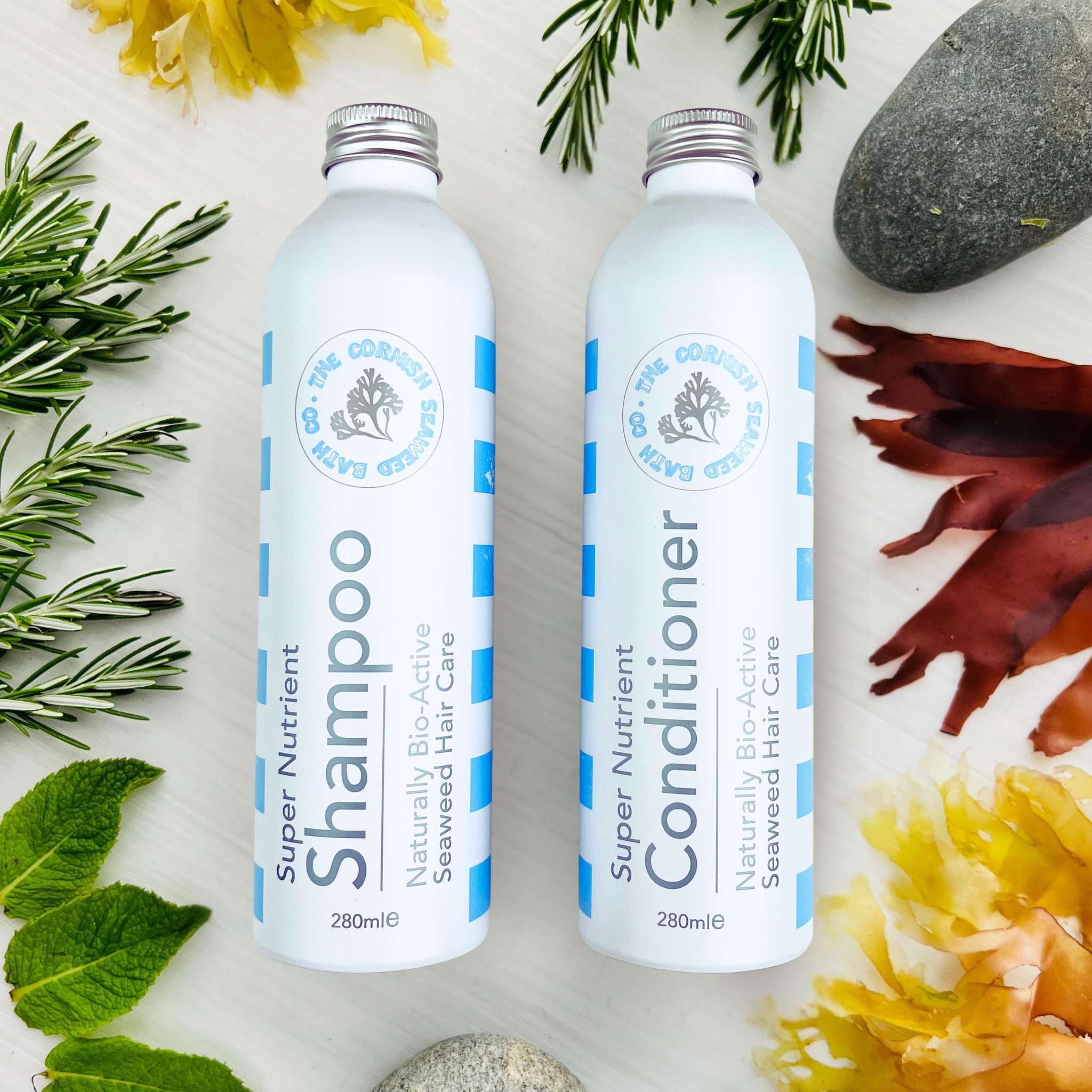
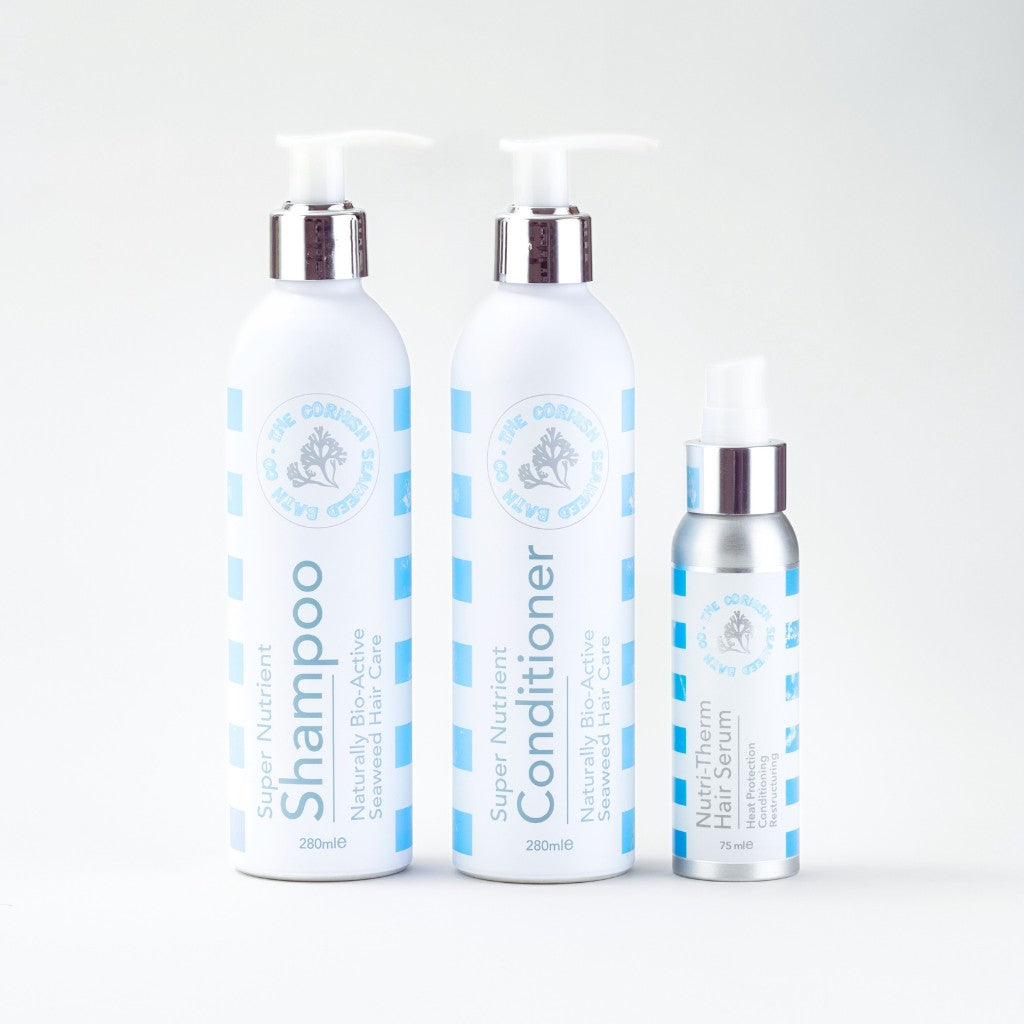
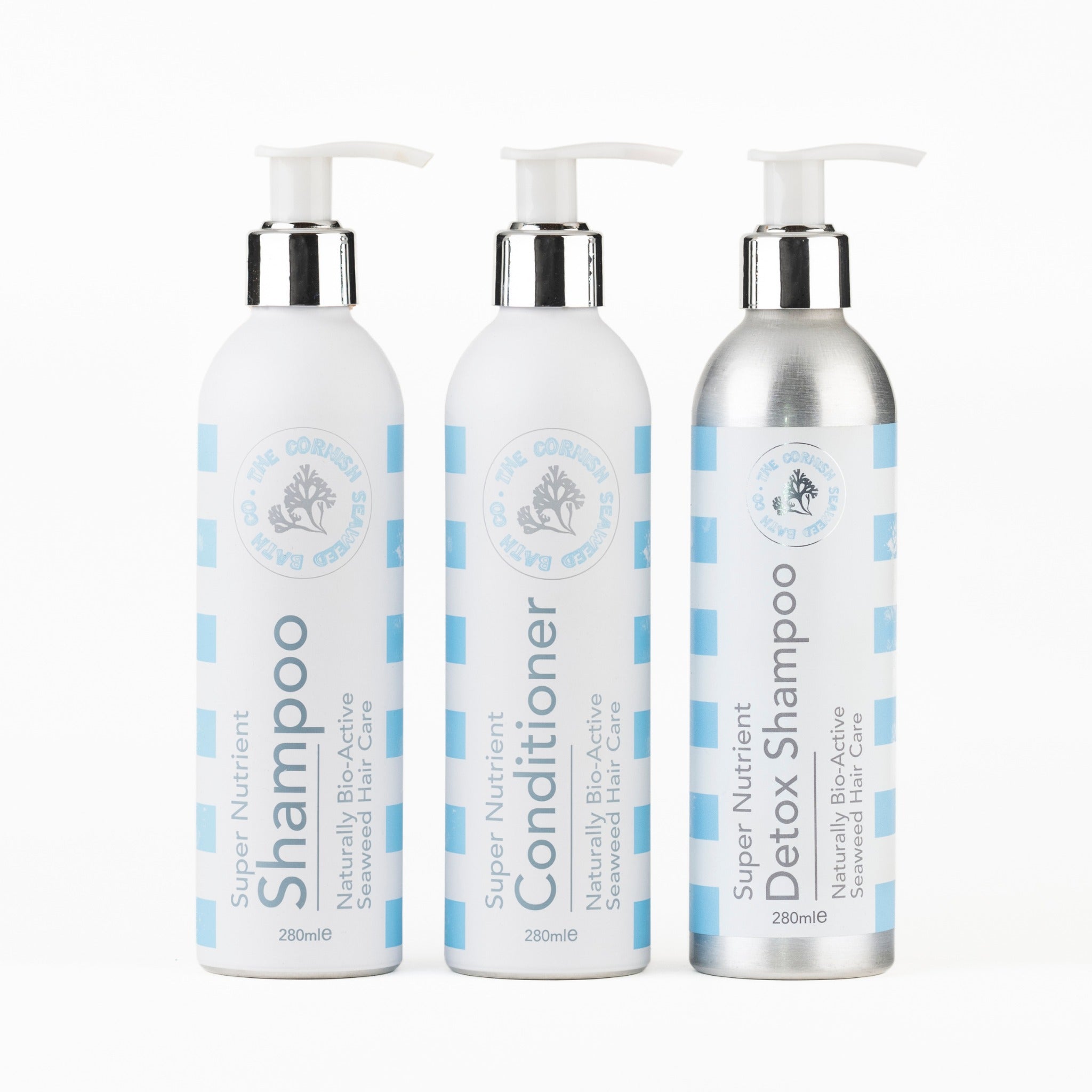
The Super Nutrient Shampoo suits everyday cleansing, combining Fucus serratus seaweed with argan oil, oat kernel oil, and D-panthenol. It's a gentle, nourishing wash that keeps strands soft and manageable. The Super Nutrient Detox Shampoo uses stronger, natural, sulphate-free cleansers -- the better choice when your scalp accumulates build-up more readily or feels congested and weighed down between washes.
Considering Your Scalp's Specific Needs
Menopausal skin -- including the scalp -- can become drier or more reactive. Clary sage and rosemary, present in both our shampoos, are traditionally associated with scalp comfort. Mint brings a cooling quality that many find grounding after a long day. If your scalp feels tight or flaky, these botanical elements may make a real difference to how it feels between washes.
Beyond the Bottle: Supporting Hair Health More Broadly
Scalp Care as a Ritual
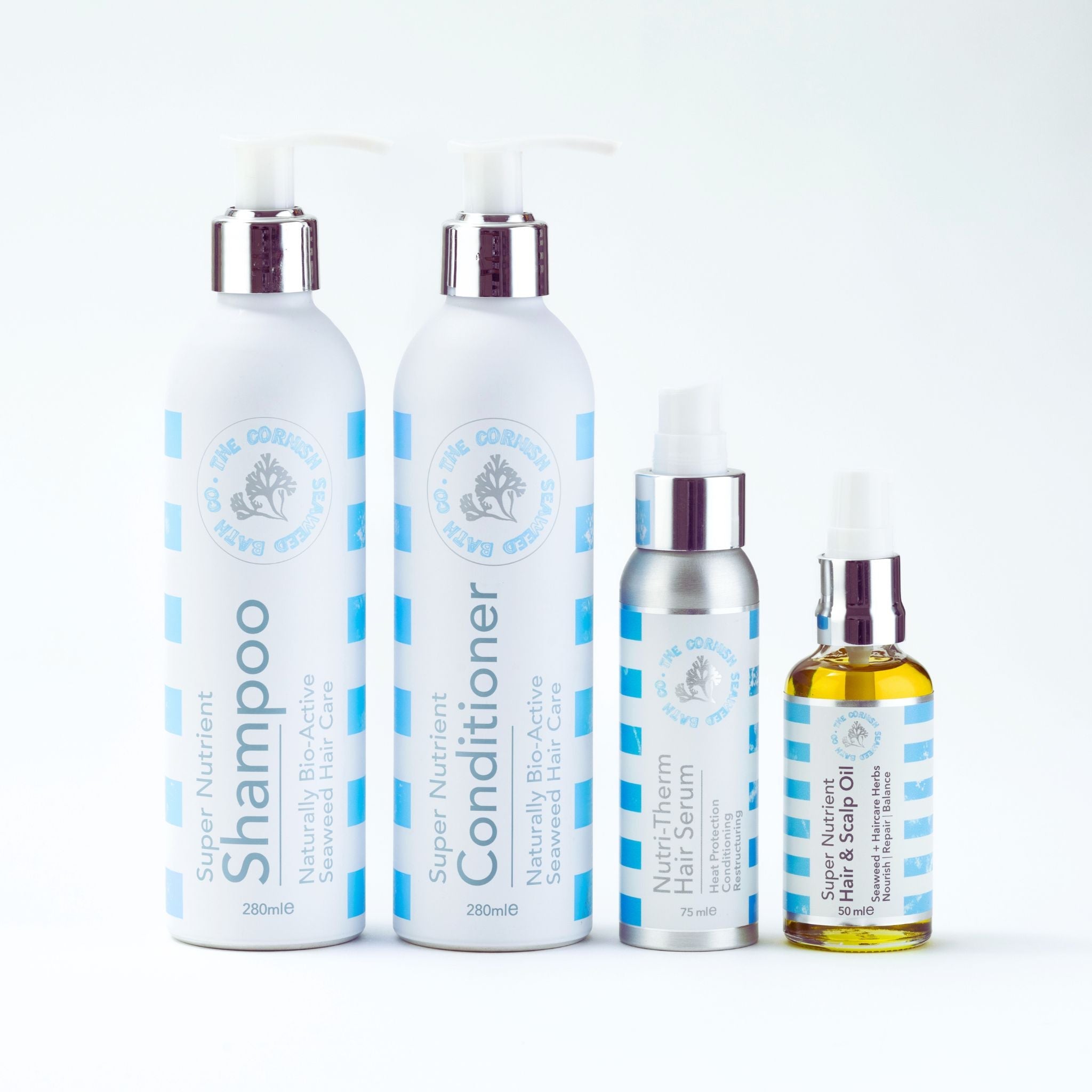
Gentle scalp massage during washing encourages circulation and can help distribute natural oils more evenly. Our Super Nutrient Hair and Scalp Oil contains eucommia bark, tuber fleeceflower root, and broccoli seed oil alongside jojoba, oat kernel, and castor seed oils. Worked into the scalp 20 mins before showering or overnight for a deeper treatment, it supports the follicle environment as part of a regular care ritual. Follow the directions on the product label and our website for guidance.
What You Eat Matters Too
Adequate protein, iron, zinc, and B vitamins underpin healthy hair growth. Midlife dietary shifts can quietly create gaps worth addressing -- through food first, and where needed, supplementation discussed with a healthcare professional. Managing sleep and stress is worth taking seriously, too; elevated cortisol genuinely impacts the hair cycle, and it's easy to underestimate that connection.
Give It Time
Hair grows slowly. Switching products every few weeks rarely gives any formula a fair chance. A consistent routine over several months is far more likely to show results. Set realistic expectations, keep your routine steady, and trust the process.
A Note on Our Approach
Our Haircare formulas are built around sustainably harvested Cornish Fucus serratus seaweed, sulphate-free cleansers, and thoughtfully chosen botanicals. If you're thinking about reducing your routine's environmental footprint, shorter showers, using the right amount of product, and recycling your packaging are all straightforward steps that don't require compromising on results.
There's no one-size-fits-all answer when it comes to thinning hair during menopause -- but gentle, botanically rich, sulphate-free shampoos can give your scalp a genuinely supportive foundation. Pair that with good nutrition, a mindful scalp care ritual, and a little patience. Our Haircare range is formulated with exactly that in mind.
Frequently Asked Questions
What can help with thinning hair during menopause?
During menopause, hair thinning often comes from hormonal shifts and other factors like nutritional gaps. A gentle, supportive approach includes using sulphate-free shampoos rich in botanicals to nourish the scalp. Considering a holistic view with diet and stress management can also be helpful.
What kind of shampoo is best for menopausal hair loss?
For menopausal hair loss, look for shampoos that are sulphate-free and rich in natural ingredients. These formulas help maintain the scalp's moisture balance while delivering nourishing botanicals. Our Super Nutrient Shampoo, with Fucus serratus seaweed, argan oil, and D-panthenol, offers gentle cleansing and support for softness and moisture.
Which ingredients should I look for in a shampoo for thinning menopausal hair?
When choosing a shampoo for thinning menopausal hair, seek out ingredients like Fucus serratus seaweed, known for its mineral richness to support scalp condition. Botanical allies such as tuber fleeceflower root, Angelica sinensis, argan oil, and oat kernel oil can also support scalp comfort and hair moisture. D-panthenol is another lovely addition for moisture retention.
Are there any shampoo ingredients I should avoid if my hair is thinning due to menopause?
Yes, it's wise to avoid ingredients that can be harsh on already sensitive menopausal hair. Sodium lauryl sulphate can strip natural oils, while synthetic silicones might build up and weigh fine hair down. Alcohol-heavy formulas can also contribute to dryness, so opting for gentle, natural cleansers is a kinder choice.
Besides shampoo, what else can support hair health during menopause?
Beyond choosing a supportive shampoo, nurturing your scalp with gentle massage can encourage circulation. A holistic approach also includes a balanced diet with adequate protein, iron, zinc, and B vitamins. Managing stress and ensuring restful sleep are also wonderful ways to support overall hair health from within.
How can I tell if my hair thinning is related to menopause?
Common signs of menopausal hair thinning include diffuse thinning across the crown, a widening hair parting, and noticing more hair on your brush or in the shower. This thinning is usually gradual and widespread, rather than sudden or patchy. If you have concerns, a conversation with your GP can help rule out other factors.