 Spring Sale!



Key Takeaways
- Skin is the body's largest organ.
- It forms a protective outer covering.
- Skin helps regulate body temperature.
- It senses the environment.
- Skin shields internal structures from external threats.
Table of Contents
- Introduction: Your Skin as Nature's Gentle Guardian
- Defining Skin – The Largest Organ in Your Body
- The Three Main Layers of Skin – A Layered Foundation
- Key Functions of Your Skin – Protection, Sensation, and Balance
- Skin Variations and Comparisons – Understanding Your Unique Type
- How Skin Regenerates and Heals – Nature's Continuous Renewal
- Nurturing Your Skin Barrier – Practical Care from Cornwall's Coastal Knowledge
- Common Skin Challenges and Gentle Solutions
Introduction: Your Skin as Nature's Gentle Guardian
What is the definition of skin? Skin is your body's largest organ, forming a protective outer covering that regulates temperature, senses the environment, and shields internal structures from external threats.
You encounter your skin every moment, yet its quiet work often goes unnoticed. This remarkable organ spans roughly 2 square metres across an average adult, weighing 4-5 kilograms and containing approximately 19 million cells per square inch. We see it as the canvas for your daily rituals, deserving care rooted in nature's wisdom. Explore our full range of skincare to discover products designed to support your skin's natural resilience.
Here, we explore skin's definition, structure, and nurturing practices through Cornwall's coastal perspective, where resilient seaweed like Fucus Serratus has long supported healthy skin traditions. Understanding what skin truly is guides you towards honouring its natural resilience. For more on the benefits of seaweed in wellness, read about the benefits of eating seaweed and how it can support your overall health.
Defining Skin – The Largest Organ in Your Body

What is the definition of skin in biological terms? Skin comprises the integumentary system, including its core layers plus hair follicles, nails, sebaceous glands, and sweat glands. This complex structure serves as your body's frontline defence against environmental stressors, pathogens, and temperature fluctuations.
Why is skin considered the largest organ? Across an average adult, it spans approximately 2 square metres and weighs 4-5 kilograms, significantly larger than your liver (1.5kg) or lungs (1.3kg combined). Its thickness varies dramatically: paper-thin at 0.05mm on your eyelids, yet robust at 4mm on your palms and soles where protection matters most. Learn how moisturisers support your skin's barrier and help maintain its health across different areas of your body.
In practical terms, skin adapts constantly to your environment. Those familiar Cornish coastal winds that we know so well demonstrate this beautifully, your skin responds by adjusting oil production and barrier strength. Trace your skin's expanse by measuring from fingertip to fingertip (roughly 1.8 metres for most adults) to visualise its remarkable scale and appreciate why proper care matters.
The Three Main Layers of Skin – A Layered Foundation
Your skin organises into three distinct layers: the epidermis (outermost shield), dermis (supportive core), and hypodermis (insulating base). Each layer contributes unique functions without overlap, creating an integrated protective system.
| Layer | Thickness Range | Primary Cells | Key Function |
|---|---|---|---|
| Epidermis | 0.05-1.5mm | Keratinocytes | Barrier protection |
| Dermis | 0.3-3mm | Fibroblasts | Elasticity & sensation |
| Hypodermis | 1-30mm | Adipocytes | Insulation & cushioning |
Press gently on your forearm to sense these distinctions: feel the epidermis yield slightly, the dermis resist with firmness, and the hypodermis provide cushioning beneath. This simple technique helps you understand your skin's layered architecture.
Epidermis – Your Renewing Outer Barrier
The epidermis consists primarily of keratinocytes that produce keratin protein, creating a waterproof barrier. This avascular layer (no blood vessels) regenerates completely every 28-30 days, with new cells forming at the base and gradually moving upward. It also hosts melanocytes for UV-protective melanin and Langerhans cells for immune surveillance.
This layer prevents up to 500ml of daily water loss while blocking pathogen entry. Apply a pea-sized amount of cleanser, massaging for 30 seconds to support natural renewal without stripping protective oils. Our Renewal Facial Cleanser combines saponified olive and coconut oils with Fucus Serratus seaweed to cleanse gently, rinse within one minute to preserve the barrier. For more on facial cleansing, discover what is cleanser for face and how to choose the right one for your skin type.
Under microscopic examination, you'll identify the epidermis by its distinctive stratified squamous cells arranged in layers. These flatten as they rise, eventually shedding as the outermost stratum corneum.
Dermis – The Nourishing Middle Layer
The dermis comprises 90% of your skin's thickness, rich in collagen and elastin fibres that provide elasticity and strength. This vascular layer houses blood vessels, nerve endings, hair follicles, sebaceous glands, and sweat glands. Approximately 1,000 nerve endings per square centimetre detect touch, pressure, temperature, and pain.
Pat (don't rub) after washing to preserve natural oils from sebaceous glands. Massage our Organic Super Nutrient Body Oil, containing jojoba, rosehip, and Fucus Serratus seaweed, in upward circles for two minutes nightly to nourish the dermal blood vessels that feed your skin.
The dermis contains dense fibrous connective tissue compared to the epidermis's flat cellular layers, explaining why it provides structural support while the epidermis focuses on barrier function.
Hypodermis – Your Deep Cushion and Anchor
The hypodermis, also known as subcutaneous tissue, forms the deepest layer of your skin structure. This fatty layer serves three essential purposes: insulation against temperature changes, cushioning against physical impact, and anchoring your skin to underlying muscles and bones. Unlike the cellular organisation of upper layers, the hypodermis consists primarily of adipose (fat) cells and loose connective tissue, with thickness varying significantly across body areas, typically thicker on your abdomen and thighs, thinner over bony prominences like shins.
You can gauge your hypodermis health through a simple pinch test: gently pinch the skin on your thigh between thumb and forefinger. A healthy layer measures roughly 1-2 centimetres, indicating adequate insulation and energy storage. After bathing, support this protective layer by applying our Wild Seaweed Skin Repair Balm, which combines sunflower oil, organic shea butter, and Fucus Serratus seaweed to nourish areas where the hypodermis works hardest, elbows, knees, and heels.
Key Functions of Your Skin – Protection, Sensation, and Balance
Beyond its structural layers, your skin performs five critical functions that maintain your body's equilibrium with the environment. These include thermoregulation through sweat production and blood vessel dilation, vitamin D synthesis when exposed to ultraviolet light, wound healing through cellular regeneration, immune defence via specialised cells, and sensory perception through thousands of nerve endings. Understanding what the definition of skin is requires recognising these interconnected roles that operate continuously, often without conscious awareness.
Top 5 Skin Functions
- Barrier Protection: Prevents water loss and pathogen entry
- Sensation: Detects touch, pressure, temperature, and pain
- Thermoregulation: Controls body temperature through sweat and blood flow
- Vitamin D Synthesis: Converts UV exposure to essential vitamin D
- Healing: Repairs damage through cellular regeneration
Your skin's thermoregulatory function operates through two primary mechanisms: sweating to cool through evaporation, and vasodilation or vasoconstriction to release or conserve heat. When internal temperature rises, approximately 2-4 million sweat glands activate, potentially releasing up to 3 litres of fluid per hour during intense activity. For vitamin D synthesis, expose your arms to midday sunlight for 10-15 minutes (avoiding peak UV hours), then apply our Sky Organic Facial Oil within three minutes. This oil's blend of Ulva Lactuca seaweed and organic camellia oil supports skin recovery after controlled sun exposure.
The healing function demonstrates your skin's remarkable regenerative capacity. Minor wounds progress through three distinct phases: inflammation (days 1-3), proliferation (days 4-21), and remodelling (weeks to months). During inflammation, blood vessels dilate to deliver immune cells and nutrients. Support this natural process by maintaining clean wounds and using gentle, nourishing products. Our Wild Cornish Seaweed Bath, containing Fucus Serratus seaweed and Dead Sea salt, creates a soothing 20-minute soak that supports your skin's natural healing environment without disrupting the delicate repair process.
For monthly self-examination, use the ABCDE method for monitoring moles and skin changes: Asymmetry, Border irregularity, Colour variation, Diameter larger than 6mm, and Evolving characteristics. This systematic approach helps you recognise when professional consultation may be beneficial, supporting your skin's protective function through informed awareness.
Skin Variations and Comparisons – Understanding Your Unique Type

Human skin varies dramatically in thickness, structure, and function across body regions and between individuals. Thick skin, found on palms and soles, measures 1.5-4mm and lacks hair follicles but contains extra epidermal layers for enhanced protection. Thin skin covers most of your body at 0.05-0.5mm thickness, featuring abundant hair follicles and sebaceous glands for sensation and thermoregulation. This variation reflects evolutionary adaptation, your palms developed thickness for gripping, whilst eyelids remained thin for movement and sensitivity.
| Aspect | Thick Skin (Palms/Soles) | Thin Skin (Face/Body) |
|---|---|---|
| Thickness | 1.5-4mm | 0.05-0.5mm |
| Hair Follicles | Absent | Abundant |
| Epidermal Layers | 5 distinct layers | 4 layers |
| Primary Function | Protection and grip | Sensation and regulation |
| Sebaceous Glands | Few or absent | Numerous |
Skin type classification typically focuses on sebum production levels, which determine whether your skin appears oily, dry, combination, or normal. What is the definition of skin? Beyond its biological classification, your skin adapts constantly, producing more sebum in humid conditions, thickening where friction occurs, and adjusting its barrier function based on environmental demands. For a deeper scientific overview, see the Wikipedia entry on human skin.
Key Insight: Understanding your skin type helps you choose appropriate care, but remember that skin characteristics can shift with seasons, hormones, and age. What matters most is supporting its natural barrier function rather than fighting against its inherent tendencies.
Practical application: Test your skin type by gently pressing a clean tissue to your face one hour after cleansing. Shine indicates active sebaceous glands; flaking suggests dryness. For balanced care, our Sand Organic Facial Oil offers jojoba oil and Fucus Serratus seaweed that adapts to varying skin needs, apply 2-3 drops whilst skin is slightly damp for optimal absorption.
How Skin Regenerates and Heals – Nature's Continuous Renewal
Your skin operates as a living factory, constantly producing new cells whilst discarding old ones through a precisely orchestrated process called keratinisation. This remarkable regenerative capacity allows your skin to heal from daily wear, environmental damage, and minor injuries without conscious effort on your part.
The regeneration cycle: New keratinocytes form in the basal layer of your epidermis, gradually migrating upward over 28-30 days. As they travel, these cells flatten, lose their nuclei, and fill with keratin protein before reaching the surface as protective dead cells that eventually shed. This process slows with age, regeneration can extend to 40-45 days in mature skin, explaining why healing takes longer as we age.
Wound healing phases: When injury occurs, your skin initiates a three-stage repair process. Inflammation (days 1-3) brings immune cells to clean the wound. Proliferation (days 4-21) rebuilds tissue through rapid cell division. Remodelling (weeks to months) strengthens the new tissue, though complete restoration depends on wound depth and individual healing capacity. For more in-depth medical detail, refer to this resource on skin structure and function.
Supporting natural healing: Gentle cleansing prevents infection whilst avoiding disruption of healing tissue. Our Wild Cornish Seaweed Bath combines Fucus Serratus seaweed with Dead Sea salt to create a soothing soak that supports skin comfort during the healing process, add the seaweed pouch to warm water and soak for 15-20 minutes.
Nurturing Your Skin Barrier – Practical Care from Cornwall's Coastal Knowledge
Effective skin care centres on maintaining your natural barrier function rather than attempting to dramatically alter your skin's inherent characteristics. This approach, inspired by Cornwall's resilient coastal environment, focuses on supporting your skin's own protective mechanisms through thoughtful, consistent practices.
Essential barrier support principles: Cleanse gently to remove impurities without stripping natural oils. Hydrate promptly after washing whilst skin remains slightly damp to lock in moisture. Protect from environmental stressors including harsh winds, extreme temperatures, and excessive UV exposure. These fundamentals apply regardless of your specific skin type or concerns.
Daily care routine foundations: Begin with our Renewal Facial Cleanser, using a pea-sized amount massaged gently for 30 seconds before rinsing with cool water. The saponified olive oil, coconut oil, and Fucus Serratus seaweed cleanse effectively whilst maintaining your skin's natural pH balance. Follow immediately with appropriate moisturisation, our Sea Organic Facial Oil provides jojoba oil and citrus oils that absorb quickly without leaving residue.
Weekly intensive care: Support your skin's renewal process with our Organic Body Scrub once weekly. The pink Himalayan salt and Fucus Serratus seaweed combination gently removes accumulated dead cells whilst jojoba oil prevents over-drying. Apply to damp skin using circular motions for one minute, then rinse thoroughly. This practice enhances your skin's natural exfoliation process without causing irritation. You may also be interested in why natural hair is the best for a holistic approach to personal care.
| Skin Concern | Barrier Support Strategy | Recommended Product | Application Method |
|---|---|---|---|
| Dryness | Immediate post-cleanse hydration | Organic Super-Nutrient Facial Oil | 3 drops on damp skin, morning and evening |
| Sensitivity | Fragrance-free, minimal ingredients | Fragrance Free Seaweed Soap | Gentle lather, 20-second contact time |
| Environmental exposure | Protective barrier enhancement | Wild Seaweed Skin Repair Balm | Thin layer on exposed areas before outdoor activities |
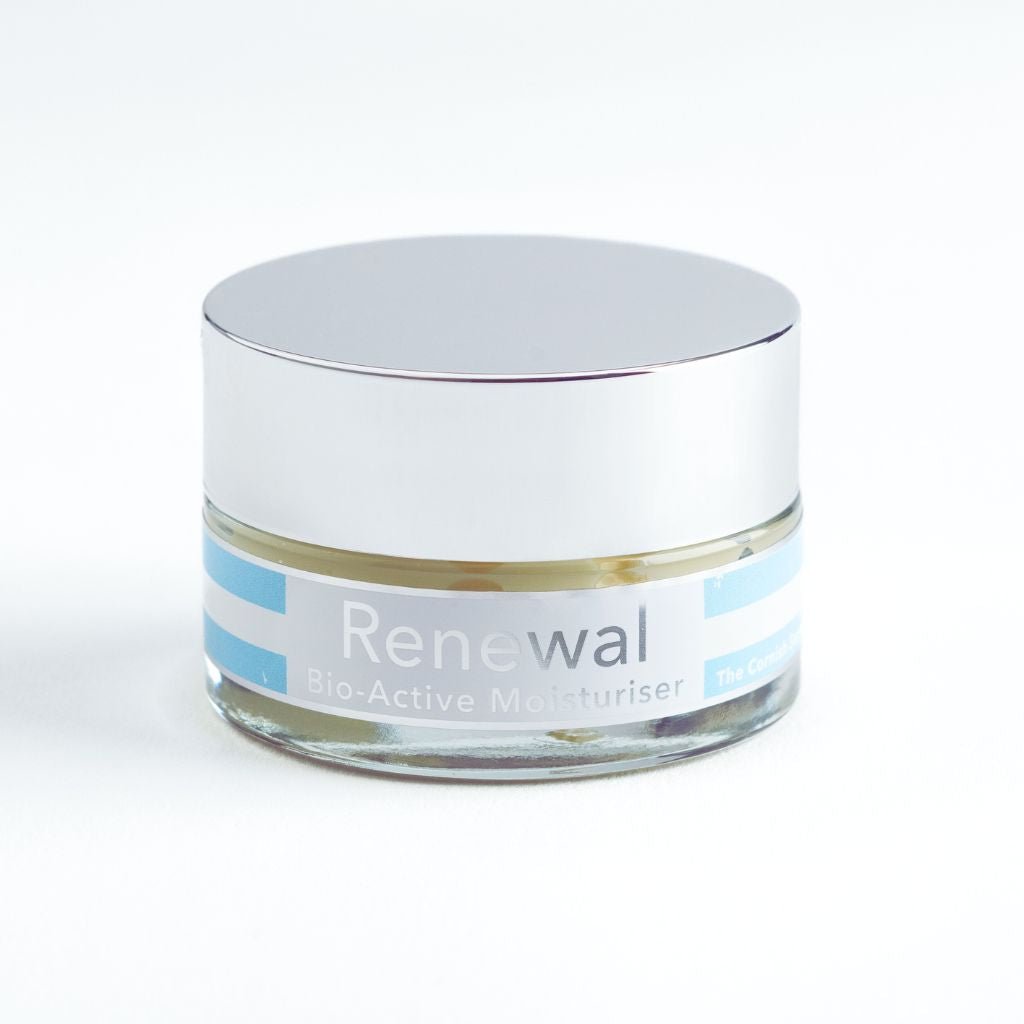
| Aging concerns | Nutrient-rich support | Renewal Bio-Active Moisturiser | Upward massage motions, focus on areas of concern |
Common Skin Challenges and Gentle Solutions

Most skin concerns stem from barrier dysfunction rather than inherent skin defects. Supporting your skin with gentle, nourishing products and consistent care helps maintain its natural resilience and comfort.
Frequently Asked Questions
What are the three main layers of the skin and what are their specific functions?
The skin consists of three main layers: the epidermis, which acts as a protective barrier; the dermis, providing strength and elasticity through connective tissue; and the hypodermis, which cushions and insulates the body. Each layer plays a distinct role in maintaining skin’s resilience and overall health.
Why is skin considered the largest organ in the human body?
Skin is considered the largest organ because it covers roughly 2 square metres on an average adult and weighs between 4 to 5 kilograms. This extensive surface area and weight surpass other organs, reflecting its vital role as the body’s primary protective covering.
How does skin adapt to different environmental conditions, such as coastal winds?
Skin adapts to environmental conditions by adjusting its oil production and barrier function to protect against moisture loss and irritation. For example, exposure to coastal winds can prompt the skin to strengthen its natural defences to maintain balance and comfort.
What role does seaweed like Fucus Serratus play in supporting healthy skin?
Seaweed such as Fucus Serratus is valued for its nourishing properties, helping to soothe and support the skin’s natural barrier. Incorporated in skincare formulations, it contributes to maintaining skin’s hydration and resilience in a gentle, environmentally respectful way.
A picture tells a thousand words: out of necessity, some images in this blog post have been created using artificial intelligence models. This is to help us bring to life & more comprehensively express the written content within this post. We only using artificially generated images when we don’t have a suitable image available to us.