 Spring Sale!



Key Takeaways
- Choosing the best purple shampoo in the UK depends on matching pigment strength to your hair colour and condition.
- Proper use of purple shampoo helps maintain icy platinum, brighten natural grey, or tone highlighted brunette hair.
- Applying the right formula at the correct frequency prevents brassiness effectively.
- Using purple shampoo correctly avoids over-ashing and keeps hair looking natural.
Table of Contents
Best Purple Shampoo UK: A Calm, Practical Guide to Brass-Free Blonde & Grey Hair in 2025
Finding the best purple shampoo UK for your blonde or grey hair means matching pigment strength to your specific colour level and hair condition. Whether you're maintaining icy platinum, brightening natural grey, or toning highlighted brunette sections, the right formula applied at the correct frequency prevents brassiness without over-ashing your hair.
Purple shampoo works through colour theory, violet pigments neutralise yellow tones by sitting opposite on the colour wheel. However, not all formulas suit every hair type, and timing matters as much as product choice. Too strong a pigment or too long a contact time can leave hair looking dull or grey, while too gentle an approach won't shift stubborn brassiness.
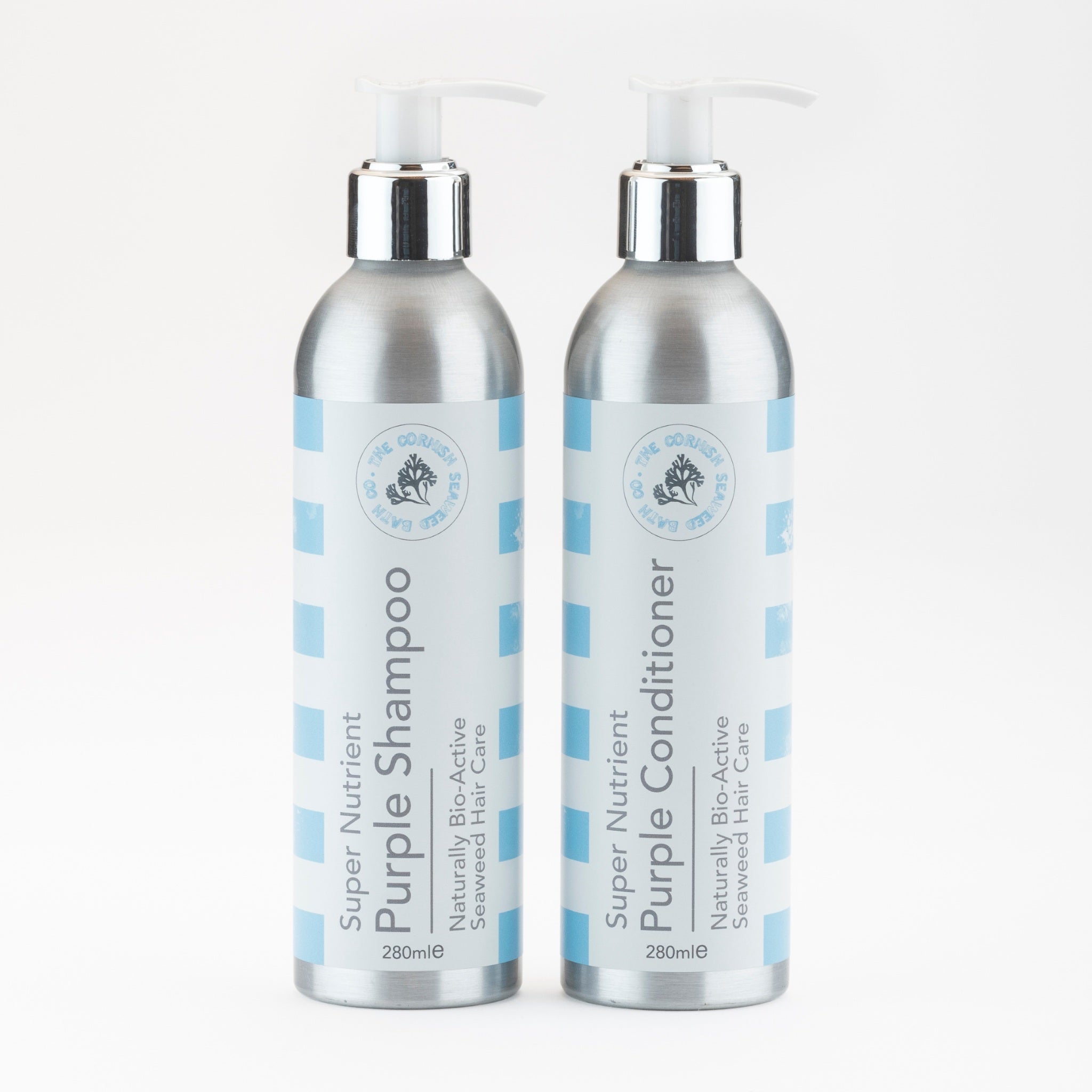
For those seeking a comprehensive routine, the Complete Super Nutrient Purple Haircare Set offers a full solution for maintaining vibrant, brass-free hair. If you prefer to start with a single product, the Super Nutrient Purple Shampoo is a standout choice for effective toning and gentle cleansing.
What Purple Shampoo Is – And Why It Works on Brassiness

Understanding Brassiness in Blonde, Grey and Highlighted Hair
Brassiness appears as unwanted yellow, orange, or gold tones that develop in lightened hair over time. When hair is bleached or chemically lightened, the natural melanin pigments are broken down, leaving behind underlying warm tones that become more visible as the artificial colour fades or oxidises. This process happens gradually through daily exposure to environmental factors.
Lighter hair shows these warm undertones more clearly than darker hair because there's less natural pigment to mask them. Grey hair can also develop yellowish casts, particularly in areas exposed to more pollution or product buildup. The porosity of lightened hair makes it more susceptible to absorbing environmental particles that contribute to dulling.
- Heat styling tools that create oxidation over time
- Hard water containing minerals that build up on the hair shaft
- Chlorine from swimming pools
- Smoke and pollution particles
- Product buildup that creates a film over the hair cuticle
How Purple Shampoo Neutralises Yellow Tones (Colour Theory Made Simple)
Purple shampoo works through basic colour theory principles. On the colour wheel, purple sits directly opposite yellow, making these colours complementary. When complementary colours are placed together, they neutralise each other visually. Purple pigments in the shampoo don't remove yellow tones but instead deposit violet pigments that counteract the appearance of warmth. For a deeper dive into the science behind this, see this overview of colour analysis.
The violet pigments in purple shampoo create a sheer tint that adjusts how light reflects from your hair strands. This optical effect gives the appearance of cooler, more neutral tones. The process is temporary and gradual – purple shampoo doesn't chemically alter your hair's structure or permanently change its colour. Regular use maintains this neutralising effect as the deposited pigments wash away over several shampoos.
Purple Shampoo vs Regular Shampoo vs Toner
Regular shampoo focuses primarily on cleansing the scalp and removing dirt, oil, and product buildup from hair strands. Most standard shampoos contain no colour-correcting pigments and are formulated to clean without depositing additional colour. They maintain hair and scalp health but don't address tonal concerns.
Purple shampoo combines cleansing action with violet pigments for gentle, ongoing tonal maintenance. It provides regular cleansing while depositing small amounts of colour-correcting pigments with each use. This makes it suitable for maintenance between professional colour appointments but less effective for dramatic colour corrections.
Professional salon toners use oxidative or demi-permanent colour chemistry to create more precise, longer-lasting tonal changes. These treatments can shift hair colour more dramatically and typically last 4-8 weeks. Toners work at the cuticle level and can be customised to achieve specific shades that purple shampoo cannot replicate.
- Use purple shampoo for ongoing maintenance between salon visits
- Choose regular shampoo for daily cleansing without tonal adjustment
- Book professional toner when hair has shifted significantly warm or needs precise colour correction
How to Choose the Best Purple Shampoo in the UK for Your Hair
Match Pigment Strength to Your Hair Colour Level
Purple shampoos range from low-pigment formulas that appear almost clear with a slight violet tint, to high-pigment versions that look deeply coloured in the bottle. The intensity of pigmentation determines how quickly and dramatically the shampoo will affect your hair's tone. Choosing the wrong strength can result in over-toning or insufficient colour correction.
Your starting hair colour level determines which pigment strength will work most effectively. Darker blonde hair typically needs less intense pigmentation, while very light or porous hair may require careful timing even with medium-strength formulas to avoid unwanted ashy results.
- Natural dark blonde or highlighted brunette: start with low to medium pigment formulas
- Light blonde or cool beige tones: medium pigment with 2-3 minutes contact time
- Icy platinum, silver or very pale grey: medium to high pigment with careful timing, often 1-3 minutes initially
For more tips on maintaining healthy hair while using toning products, check out our guide to the best shampoos for healthy hair.
Consider Your Hair Texture: Fine, Thick, Curly or Coarse
Hair texture affects how purple shampoo absorbs and how long it should remain on your hair. Fine hair tends to absorb pigments more quickly and can become over-toned with extended contact times, while thicker hair may need longer application periods to achieve the same result.
Fine or thin hair: Look for lighter, fluid formulas that rinse cleanly without leaving residue. Avoid heavily conditioning purple shampoos that might weigh down roots or create a flat appearance.
Thick or coarse hair: Richer textures that spread easily work best. You may need slightly longer contact times, typically up to 5 minutes, as thicker hair cuticles can be less porous.
Curly or coily hair: Prioritise purple shampoos described as moisturising or hydrating. Always follow with a substantial conditioning treatment to maintain curl definition and prevent dryness.
Chemically Damaged Hair: Considerations
Sulphate-Free vs Regular Purple Shampoo
Sulphate-based cleansers create rich lather and remove oils effectively, whilst sulphate-free alternatives use gentler surfactants that may feel less stripping on dry or chemically processed hair. If you have a sensitive scalp, very dry lengths, or find that regular purple shampoos leave your hair feeling rough, sulphate-free options might suit you better.
When examining labels, look for sodium lauryl sulphate or sodium laureth sulphate in the ingredients list, these indicate traditional cleansing agents. Sulphate-free formulas often list coco-glucoside, decyl glucoside, or similar plant-derived cleansers instead. You might also see "for daily use" or "gentle toning" on sulphate-free packaging, suggesting they're designed for more frequent application.
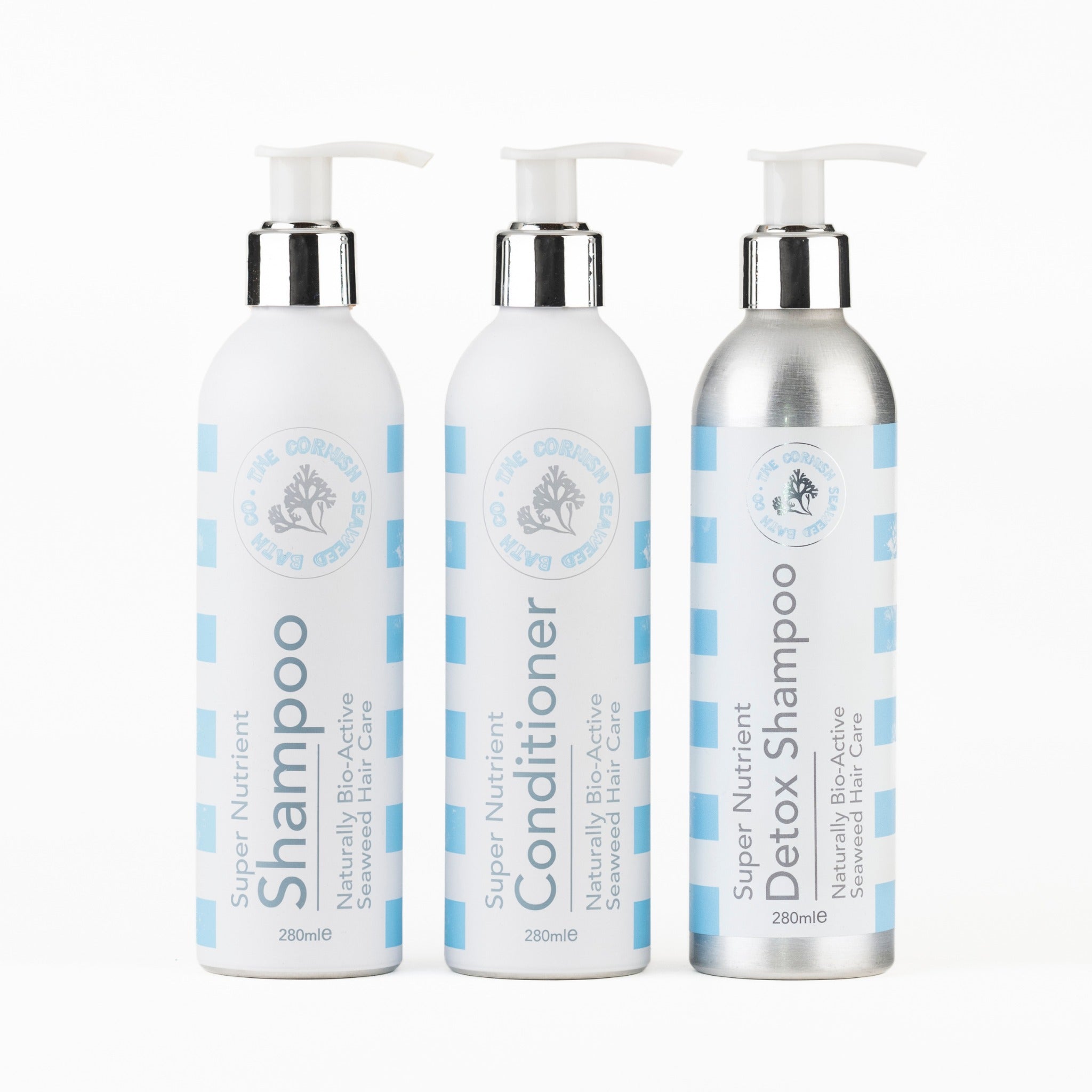
Our Super Nutrient Shampoo and Super Nutrient Detox Shampoo both use naturally derived cleansers rather than sulphates, making them excellent choices for your non-toning wash days. This approach helps maintain scalp comfort whilst ensuring your hair feels clean and manageable between purple shampoo sessions.
Ingredient Awareness: What to Look For (and What to Avoid)
Effective purple shampoos typically list violet or purple pigments early in their ingredient lists, often appearing as CI numbers or colour additives. Look for conditioning agents like panthenol, plant oils, or protein derivatives that help counteract the potentially drying effects of repeated pigment deposits. Non-stripping surfactants ensure your scalp doesn't feel tight or irritated after use.
Consider fragrance levels if you're sensitive to strong scents, as some purple shampoos can be quite heavily perfumed. If you're new to toning shampoos, be mindful of formulas that advertise very strong pigmentation, these require careful timing and may be better suited to experienced users or very brassy hair.
Our approach centres Fucus Serratus seaweed, Oat Kernel Oil, Argan Oil, and D-Panthenol in our Super Nutrient Shampoo, our Super Nutrient Detox Shampoo and our Super Nutrient Purple Shampoo. These ingredients work together to support hair feel and scalp comfort, making them ideal partners for your purple shampoo routine.
Exactly How to Use Purple Shampoo for Best Results (Step-by-Step)

Core Routine: Using Purple Shampoo on Blonde Hair
Start slowly and adjust based on how your hair responds. Most people find success by treating purple shampoo as an occasional treatment rather than a daily cleanser, allowing you to control the toning effect gradually.
- Wet hair thoroughly with warm (not hot) water for at least one minute to ensure even saturation.
- Pre-cleanse if needed with a 10p–20p-sized amount of our Super Nutrient Shampoo if hair is oily or has heavy product build-up.
- Squeeze out excess water so hair is damp but not dripping, this helps the purple shampoo distribute more evenly.
- Apply purple shampoo using a 10p–50p-sized amount depending on hair length, working from roots to ends.
- Massage gently for 30–60 seconds to ensure even distribution without tangling wet hair.
- Leave on for 2–3 minutes the first time; you can extend to 5 minutes on later uses if more toning is needed.
- Rinse until water runs clear, purple-tinted water should completely disappear before you finish.
- Follow with conditioner, such as our Super Nutrient Conditioner, focusing on mid-lengths and ends for 3–5 minutes.
For more on clarifying and prepping your hair for toning, see our article on gentle clarifying shampoo in the UK.
Using Purple Shampoo on Grey or Silver Hair
Grey hair can be more porous than pigmented hair, meaning it may absorb purple tones more quickly. This makes conservative contact times essential, especially when you're establishing your routine. Start with shorter applications and observe how your hair responds over several washes.
Begin with 1–2 minutes of contact time and assess the results before extending. Use purple shampoo no more than once weekly initially, then adjust based on how quickly yellow tones return between washes. Always condition afterwards, our Super Nutrient Purple Conditioner with Tuber Fleeceflower Root, Angelica Sinensis, and Oat Oil can help soften any wiry texture whilst keeping hair manageable.
How to Use Purple Shampoo on Highlighted Brunette, Balayage or Ombré Hair
With multi-tonal hair, you can focus the purple shampoo where your hair is lightest, avoiding over-processing your natural base colour. This targeted approach gives you more control over the final result and prevents your darker roots from picking up unwanted ash tones.
Section your hair into 2–4 parts so the lighter areas are clearly exposed. Apply purple shampoo as needed, and for a complete routine, consider the 3 Step Super Nutrient Purple Haircare Set for optimal results.
For more information on what purple shampoo does and how it works, you can read this Medical News Today article.
Frequently Asked Questions
How do I choose the best purple shampoo in the UK for my specific hair colour and condition?
Selecting the best purple shampoo depends on matching the pigment strength to your hair’s colour and condition. For icy platinum or natural grey hair, a stronger violet pigment may be suitable, while highlighted brunette hair often benefits from a gentler formula to avoid over-ashing. Considering your hair’s porosity and sensitivity helps ensure the shampoo supports your hair without dulling or drying it.
What is the correct frequency and method for using purple shampoo to avoid over-ashing or dullness?
Use purple shampoo sparingly and follow the recommended contact time to prevent over-ashing. Typically, applying a small amount to wet hair and scalp, massaging gently, then rinsing thoroughly is best. Adjust frequency based on your hair’s response, aiming to neutralise brassiness without leaving a grey or dull cast.
Why does brassiness occur in blonde, grey, or highlighted hair, and how does purple shampoo neutralise these tones?
Brassiness arises when warm yellow, orange, or gold tones become visible as lightened hair fades or oxidises, often due to environmental exposure and product buildup. Purple shampoo contains violet pigments that counteract these warm tones by sitting opposite on the colour wheel, helping to maintain a cooler, more balanced hair colour.
Are there special considerations for using purple shampoo on chemically damaged or porous hair?
Chemically damaged or porous hair tends to absorb pigments more readily, so it’s important to choose a gentle purple shampoo and limit contact time to avoid excessive ashing. Using a nutrient-rich, sulphate-free formula can support scalp health and hair strength while toning, helping to maintain balance without additional stress.
A picture tells a thousand words: out of necessity, some images in this blog post have been created using artificial intelligence models. This is to help us bring to life & more comprehensively express the written content within this post. We only using artificially generated images when we don’t have a suitable image available to us.