 It's Early Summer!





What Makes Up 90% of Hair?
Key Takeaways
- The cortex makes up 90% of hair and is the middle layer between the cuticle and medulla
- The cortex is densely packed with alpha-keratin filaments
- Disulphide bonds from cysteine amino acids cross-link the keratin filaments in the cortex
- These molecular bonds provide hair strands with significant strength and resilience
- A single hair strand can withstand about 100 grams of force before breaking due to the cortex's structure
Table of Contents
- The Cortex: The Core That Comprises 90% of Your Hair Shaft
- Keratin: The Protein Powering 95% of Your Hair's Composition
- Beyond Keratin: The Remaining 5-10% That Supports Hair Health
- Cuticle vs Cortex: Protecting the 90% Core from Outer Damage
- Hair Growth Cycle: How the Cortex Forms and Sustains Over Time
- Melanin in the Cortex: The 90%'s Role in Natural Colour and Strength
- Variations in Hair Composition Across Ethnicities and Types
- Common Cortex Damage and Targeted Solutions
The Cortex: The Core That Comprises 90% of Your Hair Shaft
When you ask "what makes up 90% of hair?", you're looking at the cortex, the substantial middle layer that sits between the protective outer cuticle and the sometimes-present inner medulla. This layer dominates because it's densely packed with alpha-keratin filaments, cross-linked by disulphide bonds from cysteine amino acids. These molecular bridges create the resilience that allows a single strand to withstand approximately 100 grams of force before breaking.
The cortex contains melanin, determining hair colour, and its disulphide bonds contribute to hair's elasticity and resistance to damage.
The cortex's bulk comes from tightly bundled protein fibres arranged in a complex hierarchy. Microfibrils combine into macrofibrils, which then form the cortical cells that make up this substantial layer. This intricate structure explains why the cortex accounts for such a significant portion of your hair's mass whilst simultaneously determining its mechanical properties.
Your daily hair experience, whether it feels strong, elastic, or brittle, stems directly from cortex health. When the cortex is well-maintained, hair can stretch up to 20% of its length when wet before snapping back, providing the flexibility needed for styling and movement.
Supporting Cortex Health Through Scalp Care
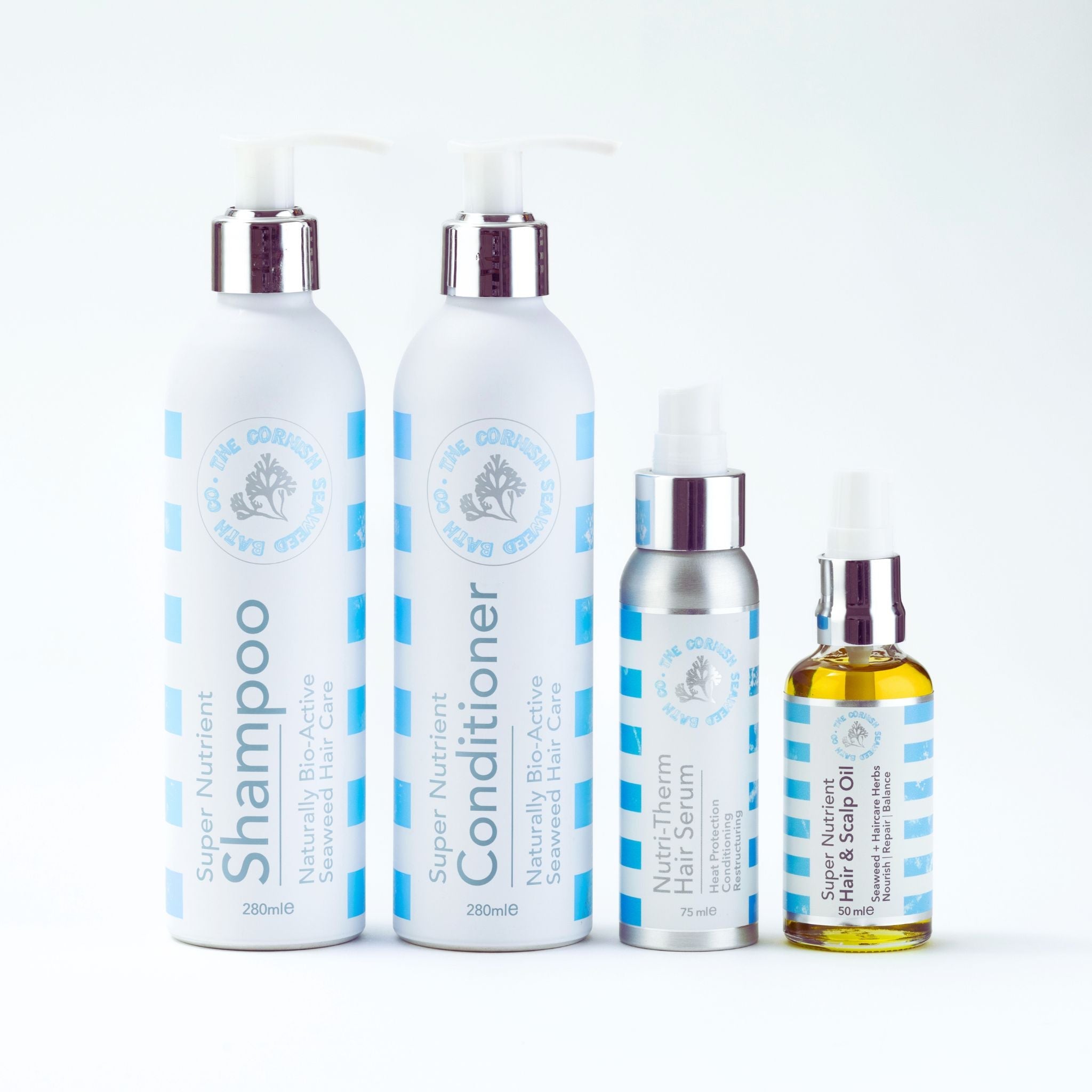
To support cortex nourishment, apply our Super Nutrient Hair & Scalp Oil as a pre-wash treatment. Pump onto scalp and comb through the lengths of the hair. Massage your scalp with fingertips for two minutes before shampooing to stimulate blood flow to follicles. Leave on for 20 minutes or overnight, then shampoo out and condition. The oat kernel oil and wild Cornish seaweed (Fucus Serratus) may help support the protein structure that makes up 90% of each strand.
For brittle ends from daily brushing, this routine may help build elasticity without weighing hair down. Leave the oil treatment in overnight weekly to allow the nutrients to penetrate the cortex layer effectively.
Keratin: The Protein Powering 95% of Your Hair's Composition
Within the cortex that comprises 90% of your hair, keratin makes up approximately 95% of the total protein content. This fibrous protein contains 18 amino acids, with cystine dominating at 10-14% to form the protective disulphide bonds that give hair its strength. The remaining elements include carbon (45%), oxygen (27%), nitrogen (16%), hydrogen (7%), and sulphur (5%).
These percentages matter because they explain why hair can withstand significant tension, each strand supports roughly 100 grams of force, whilst maintaining elasticity. The sulphur content specifically enables the cross-linking that prevents the cortex from simply unravelling under stress.
Understanding what makes up 90% of hair helps explain why protein-depleted strands feel weak and snap easily. The cortex relies on this keratin matrix to maintain its structural integrity, making proper care essential for long-term hair health.
Maintaining Keratin Integrity for Everyday Resilience
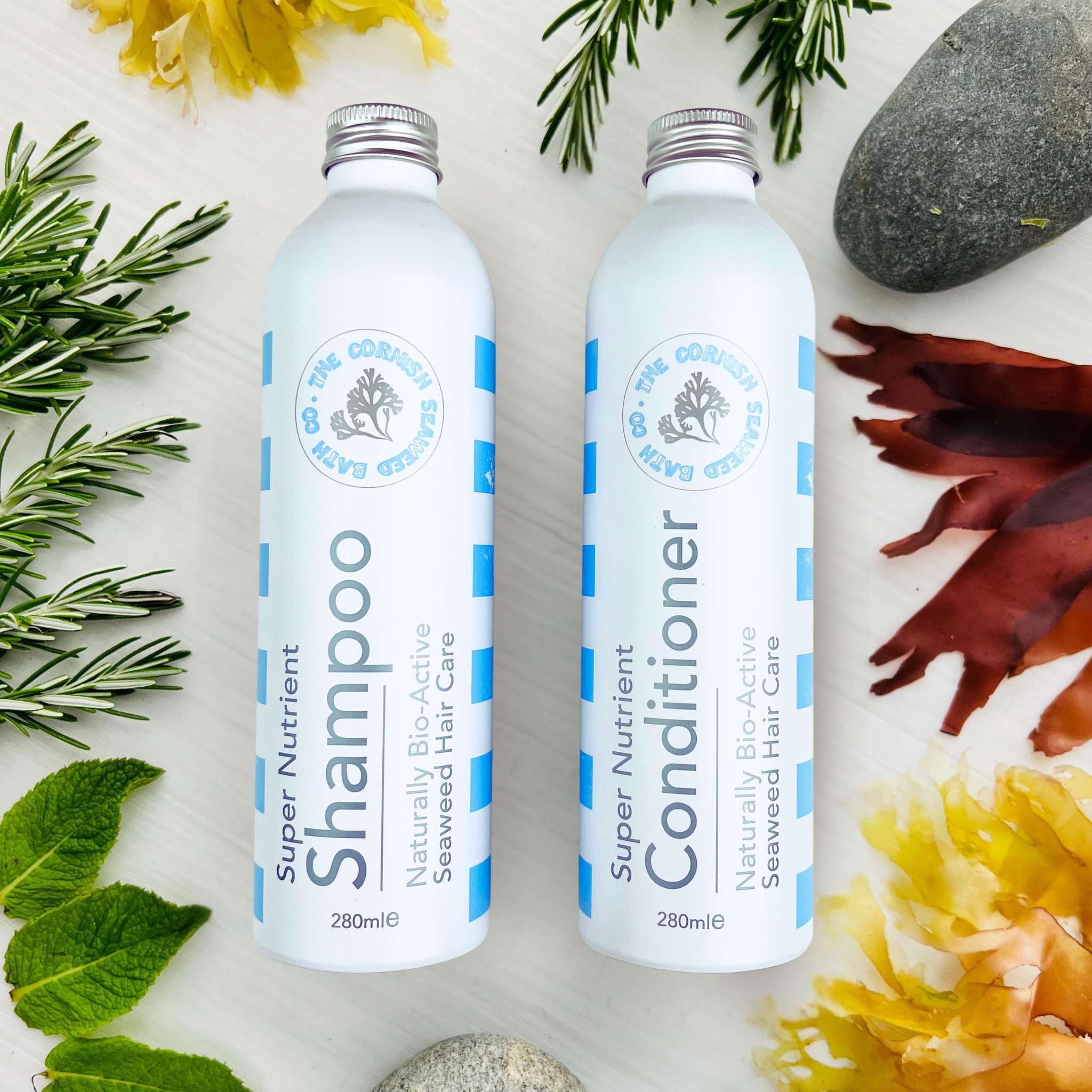
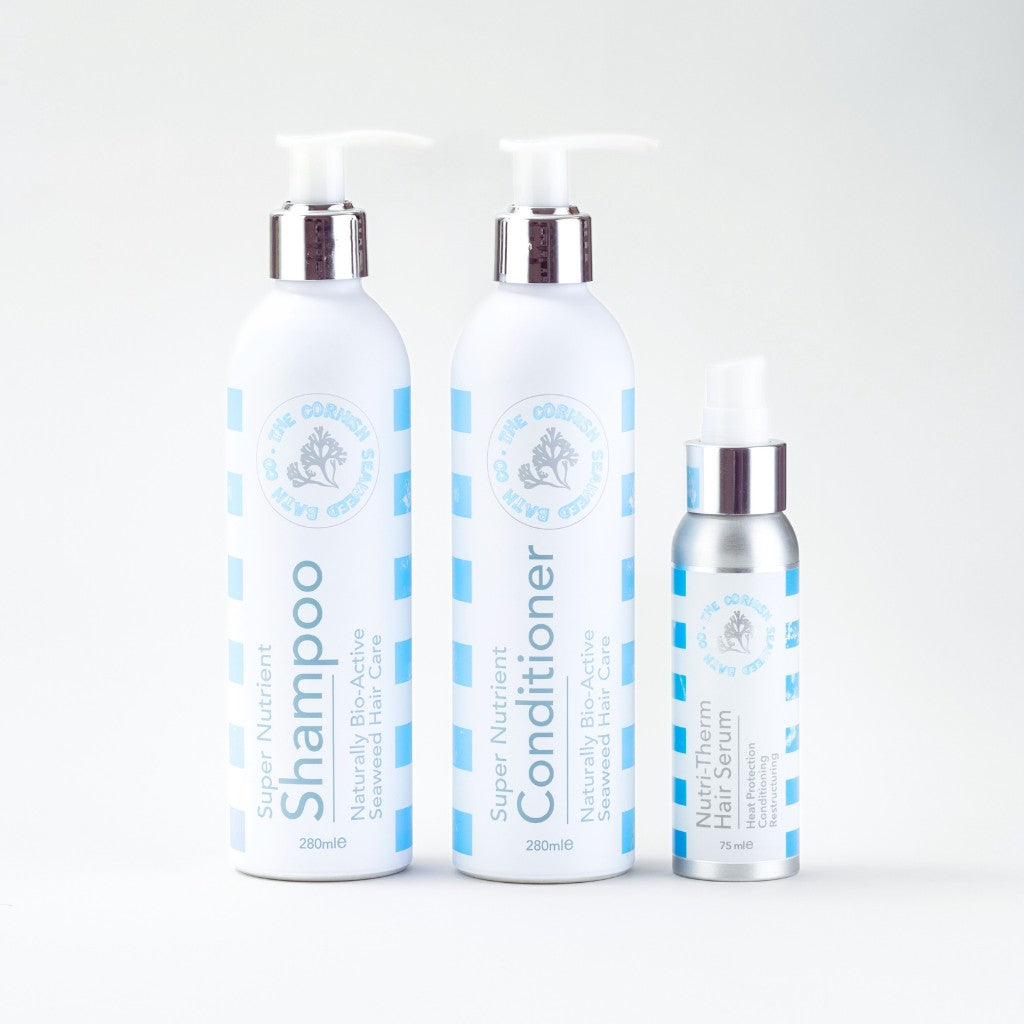
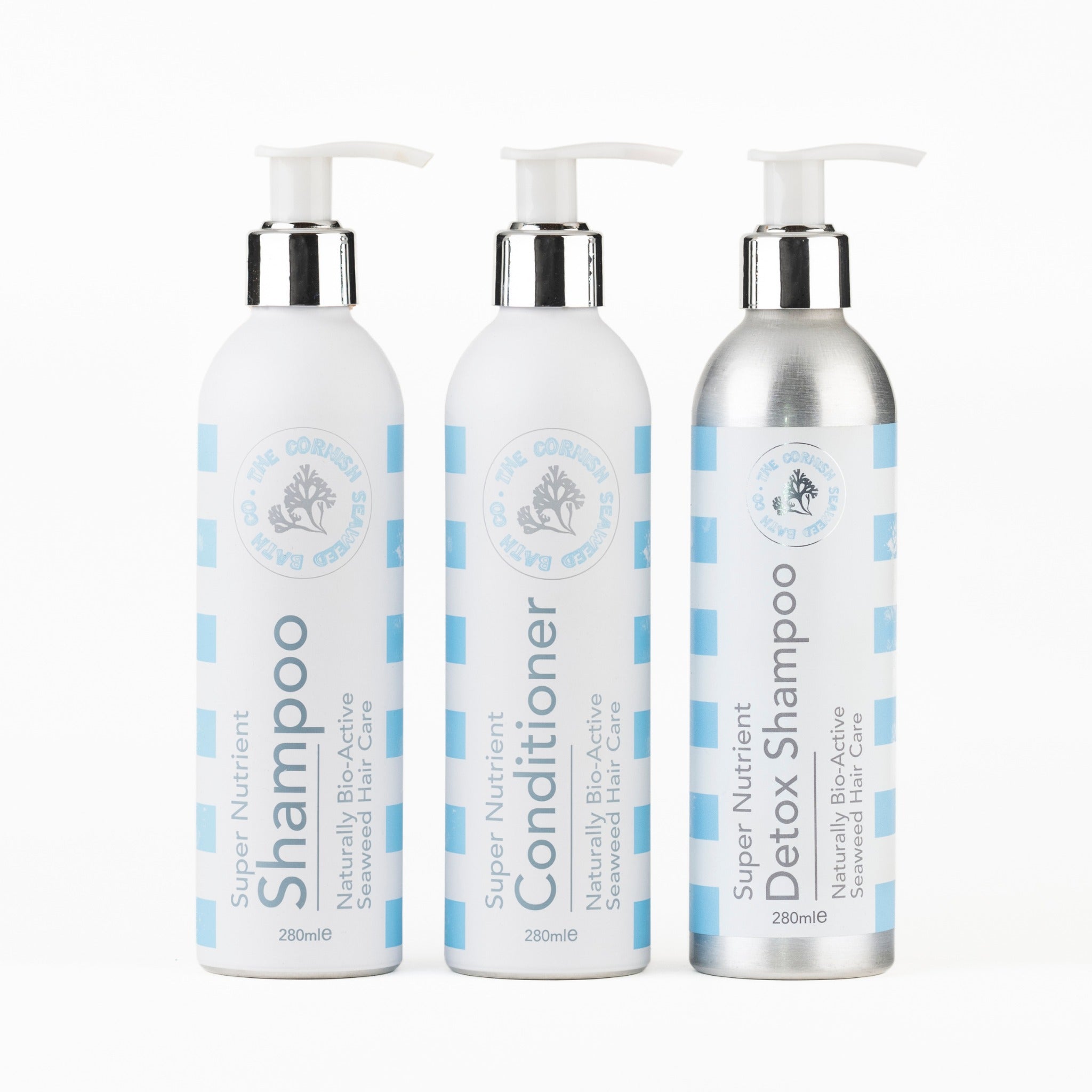
Preserve keratin bonds by using our Super Nutrient Shampoo diluted in your hands, apply a small amount to wet hair and scalp, massage gently for 60 seconds on the scalp only, then rinse thoroughly. Use lukewarm rather than hot water to prevent protein denaturation within the cortex.
Follow immediately with our Super Nutrient Conditioner, applying to wet hair focusing on mid-lengths and ends for 1-3 minutes before rinsing. The argan oil and wild Cornish seaweed (Fucus Serratus) may help support the lipid layer that protects the keratin-rich cortex from environmental damage.
Weekly, apply our Nutri-Therm Hair Serum to damp/towel-dried hair before heat styling or use as a leave-in treatment. The bamboo leaf and plant proteins may help support the existing keratin structure without overloading fine hair.
Test cortex health by gently tugging a single strand, immediate snapping indicates compromised keratin. Track improvement after four weeks of consistent care, noting increased elasticity and reduced breakage.
Beyond Keratin: The Remaining 5-10% That Supports Hair Health
| Component | Percentage | Primary Function | Location |
|---|---|---|---|
| Cortex (Keratin) | 90% | Strength & elasticity | Middle layer |
| Cuticle | 5-10% | Protection | Outer scales |
| Lipids | 1-9% | Smoothness & shine | Throughout cortex |
| Water | 6-13% | Flexibility | Cortex interior |
| Melanin | 0.1-3% | Colour & UV protection | Within cortex |
Cuticle vs Cortex: Protecting the 90% Core from Outer Damage
The cuticle serves as a protective shield for the cortex that comprises what makes up 90% of hair. Whilst the cuticle represents only 5-10% of hair's weight, damage here penetrates inward to compromise the substantial cortex layer. The cuticle consists of overlapping scales, whilst the cortex contains the dense keratin fibres that determine hair's strength.
Understanding this relationship explains why surface damage quickly affects hair's overall integrity. When cuticle scales lift or break, the cortex becomes exposed to environmental stressors, leading to protein loss from the layer that provides 90% of hair's structure.
Both layers require coordinated care, the cuticle needs gentle handling to maintain its protective function, whilst the cortex benefits from protein and lipid support to maintain its substantial mass and strength.
3 Techniques to Safeguard Both Layers
- Detangle wet hair using a wide-tooth comb from ends upward, with our Super Nutrient Conditioner providing slip protection. This may help prevent cuticle lifting that would expose the cortex to damage. Work in small sections to avoid pulling on the keratin matrix.
- Limit washing frequency to match your scalp's oil production, typically every 2-4 days, using our Super Nutrient Shampoo with a cool final rinse for 30 seconds. Hot water swells the cortex and lifts cuticle scales simultaneously.
- For heat styling, apply our Nutri-Therm Hair Serum to damp/towel-dried hair before styling. The seaweed (Fucus Serratus) and bamboo leaf may help create a protective barrier whilst supporting the underlying cortex structure.
Hair Growth Cycle: How the Cortex Forms and Sustains Over Time
The cortex that makes up 90% of hair develops during the anagen (growth) phase, which lasts 2-7 years. Within the follicle's matrix, specialised cells produce the keratin fibres that will form the substantial cortex layer. Hair grows approximately 1 centimetre monthly, with each new section containing the same 90% cortex composition.
During catagen (2-4 weeks), cortex production ceases as the follicle shrinks. The telogen phase (3 months) maintains existing cortex structure until the strand naturally sheds. Understanding this cycle helps explain why cortex damage accumulates over time, older hair sections have endured more environmental exposure.
Supporting follicle health during anagen may help ensure strong cortex formation from the root, whilst protecting existing cortex may help prevent premature weakness in older hair sections.
Supporting Cycle Phases with Scalp Nourishment
Evening scalp massage with our Super Nutrient Hair & Scalp Oil may help support anagen phase cortex development. Use fingertips for 3 minutes to stimulate blood flow to follicle matrix cells where the 90% cortex structure forms. The eucommia bark and tuber fleeceflower root are designed to provide targeted nourishment during this critical formation period.
Following natural shedding during telogen, use our Light Hold Hair Mousse for gentle hold without stressing newly emerging strands. Dispense 1-2 pumps into palm and apply through damp hair. The bamboo and eclipta may help support delicate cortex development in fresh growth without weighing down fine new hair.
Consistent application may yield visible thickness improvements in 6-8 weeks as the cortex strengthens throughout its formation cycle. Track progress by noting reduced breakage and increased elasticity in newer growth sections.
Melanin in the Cortex: The 90%'s Role in Natural Colour and Strength
Melanin embeds within the keratin matrix that makes up 90% of hair, serving dual functions of pigmentation and antioxidant protection. Eumelanin produces black and brown tones, whilst pheomelanin creates red hues. This pigment distribution throughout the substantial cortex layer determines your hair's natural colour depth and UV resistance.
The cortex's dense keratin structure houses these melanin granules, protecting them from environmental degradation. When melanin breaks down, the cortex loses both colour vibrancy and some protective capacity, making the 90% keratin structure more vulnerable to oxidative damage.
| Component | Role in Hair | Percentage Contribution | Care Impact |
|---|---|---|---|
| Keratin | Structure & strength | 95% of cortex | Requires protein support |
| Melanin | Colour & UV protection | 0.1-3% of cortex | Needs antioxidant care |
Nurturing Pigment Naturally
Shield melanin from sun damage with daily application of our Nutri-Therm Hair Serum. The wild Cornish seaweed (Fucus Serratus) provides natural antioxidants that may help protect both melanin granules and the surrounding keratin matrix from UV-induced breakdown.
For colour fading concerns, use our Super Nutrient Conditioner. The clary sage may help preserve melanin integrity whilst the argan oil supports the cortex structure that houses these pigments, potentially maintaining both colour depth and hair strength.
Variations in Hair Composition Across Ethnicities and Types
Whilst the cortex consistently makes up 90% of hair across all ethnicities, its internal structure varies significantly. African hair contains higher cystine levels (up to 14%), creating more disulphide bonds that produce the curved cortex responsible for natural curl patterns. Asian hair typically features a round cortex with uniform keratin distribution, resulting in straight growth patterns.
European hair shows intermediate cystine levels (10-12%) with oval cortex shapes that can produce waves or loose curls. These structural differences within the 90% cortex layer influence how hair responds to styling, moisture retention, and mechanical stress, requiring tailored care approaches.
Tailored Tips for Your Hair Type
- Curly hair benefits from our Light Hold Hair Mousse applied in quarter-sized amounts to damp hair. The broccoli seed oil may help penetrate the curved cortex structure more effectively than heavier oils, providing definition without disrupting natural curl patterns.
- Fine hair requires minimal product application, use our Super Nutrient Hair & Scalp Oil sparingly, focusing on ends where the cortex has experienced the most environmental exposure. Two drops distributed through lengths may provide adequate nourishment without overwhelming delicate cortex fibres.
- Coarse hair with dense cortex structure responds well to our Super Nutrient Conditioner left on for 3 minutes. The concentrated proteins can penetrate the tightly packed keratin matrix that characterises this hair type's substantial 90% cortex layer.
Common Cortex Damage and Targeted Solutions
Brittle hair indicates broken disulphide bonds within the cortex that makes up 90% of hair structure. Heat styling above 180°C and chemical processing disrupt the keratin matrix, causing the substantial cortex layer to lose its natural elasticity and strength.
Dullness signals lipid loss from the cortex surface, preventing light reflection and making hair appear lacklustre. Environmental factors like hard water minerals and UV exposure gradually strip protective lipids from the 90% cortex layer, compromising both appearance and structural integrity.
Excessive porosity occurs when the cuticle damage exposes the cortex to moisture loss and protein leaching. This creates a cycle where the weakened cortex cannot maintain proper hydration levels, leading to further structural compromise.
Step-by-Step Repair Solutions
Weekly Cortex Restoration Protocol:
- Clarify: Use our Super Nutrient Shampoo to gently remove buildup without stripping natural oils
- Condition: Apply Super Nutrient Conditioner focusing on mid-lengths and ends for 1-3 minutes
- Protect: Follow with Nutri-Therm Hair Serum on damp hair before any heat styling
- Nourish: Weekly overnight treatment with Super Nutrient Hair & Scalp Oil to support scalp health
Track improvements over 4-6 weeks, noting increased elasticity and reduced breakage as signs of cortex recovery. The wild Cornish seaweed in our formulations provides minerals and amino acids that may help support barrier function and hydration throughout the substantial cortex layer.
Frequently Asked Questions
What role does the cortex play in determining the strength and elasticity of hair?
The cortex forms about 90% of the hair shaft and contains densely packed keratin fibres that provide structural strength and elasticity. Its fibrous protein arrangement allows hair to stretch and recover, contributing to its flexibility and resilience.
How do disulphide bonds in the cortex contribute to hair's resilience and ability to withstand force?
Disulphide bonds, formed between cysteine amino acids within the keratin filaments of the cortex, act as molecular cross-links that strengthen the hair structure. These bonds enhance the hair's resistance to breaking, enabling a single strand to withstand significant force before snapping.
Why is keratin such a crucial protein in the composition of hair, and what is its relationship with the cortex?
Keratin makes up around 95% of hair's protein content and is the primary component of the cortex. The cortex's tightly bundled keratin filaments form the core framework that determines hair’s mechanical properties, including strength and elasticity.
What are the best practices to maintain and support the health of the hair cortex for stronger, more elastic hair?
Supporting cortex health involves gentle scalp care, such as massaging the scalp to encourage circulation, and using nourishing treatments like our Super Nutrient Hair & Scalp Oil as a pre-wash. These practices help maintain the integrity of the cortex, promoting stronger, more elastic hair.
A picture tells a thousand words: out of necessity, some images in this blog post have been created using artificial intelligence models. This is to help us bring to life & more comprehensively express the written content within this post. We only using artificially generated images when we don’t have a suitable image available to us.