 It's Early Summer!





Key Takeaways
- Type 1A hair is one of the rarest hair patterns worldwide.
- This hair type is perfectly straight with ultra-fine strands that lie flat against the scalp.
- Type 1A hair has a high natural shine but struggles to hold curls.
- The roots of Type 1A hair often appear oily within 24 hours.
- When rolled between fingers, Type 1A hair feels finer than sewing thread.
Table of Contents
What Is The Rarest Hair Type? A Calm, Practical Guide For Real Hair In The Real World
Quick Answer
Type 1A hair is considered one of the rarest hair patterns globally, perfectly straight, ultra-fine strands that lie flat against the scalp with high natural shine. This hair type struggles to hold curls, often appears oily at roots within 24 hours, and feels finer than sewing thread when rolled between fingers.
- Completely straight from root to tip with no natural bend
- Individual strands are extremely fine and soft
- High natural shine due to light reflection
- Curls drop within 30-60 minutes of styling
Most hair experts consider Type 1A, very fine, pin-straight hair, to be amongst the rarest hair patterns worldwide. However, reliable global statistics remain limited, making "rarest" an educated estimate rather than precise measurement. Tightly coiled patterns such as Type 4C may also be considered rare in certain geographical regions, highlighting how rarity often depends on context and location.
Hair type rarity reflects global prevalence patterns influenced by genetics, regional ancestry, and population distribution, not inherent value or beauty. Understanding what is the rarest hair type helps with realistic styling expectations, choosing appropriate care routines, and communicating clearly with stylists about your hair's specific needs.
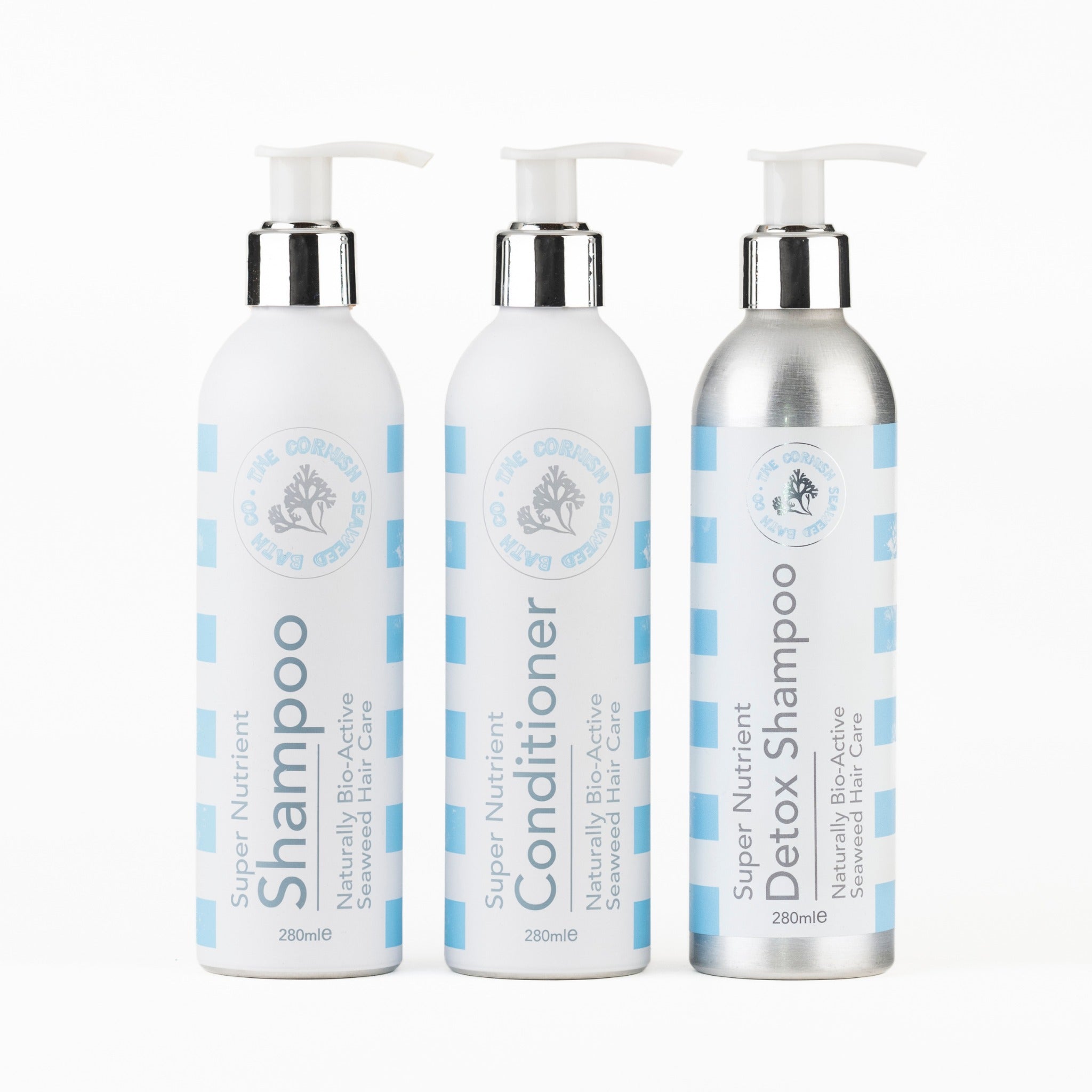
Our Super Nutrient Shampoo, Super Nutrient Detox Shampoo, and Super Nutrient Conditioner support scalp and hair health across all patterns, including fine and pin-straight hair. Formulated without harsh sulphates, these seaweed-rich products nourish and soothe without overwhelming delicate strands or weighing down naturally straight hair.
Hair Types 101 – The Four Main Categories And Their Subtypes

The four main hair type families (1–4)
The hair typing system categorises natural patterns into four distinct families: Type 1 (straight) lies flat with no natural curl or wave, Type 2 (wavy) forms loose to moderate S-shaped bends, Type 3 (curly) creates defined spirals and corkscrews, and Type 4 (coily) produces tight, dense coil patterns. Each type describes how your hair naturally dries when left untouched by styling products or tools.
What A, B, and C mean within each type
The A/B/C subdivisions indicate pattern intensity within each family, A represents the loosest expression, B shows moderate characteristics, and C displays the most pronounced features. Many people exhibit mixed patterns, such as 2B waves at the nape with 2C curls around the crown, making hair beautifully unique rather than rigidly categorised.
Quick-reference visual table
| Hair Type | Shape When Air-Dried | Typical Strand Feel | Common Challenges |
|---|---|---|---|
| 1A | Pin-straight, no bend | Very fine | Flatness, quick oiliness |
| 1B | Straight with slight body | Fine to medium | Lack of volume |
| 2A | Loose, gentle waves | Fine to medium | Frizz, inconsistent pattern |
| 2B | Defined S-shaped waves | Medium | Frizz, weight distribution |
| 3A | Large, loose curls | Medium | Dryness, definition |
| 4C | Tight, dense coils | Fine to coarse | Shrinkage, moisture retention |
Hair type vs hair texture – not the same thing
Type describes pattern (straight, wavy, curly, coily) whilst texture refers to individual strand thickness (fine, medium, coarse). You might have fine 1A hair that feels delicate, coarse 1C hair with substantial body, or fine 2A waves that appear wispy. This distinction matters significantly when selecting products, fine hair needs lighter formulations regardless of curl pattern, whilst coarse hair can handle richer treatments. For more on ingredient choices, see haircare the silicone and sulphate dilemma.
Why Type 1A Is Considered The Rarest Hair Type
What Type 1A hair actually looks and feels like
Type 1A hair appears as perfectly straight strands from root to tip, with individual hairs feeling finer than sewing thread. This pattern struggles to hold any curl or wave, typically shows oil at the roots within 24 hours of washing, and lies completely flat against the scalp with high natural shine.
- Quick test: After washing, let hair air-dry with no products, 1A will show zero bend or wave
- Strand check: Roll a single hair between your fingers, it should feel notably thinner than most people's
- Curl test: Even with styling tools, curls drop out within 30-60 minutes
What "rarity" really means for hair
Hair type rarity refers to global prevalence rather than beauty or desirability. Type 1A occurs most commonly in certain East Asian populations yet remains uncommon in many other regions, making it statistically rare when viewed worldwide. Regional differences matter significantly, what appears rare in one area may be more typical in another. For a deeper dive into hair genetics and prevalence, see this external resource.
Understanding your rare hair type helps set realistic styling expectations, choose appropriate products that won't overwhelm fine strands, and communicate clearly with stylists about your hair's specific needs and limitations.
Where Cornish seaweed haircare fits in
Our Super Nutrient Haircare range supports scalp and hair health across various patterns, including ultra-fine 1A hair. These formulations use gentle, sulphate-free cleansers that won't strip delicate strands while providing the nourishing botanicals that help maintain scalp balance.
For a holistic perspective on embracing your natural texture, you might enjoy reading why is natural hair the best.
Rarest Hair Types By Region And Ethnicity
Rarest hair types in European populations
Across European populations, hair patterns typically range from straight (Types 1B-1C) through loose waves (2A-2B) to moderate curls (3A-3B). Ultra-fine Type 1A remains relatively uncommon compared to the slightly thicker 1B variant. A reader of Northern European background with naturally ash-blonde 1A hair would likely find their specific combination, ultra-fine texture with cool-toned colour, represented in perhaps 1-2% of their local population.
Rarest hair types in East and Southeast Asian populations
Whilst straight hair predominates across many East and Southeast Asian populations, much of what people describe as "typical Asian hair" actually falls into Type 1B or even 1C categories. These patterns feature straight growth with moderately thick to thick individual strands, creating natural body and resilience. True Type 1A, with its characteristic ultra-fine texture and tendency towards quick oil transfer, remains less widespread than straight hair generally.
The distinction matters because 1B and 1C hair can often hold gentle waves and volume more successfully than genuine 1A patterns. For more on the science of hair curl and structure, see this external resource.
Rarest hair types in African and African diaspora populations
Within African and African diaspora communities, Type 4 coily patterns (4A, 4B, 4C) are common overall, though the specific sub-distribution varies considerably by region and ancestral background. What might be genuinely rare within these populations includes naturally very loose waves (2A) or pin-straight patterns (1A), which occur but remain statistically uncommon.
Many people within these communities also have mixed curl patterns, perhaps 4A at the crown with 4B at the nape, making single-category classification less relevant than understanding the dominant pattern for care purposes. For more on the diversity of coily hair, you may find this overview of kinky hair helpful.
Combined rarity – when type, colour, and texture intersect
| Hair Type | Colour | Texture | Why Combination Is Rare |
|---|---|---|---|
| 1A | Natural red | Very fine | Red hair genes + ultra-fine texture = uncommon genetic combination |
| 4C | Very light natural blonde | Fine to medium | Tightly coiled pattern with naturally light pigmentation |
| 3C | True black | Very coarse | Specific curl tightness + maximum pigment + thick strands |
| 1A | Very dark brown | Ultra-fine | Pin-straight pattern with high melanin concentration |
Hair colour genetics operate independently from curl pattern inheritance, creating these fascinating combinations where someone might have a rare intersection of shade and texture. For more on the natural origins of seaweed used in haircare, see where is all the seaweed coming from.
Frequently Asked Questions
What makes Type 1A hair the rarest hair type globally?
Type 1A hair is considered the rarest due to its perfectly straight, ultra-fine strands that lie flat against the scalp with no natural bend. Its fine texture and high natural shine are uncommon worldwide, making it less prevalent compared to other hair patterns.
How does the rarity of hair types vary based on region and ethnicity?
Rarity of hair types depends largely on genetics and regional ancestry, with certain patterns more common in specific populations. For example, tightly coiled Type 4C hair may be rare globally but prevalent in some regions, illustrating that rarity is relative to geographical and ethnic context.
What are the main differences between hair type patterns and hair texture?
Hair type patterns describe the natural shape of the hair strand, straight, wavy, curly, or coily, while hair texture refers to the thickness or fineness of individual strands. Both aspects influence how hair behaves and responds to styling and care.
Why does Type 1A hair struggle to hold curls and appear oily quickly?
Type 1A hair’s ultra-fine, straight strands lack natural bends to support curls, causing styled curls to drop quickly. Additionally, the flatness of the strands allows scalp oils to travel more easily along the hair, often making roots appear oily within a short time.
A picture tells a thousand words: out of necessity, some images in this blog post have been created using artificial intelligence models. This is to help us bring to life & more comprehensively express the written content within this post. We only using artificially generated images when we don’t have a suitable image available to us.