 February Favourites




Key Takeaways
- The seaweed used in our products is sourced exclusively from Cornwall's coastal waters.
- We hand-harvest Fucus Serratus and Ulva Lactuca during spring tides.
- Collectors select only mature seaweed specimens while preserving holdfasts for regeneration.
- This sustainable harvesting method ensures high-quality seaweed and protects the marine ecosystem.
Table of Contents
- The Heart of Our Rituals, Seaweed's Cornish Origin
- Understanding Seaweed, Definition, Types & Classification
- How Our Seaweed Is Harvested, Ethics, Technique, and Timing
- Wild vs. Farmed, A Respectful Comparison
- Life Cycle of Seaweed, How Nature Replenishes Itself
- Seaweed's Environmental Impact, Benefits & Stewardship
- Seaweed in Product Formulation, From Shore to Skin
- Troubleshooting & Responsible Use, Problems, Solutions, and Tips
Where Does the Seaweed Come From? Harvest to Skin
The seaweed in our products comes exclusively from Cornwall's pristine coastal waters, where we hand-harvest Fucus Serratus and Ulva Lactuca during spring tides. Our collectors walk the shoreline at optimal times, selecting only mature specimens whilst leaving holdfasts intact for regeneration. This careful approach ensures both the highest quality seaweed and the preservation of Cornwall's marine ecosystem.
Our range features the benefits of Cornish seaweed in products such as the Wild Cornish Seaweed Bath and Seaweed & Frankincense Body Wash, both crafted to deliver mineral-rich nourishment directly from shore to skin.
Our seaweed originates from designated Cornish shores, hand-harvested during spring tides using sustainable methods. We source primarily Fucus Serratus (brown algae) and Ulva Lactuca (green algae) from waters regularly tested for purity. The seaweed enters production within 24 hours of harvest to preserve its beneficial compounds.
The Heart of Our Rituals, Seaweed's Cornish Origin
Our Home Waters, A Singular Source
Cornwall's Atlantic-facing coastline provides ideal conditions for nutrient-dense seaweed growth. The convergence of warm Gulf Stream waters with cooler Atlantic currents creates mineral-rich environments where Fucus Serratus thrives on rocky substrates. Regular water quality testing ensures our collection areas maintain the pristine conditions essential for premium skincare ingredients.
We restrict harvesting to designated shores where water purity meets our stringent standards. These locations undergo continuous environmental monitoring, with collection suspended if conditions change. This commitment to source integrity means where the seaweed comes from matters as much as how we harvest it.
Hand-Harvested on Spring Tides, Our Methodology
Spring tides occur twice monthly when moon and sun align, creating the lowest tides that expose the richest seaweed beds. Our collectors time their walks precisely, selecting olive-brown Fucus Serratus specimens that show optimal colour and texture. Each piece is cut carefully above the holdfast, the root-like structure that ensures regrowth.
A typical harvest yields enough seaweed for several production batches, with collectors covering specific coastal sections to prevent over-harvesting. The entire process from shore to processing facility takes less than four hours, preserving the seaweed's natural integrity.
| Feature | Cornwall, UK | Maine, USA | Brittany, France |
|---|---|---|---|
| Water Purity | Exceptional (Atlantic Gulf Stream) | Good (North Atlantic) | Variable (English Channel) |
| Harvest Method | Hand-cut, sustainable | Mixed mechanical/hand | Predominantly mechanical |
| Primary Species | Fucus Serratus, Ulva Lactuca | Ascophyllum Nodosum | Laminaria Digitata |
| Commercial Scale | Artisanal, quality-focused | Large-scale commercial | Industrial processing |
Understanding Seaweed, Definition, Types & Classification

What Makes a Seaweed?
Seaweed comprises marine macroalgae, large, complex algae visible to the naked eye. Unlike land plants, seaweed absorbs nutrients directly from seawater through its entire surface, concentrating minerals and trace elements. In skincare, this nutrient density translates to products rich in naturally occurring compounds that support skin health.
Our formulations focus on Fucus Serratus, a brown algae prized for its balanced mineral profile, and Ulva Lactuca, a green algae known for its gentle, soothing properties. These species represent the pinnacle of Cornish seaweed quality for personal care applications.
Red, Brown & Green, Qualitative Differences
Brown algae like Fucus Serratus contain fucoidans and alginates, compounds that help retain moisture and provide skin-conditioning benefits. Green algae such as Ulva Lactuca offer chlorophyll and amino acids that complement sensitive skin formulations. Red algae, whilst not featured in our current range, typically provide carrageenan for thickening properties.
The colour classification reflects different photosynthetic pigments adapted to various water depths and light conditions. This diversity allows us to select specific species that deliver targeted benefits in our skincare rituals.
How Our Seaweed Is Harvested, Ethics, Technique, and Timing
Sustainable Practices, From Shore to Studio
Hand-harvesting distinguishes our approach from mechanical collection methods that can damage marine habitats. Our collectors use sharp knives to make clean cuts, leaving holdfasts and surrounding vegetation undisturbed. This selective harvesting maintains ecosystem balance whilst ensuring premium quality ingredients.
We follow strict protocols: never harvest more than one-third of any seaweed bed, rotate collection areas seasonally, and avoid harvesting during reproductive periods. These practices ensure where the seaweed comes from remains a sustainable answer for generations.
Seasonality & Resilience
Cornish seaweed reaches peak nutrient density during late spring and early autumn when growth accelerates following seasonal storms. These natural stress cycles enhance the seaweed's adaptive compounds, the same properties that benefit skin resilience. Winter harvesting yields seaweed with concentrated minerals from slower growth periods.
Coastal conditions including salt spray, temperature fluctuations, and tidal exposure create robust seaweed specimens. This natural hardiness translates directly to skincare benefits, as stress-adapted seaweed contains higher levels of protective compounds than cultivated varieties.
Troubleshooting, Common Harvest Challenges & Solutions
Weather windows determine harvest success, with collectors monitoring tide tables and storm patterns weeks in advance. Rough seas can make collection dangerous, whilst calm periods may not expose sufficient seaweed beds. Our flexible scheduling ensures optimal collection conditions without compromising safety or sustainability.
Visual inspection removes any contaminated specimens before processing. Collectors identify healthy seaweed by its consistent colour, firm texture, and clean attachment points. This field-level quality control ensures where the seaweed comes from meets our exacting standards before reaching production facilities.
Wild vs. Farmed, A Respectful Comparison
Selection Criteria for Comparison
Our comparison evaluates water purity standards, ecological impact, nutrient variability, and harvesting methods. These criteria reflect the factors most relevant to skincare quality and environmental responsibility. We assess both wild-harvested and farmed seaweed based on measurable attributes rather than subjective preferences.
| Feature | Cornish Wild-Harvested | Farmed Seaweed | Significance |
|---|---|---|---|
| Water Purity | Regulated Atlantic waters | Variable by location | Affects mineral content |
| Seasonality | Natural growth cycles | Controlled harvesting | Influences nutrient density |
| Nutrient Profile | Stress-adapted compounds | Consistent but limited | Determines skincare benefits |
| Ecological Impact | Minimal with proper methods | Moderate infrastructure needs | Long-term sustainability |
| Quality Consistency | Natural variation | Standardised output | Batch-to-batch differences |
Balanced Analysis
Wild Cornish seaweed offers superior nutrient diversity through natural environmental pressures, creating compounds that farmed varieties cannot replicate. The unpredictable coastal conditions that challenge wild seaweed produce the adaptive benefits we seek for skincare applications. This natural resilience translates to products that support skin's own protective mechanisms.
Farmed seaweed provides reliable supply chains and consistent quality metrics, valuable for large-scale commercial operations. However, controlled growing conditions limit the stress-response compounds that give wild seaweed its distinctive properties. Our commitment to wild harvesting reflects our priority for maximum skincare efficacy over production convenience.
Life Cycle of Seaweed, How Nature Replenishes Itself

Growth & Regeneration
Fucus Serratus reproduces through spore release during warmer months, with fertilised eggs developing into new plants over 6-12 months. The holdfast system anchors mature plants whilst allowing lateral growth, meaning careful cutting above this root structure preserves the entire regeneration capacity. Understanding where seaweed comes from includes respecting these natural cycles.
Ulva Lactuca demonstrates even more rapid regeneration, with fragmented pieces capable of growing into full plants within weeks under optimal conditions. This resilience makes green algae particularly suitable for sustainable harvesting when collection follows natural growth patterns.
Timing and Responsible Collection
Optimal harvesting occurs during non-reproductive periods when seaweed energy focuses on growth rather than spore production. We avoid collection during spring spawning seasons and late summer reproductive cycles, allowing populations to maintain genetic diversity and recruitment success.
Our rotation system ensures no area experiences harvesting pressure more than twice annually. This conservative approach maintains seaweed bed health whilst providing sufficient raw material for our product range, proving that quality sourcing and sustainability complement rather than compete. For further reading on sustainable seaweed farming in Cornwall, see this external resource.
Seaweed's Environmental Impact, Benefits & Stewardship
How Seaweed Supports Marine Environments
Seaweed beds produce oxygen, provide nursery habitat for fish species, and stabilise coastal sediments. A single square metre of healthy seaweed bed supports dozens of marine species whilst filtering nutrients from seawater.
Benefits for the Ecosystem
Cornish seaweed beds serve as nurseries for juvenile fish including wrasse and gobies, whilst providing attachment surfaces for marine invertebrates. The complex three-dimensional structure creates microhabitats that support biodiversity levels comparable to tropical coral reefs. Seaweed photosynthesis contributes significantly to coastal oxygen production.
Seaweed in Product Formulation, From Shore to Skin
From Harvest to Production, Our Process
Within 24 hours of harvest, freshly collected seaweed undergoes gentle cleansing in filtered seawater to remove sand and marine debris. We air-dry the seaweed at controlled temperatures below 40°C, preserving heat-sensitive compounds whilst achieving stable moisture content. This careful processing maintains the mineral profile and bioactive components that make Cornish seaweed particularly valuable for skincare applications.
Our production facility processes seaweed in small batches, grinding dried material to specific particle sizes for different product types. Facial oils require finer seaweed powder for smooth application, whilst bath products use coarser particles that release minerals gradually in warm water. This attention to processing detail ensures consistent product performance across our range. For more on the benefits of seaweed in skincare, read our guide on five ways to use seaweed to care for your skin health.
Products Featuring Cornish Seaweed
| Product Name | Seaweed Species & Benefit | Primary Use |
|---|---|---|
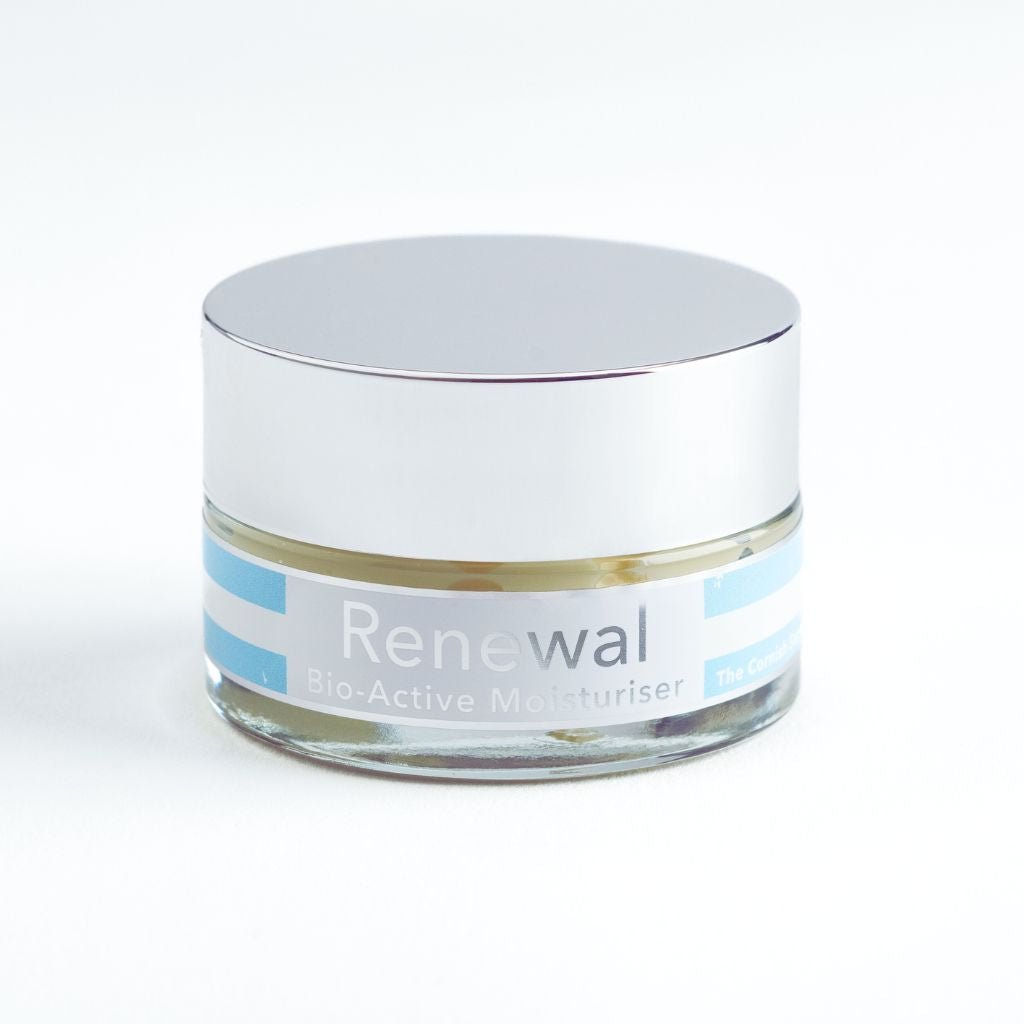
| Renewal Bio-Active Moisturiser | Fucus Serratus (mineral hydration) | Daily facial moisturising |
| Sky Organic Facial Oil | Ulva Lactuca (gentle soothing) | Sensitive skin care |
| Wild Cornish Seaweed Bath | Fucus Serratus (mineral release) | Relaxing bath ritual |
| Seaweed & Frankincense Body Wash | Fucus Serratus (skin conditioning) | Daily cleansing ritual |
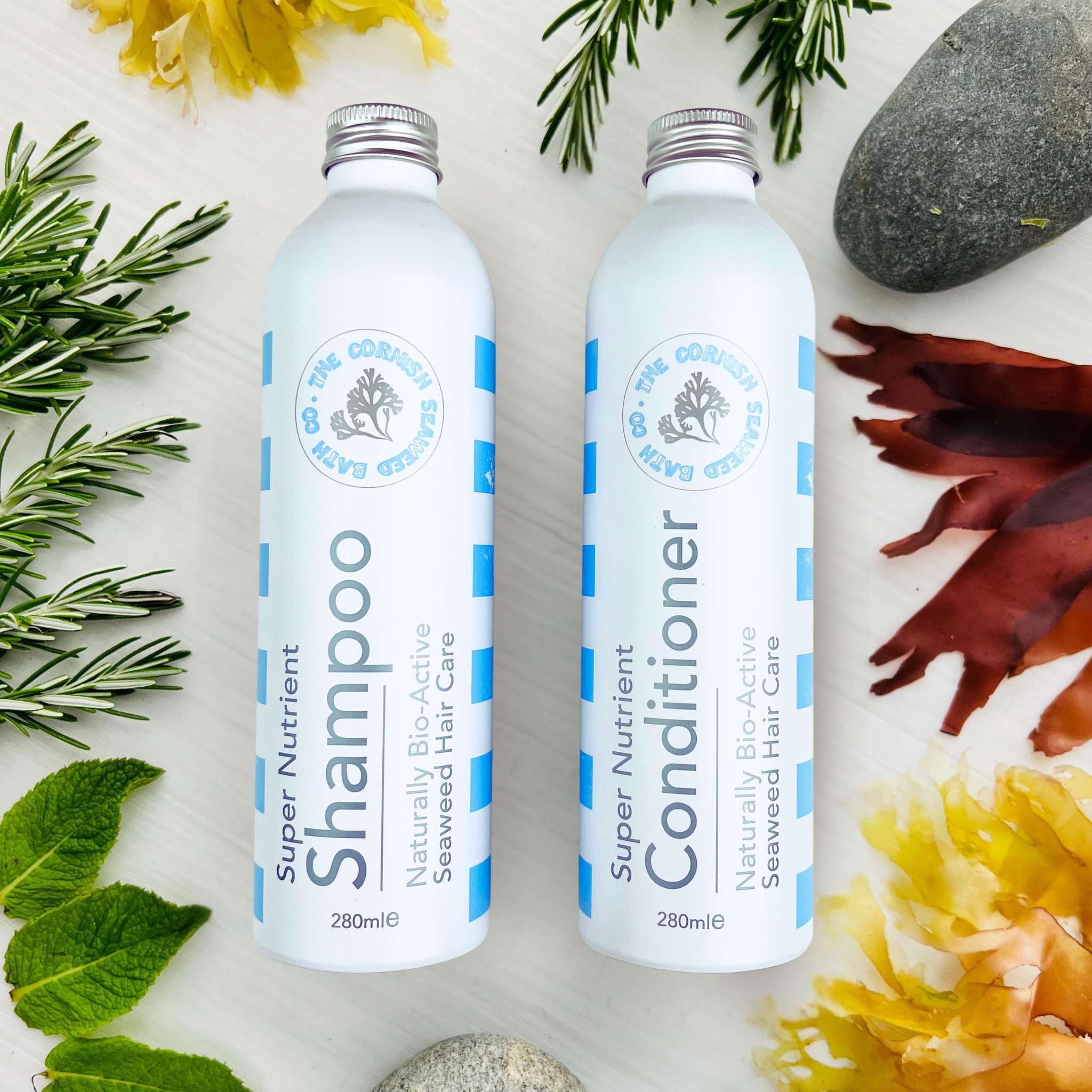
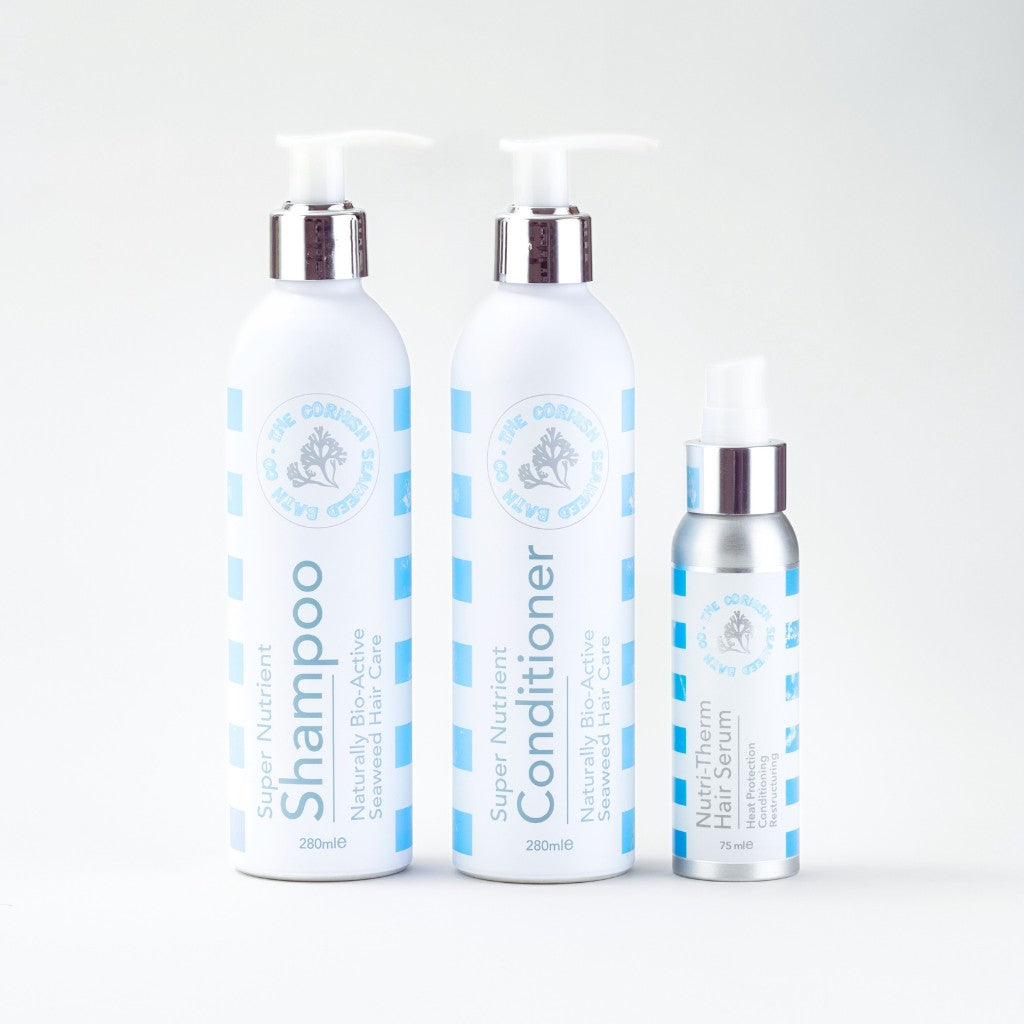
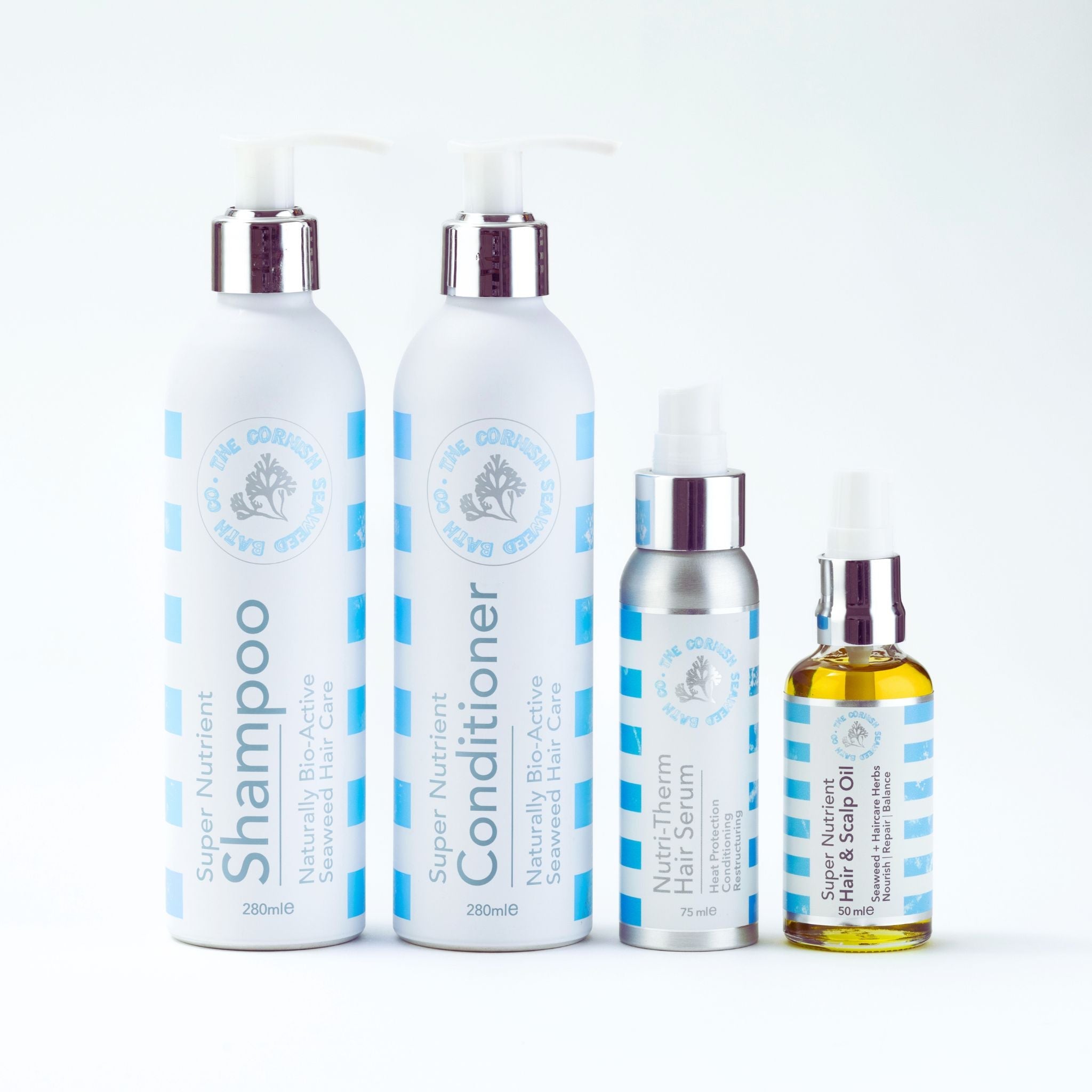
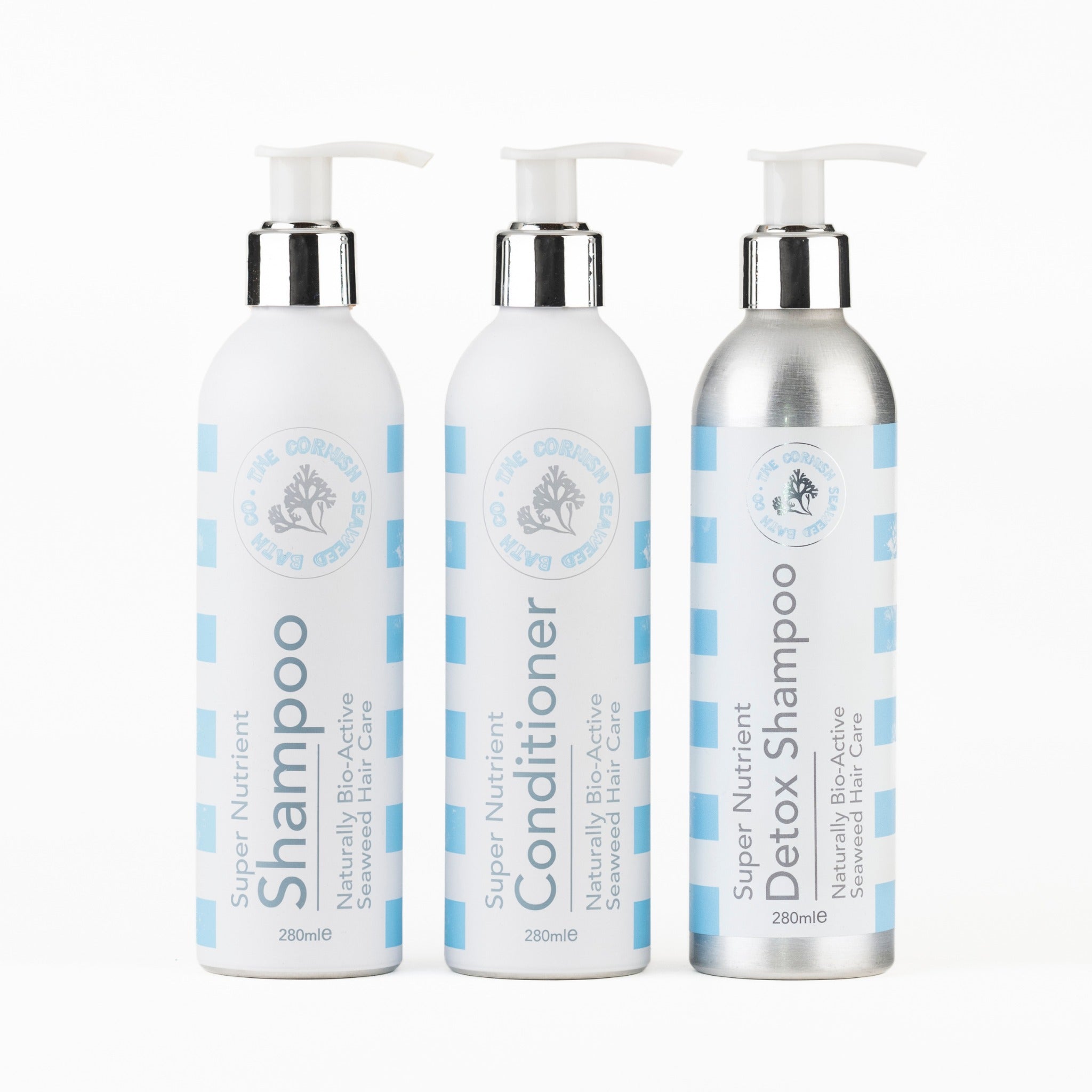
| Super Nutrient Shampoo | Fucus Serratus (scalp nourishment) | Hair and scalp care |
Quality Assurance & Safe Storage
Each batch undergoes visual inspection for foreign matter and colour consistency before blending with other ingredients. We test moisture content to prevent spoilage and verify that processing temperatures haven't degraded essential compounds. These quality checks ensure every product delivers the full benefits of Cornish seaweed.
Store seaweed-based products in cool, dry conditions away from direct sunlight. Facial oils maintain potency for 18 months when kept below 25°C, whilst soaps and solid products remain stable for up to two years. Always close containers tightly after use to prevent moisture absorption that could affect texture and performance. For those with sensitive skin, our Fragrance Free Seaweed Soap (large) is a gentle choice, and you can learn more in our article on natural seaweed soap for sensitive skin.
Troubleshooting & Responsible Use, Problems, Solutions, and Tips

Common Concerns and Practical Resolutions
Natural seaweed products may vary slightly in colour and texture between batches, reflecting seasonal changes in mineral content and growing conditions. Spring-harvested seaweed often appears darker due to higher iodine levels, whilst summer collections may have lighter tones. These variations indicate authentic wild harvesting rather than standardised farmed material.
We test every harvest for heavy metals, microplastics, and bacterial contamination using independent laboratory analysis. Results must meet strict European cosmetic safety standards before seaweed enters production. If you notice unusual odours or texture changes in stored products, discontinue use and contact us for replacement, though proper storage typically prevents such issues.
For optimal results with seaweed bath products, add the seaweed pouch of Wild Cornish Seaweed Bath to a warm bath, allowing minerals to dissolve in warm water before entering. Facial oils require just 2-3 drops for effective application. For more tips on facial care routines, see the csbco facial care guide.
Frequently Asked Questions
Why is seaweed harvested exclusively from Cornwall's coastal waters for these products?
We harvest seaweed solely from Cornwall's coastal waters because these areas provide nutrient-rich, mineral-dense conditions ideal for Fucus Serratus and Ulva Lactuca. The waters are regularly tested to ensure purity, supporting the quality and integrity of the seaweed used in our products.
How does the hand-harvesting process during spring tides ensure sustainability and quality of the seaweed?
Hand-harvesting during spring tides allows collectors to access mature seaweed specimens when the lowest tides reveal abundant beds. By selecting only mature seaweed and leaving holdfasts intact, this method supports natural regeneration and maintains the health of the seaweed population, ensuring both sustainability and high quality.
What measures are taken to protect the marine ecosystem while collecting seaweed?
Collectors carefully leave the holdfasts, the root-like structures, undisturbed to allow seaweed to regrow naturally. Harvesting is restricted to designated shores with ongoing environmental monitoring, and collection is paused if water quality or ecosystem conditions change, safeguarding the marine environment.
How does Cornish seaweed compare to seaweed sourced from other regions like Maine or Brittany in terms of purity and harvesting methods?
Cornish seaweed is gathered from waters subject to stringent purity testing and sustainable hand-harvesting practices focused on ecological balance. While regions like Maine or Brittany also harvest seaweed, our approach emphasises continuous environmental monitoring and careful selection during spring tides, reflecting our commitment to source integrity and product quality.
A picture tells a thousand words: out of necessity, some images in this blog post have been created using artificial intelligence models. This is to help us bring to life & more comprehensively express the written content within this post. We only using artificially generated images when we don’t have a suitable image available to us.