 Spring Sale!









Key Takeaways
- Seaweed thrives in coastal waters worldwide, especially in areas with cool, nutrient-rich waters.
- It is commonly found along temperate coastlines and in intertidal zones.
- Seaweed grows best on rocky shores where solid substrates provide anchoring points.
- Kelp forests in the Pacific are notable examples of productive seaweed ecosystems.
Table of Contents
- Understanding Seaweed – What You're Looking For
- Geographic Hotspots – Where Seaweed Thrives Globally
- Ideal Seaweed Habitats – What Seaweed Needs to Flourish
- Seaweed in the Intertidal Zone – The Most Accessible Location
- Identifying Common Seaweed Species You'll Encounter
- Wild vs. Farmed Seaweed – Understanding the Sources
- Seasonal Patterns – When Seaweed Thrives and Wanes
- Threats to Seaweed Habitats – Understanding Why Abundance Matters
- Practical Tips for Observing Seaweed in the Wild
- Connecting with Seaweed's Natural World
Seaweed thrives in coastal waters worldwide, from the rocky shores of Cornwall to the kelp forests of the Pacific. These marine algae flourish wherever cool, nutrient-rich waters meet solid substrates, creating some of nature's most productive ecosystems. Where is seaweed commonly found? Primarily along temperate coastlines, in intertidal zones, and shallow subtidal waters where rocky surfaces provide secure anchoring points.
Understanding seaweed distribution helps us appreciate why certain regions, like our Cornish waters, yield particularly mineral-rich varieties. The interplay of temperature, nutrients, and wave action creates distinct seaweed communities, each adapted to their specific marine environment. For a nourishing way to experience the benefits of these marine algae at home, try our Wild Cornish Seaweed Bath.
This guide explores global seaweed habitats, from accessible tide pools to vast underwater forests, revealing where these remarkable organisms establish their most thriving communities. If you're interested in gentle cleansing inspired by the sea, our 140g Pure Seaweed Soap is a natural choice for daily use.
Understanding Seaweed – What You're Looking For
Seaweed encompasses three distinct groups of macroscopic marine algae, each with characteristic appearances and habitat preferences. Unlike terrestrial plants, these organisms lack true roots, stems, or leaves, instead developing specialised structures for marine life.
Brown algae (Ochrophyta) dominate cooler waters, featuring robust holdfasts that anchor to rocks and often displaying air-filled bladders for buoyancy. These include the familiar kelps and rockweeds, with their leathery textures and branching forms reaching from intertidal zones to depths of 30 metres.
Red algae (Rhodophyta) exhibit remarkable diversity, from delicate, feathery fronds to encrusting coralline forms. Their ability to photosynthesise in deeper, shadier waters stems from specialised pigments that capture blue light penetrating ocean depths.
Green algae (Chlorophyta) appear as thin, translucent sheets or tubular structures, thriving in shallow, well-lit areas. Sea lettuce exemplifies this group, forming bright emerald patches in tide pools and shallow bays.
Each type contributes to marine ecosystems through oxygen production and carbon sequestration, whilst providing foundation habitats for countless other species. This diversity explains why where seaweed is commonly found varies dramatically based on local conditions and species requirements.
Geographic Hotspots – Where Seaweed Thrives Globally

Temperate coastlines harbour the world's most abundant seaweed populations, where cool water temperatures between 5-20°C create optimal growing conditions. The North Atlantic, from Scotland's islands through Norway to North America's eastern shores, supports extensive kelp forests and diverse intertidal communities. Our Cornish waters exemplify these productive temperate zones, where consistent nutrients and moderate temperatures sustain year-round seaweed growth.
Pacific coastlines mirror this abundance, stretching from Alaska's Aleutian Islands southward through British Columbia to California's renowned kelp forests. These regions benefit from cold-water upwelling that delivers essential nutrients, nitrogen, phosphorus, and trace minerals, directly to seaweed communities.
Cold-water regions, including Arctic and subarctic zones, host specialised seaweed communities adapted to extreme conditions. Iceland, Greenland, and northern Canada support hardy kelp species that survive beneath seasonal ice, whilst Antarctica's waters nurture unique cold-adapted algae found nowhere else.
Tropical and subtropical waters show sparser seaweed distribution, as warmer temperatures favour different marine ecosystems. However, specific niches support notable species: floating Sargassum mats in the Atlantic, seasonal blooms during monsoon periods in Southeast Asia, and specialised tropical kelps in deeper, cooler waters.
Asia-Pacific regions dominate global seaweed cultivation, with Indonesia, Philippines, China, Japan, and South Korea operating extensive farming systems. These areas combine shallow coastal waters, established cultivation knowledge, and strong market demand for food and commercial applications. For more on the role of seaweed in skin health, read our article on five ways to use seaweed to care for your skin health.
Mediterranean and enclosed seas support limited but culturally significant seaweed populations. Whilst less diverse than Atlantic or Pacific communities, these regions maintain traditional harvesting practices and unique endemic species adapted to their specific conditions.
Ideal Seaweed Habitats – What Seaweed Needs to Flourish
Rocky substrates provide essential anchoring points for seaweed holdfasts, which secure these organisms against powerful wave action. Granite outcrops, basalt platforms, and boulder fields create the stable foundations most seaweed species require, whilst sandy or muddy bottoms support only specialised varieties capable of different attachment strategies.
Water chemistry determines seaweed distribution patterns, with most species requiring full-strength seawater (34-36 parts per thousand salinity). Temperature ranges vary dramatically between species: Arctic kelps thrive in near-freezing waters, whilst tropical varieties require temperatures above 18°C. Nutrient availability, particularly nitrogen and phosphorus from upwelling or river inputs, drives growth rates and biomass production.
Light penetration limits seaweed depth distribution, as photosynthesis requires adequate illumination. Most species concentrate in the upper 30 metres, where sufficient light reaches their fronds. Intertidal zones experience the highest light levels but also face desiccation stress during low tides, creating a high-energy environment that supports specially adapted communities.
Wave action and water movement deliver nutrients whilst preventing sediment accumulation that would smother holdfast structures. High-energy shores with consistent surf support dense kelp forests, whilst calmer bays and protected inlets harbour more delicate species that cannot withstand constant wave stress.
Seasonal patterns influence habitat suitability, with winter storms destroying annual species whilst triggering spring regrowth. Nutrient pulses from seasonal upwelling or freshwater inputs create growth spurts, whilst reproductive cycles align with optimal temperature and daylight conditions. Understanding these rhythms explains why where seaweed is commonly found changes throughout the year.
Seaweed in the Intertidal Zone – The Most Accessible Location
The intertidal zone offers the most accessible seaweed viewing without specialised equipment, exposing diverse communities during low tide periods. This dynamic environment, alternately submerged and exposed, creates unique stress conditions that support the highest species diversity per square metre of any marine habitat.
Distinct zonation patterns emerge from high to low tide marks, reflecting each species' tolerance to air exposure. Upper intertidal areas host hardy rockweed (Fucus species) and resilient red algae like bottlebrush algae, whilst mid-zones support sea palms and delicate laver varieties. Lower intertidal regions transition into kelp territory, where larger brown algae begin their underwater forests.
Optimal viewing occurs during spring low tides, which expose maximum intertidal area approximately twice monthly. The window extends 2-3 hours either side of true low tide, with morning or late afternoon visits reducing sun stress on exposed seaweed. These timing considerations explain why where seaweed is commonly found becomes most visible during specific tidal conditions.
Holdfast structures create miniature ecosystems within the intertidal zone, sheltering small crabs, marine snails, and juvenile fish. Observing these layered communities reveals how different species cluster together, each occupying precise niches based on wave exposure, drying tolerance, and competitive relationships.
Identifying Common Seaweed Species You'll Encounter

Five species dominate temperate rocky shores, including our Cornish coastlines, each displaying distinctive characteristics for reliable identification. Understanding these common forms provides foundation knowledge for recognising seaweed diversity in the wild.
Bladderwrack (Fucus vesiculosus) reaches 50 centimetres in length, featuring branched leathery fronds with paired air bladders and distinctive reproductive receptacles at branch tips. Found throughout high to mid intertidal zones, its air bladders produce audible pops when squeezed, providing unmistakable identification.
Bull Kelp (Nereocystis luetkeana) displays a single large float bulb connected to extensive blade structures, often washing ashore in distinctive clumps. This low intertidal to subtidal species can reach 36 metres total length, with its prominent bulb distinguishing it from other kelp varieties.
Black Pine (Neorhodomela larix) forms delicate, brush-like structures up to 30 centimetres tall, displaying dark burgundy or black colouration in low intertidal zones. Its fine branching pattern and fragile texture contrast sharply with robust brown algae species.
Sea Lettuce (Ulva lactuca) creates thin, translucent green sheets reaching 18 centimetres, often found free-floating in tide pools or attached to rocks in high tide areas. Its papery texture and bright emerald colour make identification straightforward, particularly when held against light.
Seasonal variation affects appearance significantly: spring growth produces tender new fronds, summer brings peak biomass and reproductive structures, whilst autumn and winter show consolidation or die-back patterns. Understanding these cycles helps explain where seaweed is commonly found changes in abundance and visibility throughout the year. For more on the benefits of natural cleansing, explore our soaps collection.
Wild vs. Farmed Seaweed – Understanding the Sources
| Aspect | Wild Seaweed | Farmed Seaweed |
|---|---|---|
| Habitat | Natural rocky shores, kelp forests, established marine ecosystems | Controlled shallow waters, rope structures, purpose-built cultivation areas |
| Geographic concentration | Atlantic and Pacific temperate coasts, Arctic regions | Asia-Pacific dominance (Indonesia, Philippines, China, Japan) |
| Nutrient profile | Seasonal variation reflecting natural water chemistry and upwelling | Consistent composition through controlled nutrient input and supplementation |
| Harvesting approach | Hand-cutting above holdfasts or mechanical collection methods | Planned cultivation cycles from spore to harvest maturity |
| Supply characteristics | Limited seasonal availability, premium positioning, small-scale operations | Year-round production, high volume capacity, lower unit costs |
| Sustainability considerations | Requires careful management to prevent overharvesting, natural regeneration | Monoculture risks, water quality impacts, but predictable yields |
We source our seaweed through sustainable hand-harvesting from Cornish waters, working within natural seasonal rhythms rather than forcing year-round consistency. This approach reflects our commitment to marine ecosystem health whilst capturing the authentic mineral profiles that seasonal variation provides.
Asia-Pacific farming operations produce over 50% of global seaweed supply, supporting food security and coastal livelihoods whilst raising questions about habitat conversion and water quality impacts. These large-scale operations serve different market needs than artisanal wild-harvesting approaches.
Understanding these sourcing differences helps explain why where seaweed is commonly found increasingly includes both wild populations and cultivated areas, each serving distinct purposes in global seaweed supply chains. To learn more about the science behind global seaweed distribution, see this external resource.
Seasonal Patterns – When Seaweed Thrives and Wanes
Spring marks peak growth season in temperate waters, driven by warming temperatures, extended daylight, and nutrient flushes from winter storms. New fronds emerge vigorously during March through May, making this optimal timing for observing species diversity and natural vigour across rocky shores.
Summer brings maximum biomass development, with dense fronds displaying full colour intensity and mature reproductive structures releasing spores and gametes. However, some annual species begin consolidating growth by late summer, preparing for autumn environmental stresses.
Autumn presents contrasting responses: whilst some species weaken under increasing storm action, perennial varieties strengthen their holdfast systems. Annual species largely disappear by November, leaving hardy perennials to weather winter conditions.
Winter strips back kelp forests through storm damage, yet this apparent destruction enables spring regeneration cycles. Perennial species retreat to robust holdfast structures, beginning regrowth by late winter in preparation for the next growing season.
Geographic variation significantly affects these patterns. Tropical waters show monsoon-driven cycles rather than temperature-based seasonality, whilst Arctic regions experience explosive spring blooms following ice-melt and extended dormancy from October through March. Understanding these rhythms explains why where seaweed is commonly found changes dramatically with seasonal timing.
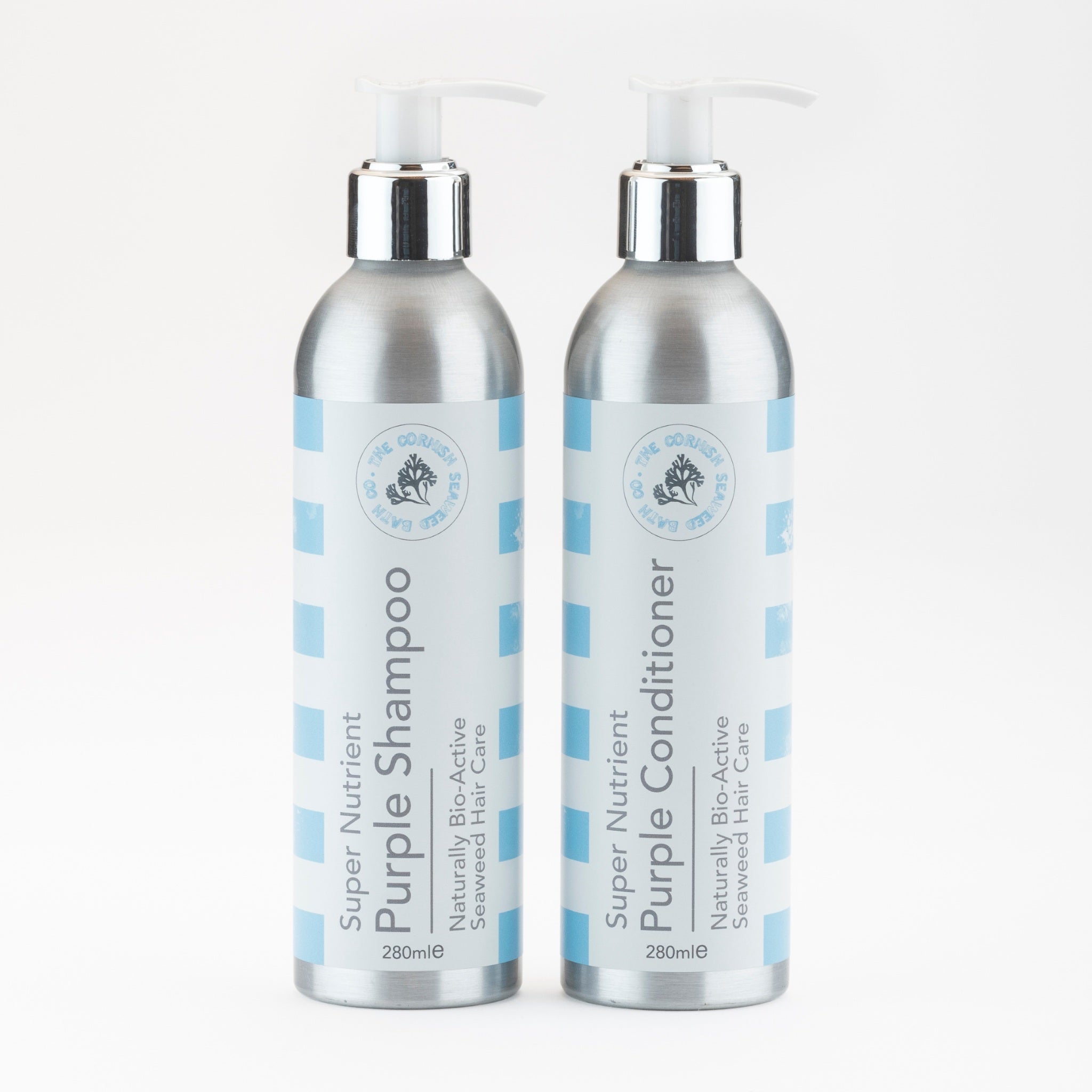
We time our harvesting to capture peak nutrient density during spring and early summer growth phases. This seasonal approach ensures optimal mineral content whilst respecting natural regeneration cycles, reflecting authentic marine rhythms rather than forcing artificial consistency. For more on haircare inspired by the ocean, discover our Super Nutrient Shampoo and Super Nutrient Conditioner for healthy, nourished hair.
Threats to Seaweed Habitats – Understanding Why Abundance Matters

Climate-driven pressures increasingly stress seaweed populations through ocean warming, which forces species ranges poleward as thermal tolerance limits are exceeded. Ocean acidification particularly threatens carbonate-dependent coralline algae, whilst intensifying storms damage holdfast structures and displace juvenile plants before establishment.
Ecological imbalances create cascading effects throughout seaweed communities. Sea urchin population explosions, often triggered by predator declines, can devastate entire kelp forests within months. Recent sea star wasting disease outbreaks along Pacific coasts removed key urchin predators, leading to widespread kelp forest collapse.
Human activities compound these natural stresses through destructive harvesting methods including dredging and mechanical raking, which destroy holdfast systems essential for regeneration. Coastal pollution introduces heavy metals and microplastics, whilst nutrient runoff triggers algal blooms that shade seaweed communities.
Sustainable harvesting practices become crucial for maintaining healthy populations where seaweed types face mounting pressures. We employ hand-cutting techniques that preserve holdfast integrity, enabling natural regrowth whilst supporting rotational harvesting across different areas. For a deeper dive into sustainable haircare, read our blog on Cornish seaweed conditioner in the UK.
Marine protected areas and ecosystem-based management provide essential refugia for seaweed communities, supporting both conservation goals and sustainable utilisation. Our commitment extends beyond responsible harvesting to supporting broader marine conservation initiatives that maintain healthy coastal ecosystems. For further scientific reading, see this external study on seaweed ecosystems.
Practical Tips for Observing Seaweed in the Wild
Preparation ensures safe and productive seaweed exploration. Check tide charts for spring low tides, research local regulations regarding observation or collection, and wear appropriate footwear for slippery rock surfaces. Bringing magnification tools enhances detailed observation of species characteristics.
Move deliberately through intertidal zones, observing zonation patterns before disturbing any specimens. Holdfast structures support entire micro-ecosystems including small crustaceans, molluscs, and juvenile fish, making careful observation more rewarding than hasty collection.
Respectful engagement preserves these fragile communities for future exploration. If harvesting, cut above holdfast structures using sharp tools, take only what you need, and avoid stripping areas bare. Leave smaller specimens to continue growing and contributing to population stability.
Safety considerations become paramount on rocky shores. Never venture out alone, monitor wave conditions constantly, and maintain awareness of tidal timing to avoid being trapped by rising water. Avoid areas near pollution sources including industrial outlets or heavy traffic zones.
Essential Safety Protocol: Always inform someone of your planned route and return time when exploring remote rocky shores. Sudden wave surges can occur even in calm conditions, making exit route awareness crucial for safe exploration.
Post-exploration activities enhance the learning experience. Thoroughly rinse any collected specimens in fresh water to remove sand and debris, document observations through photography or sketching, and consider contributing to citizen science platforms that track marine biodiversity changes. For those with sensitive skin, you may also be interested in our blog on natural seaweed soap for sensitive skin.
Connecting with Seaweed's Natural World
Seaweed thrives across global coastlines wherever rocky substrates, appropriate water conditions, and seasonal rhythms converge. From Arctic kelp forests to Mediterranean rocky shores, these marine algae create foundation ecosystems supporting countless other species whilst offering remarkable benefits for human wellbeing.
Understanding natural seaweed habitats deepens appreciation for sustainable sourcing practices that respect marine ecosystems. The intertidal zones where seaweed is commonly found becomes most accessible reveal complex communities shaped by tidal rhythms, seasonal cycles, and ecological relationships spanning millennia.
We harness these natural processes through careful hand-harvesting from Cornish waters, creating skincare and haircare formulations that capture seaweed's nourishing properties. Our Super Nutrient Shampoo and Renewal Bio-Active Moisturiser reflect the ocean's restorative power, bringing sustainable marine wellness into your daily rituals whilst supporting healthy coastal ecosystems for future generations.
Frequently Asked Questions
What types of coastal environments are most suitable for seaweed growth?
Seaweed grows best in coastal environments with cool, nutrient-rich waters and solid substrates such as rocky shores. Intertidal zones and shallow subtidal areas provide ideal conditions, offering anchoring points and exposure to sunlight necessary for growth.
How do different groups of seaweed, such as brown, red, and green algae, vary in their habitats and characteristics?
Brown algae typically inhabit cooler waters and attach firmly to rocks using strong holdfasts, often featuring air bladders for buoyancy. Red algae are usually found in deeper or more sheltered waters, while green algae prefer shallower, well-lit areas. Each group has distinct textures and forms adapted to their specific marine environments.
Why are temperate coastlines particularly rich in seaweed populations compared to other regions?
Temperate coastlines offer a balance of cool temperatures and abundant nutrients, creating favourable conditions for diverse seaweed communities. The combination of wave action and rocky substrates supports robust growth, making these regions especially productive compared to tropical or polar waters.
What role do seaweed ecosystems, like kelp forests, play in supporting marine biodiversity and environmental health?
Seaweed ecosystems such as kelp forests provide habitat, shelter, and food for a wide range of marine species, supporting biodiversity. They also contribute to environmental health by stabilising coastal sediments and influencing local water quality, creating balanced and thriving marine communities.
A picture tells a thousand words: out of necessity, some images in this blog post have been created using artificial intelligence models. This is to help us bring to life & more comprehensively express the written content within this post. We only using artificially generated images when we don’t have a suitable image available to us.