 Earth Day Sale!



best scalp treatment for menopausal dandruff
Understanding Menopause and Its Impact on Your Scalp
The best scalp treatment for menopausal dandruff combines gentle, nourishing ingredients that address both flaking and the underlying hormonal changes affecting your scalp. Look for seaweed-based formulations with soothing botanicals that restore moisture balance without harsh chemicals.
The Hormonal Shift: What Happens to Your Scalp?
During menopause, declining oestrogen levels directly affect your scalp's natural oil production and barrier function. Your sebaceous glands produce less sebum, leading to dryness that can trigger compensatory flaking. This compromised barrier makes your scalp more susceptible to irritation and environmental stressors, while altered pH levels and reduced antimicrobial properties allow naturally occurring yeasts like Malassezia to proliferate more easily.
Why Flakes Seem to Multiply During This Time
You might notice larger, oilier flakes accompanied by persistent itching. Quite different from the small, fine flakes of simple dry scalp. During menopause, you could experience both conditions simultaneously as hormonal changes affect different areas of your scalp in varying ways. Some patches may remain relatively oily whilst others become extremely dry.
Key insight: Menopausal scalp changes aren't just about dryness. The altered microbiome and compromised barrier function call for treatments that moisturise and support natural balance, rather than simply removing flakes.
Natural Ingredients That Actually Help
Why Cornish Seaweed Works So Well
Cornish seaweed (Fucus Serratus) offers unique benefits for menopausal scalps through its rich mineral content and natural humectant properties. This marine botanical helps support your scalp's compromised moisture barrier whilst providing nutrients that support healthy skin cell turnover. Unlike harsh anti-dandruff chemicals, seaweed works gently to help rebalance your scalp's natural environment without stripping away those precious remaining oils.
The polysaccharides in seaweed create a protective film on your scalp surface, helping to lock in moisture and reduce the irritation that often comes with hormonal changes. Perfect for the sensitive scalp conditions that are so common during menopause.
Supporting Botanicals to Look For
Frankincense resin offers soothing properties that can calm irritated scalp tissue, whilst tuber fleeceflower root has traditionally been valued for supporting scalp comfort. Oat kernel oil and jojoba oil provide the fatty acids your skin needs to maintain its protective barrier. Especially important when hormones are disrupting this natural process.
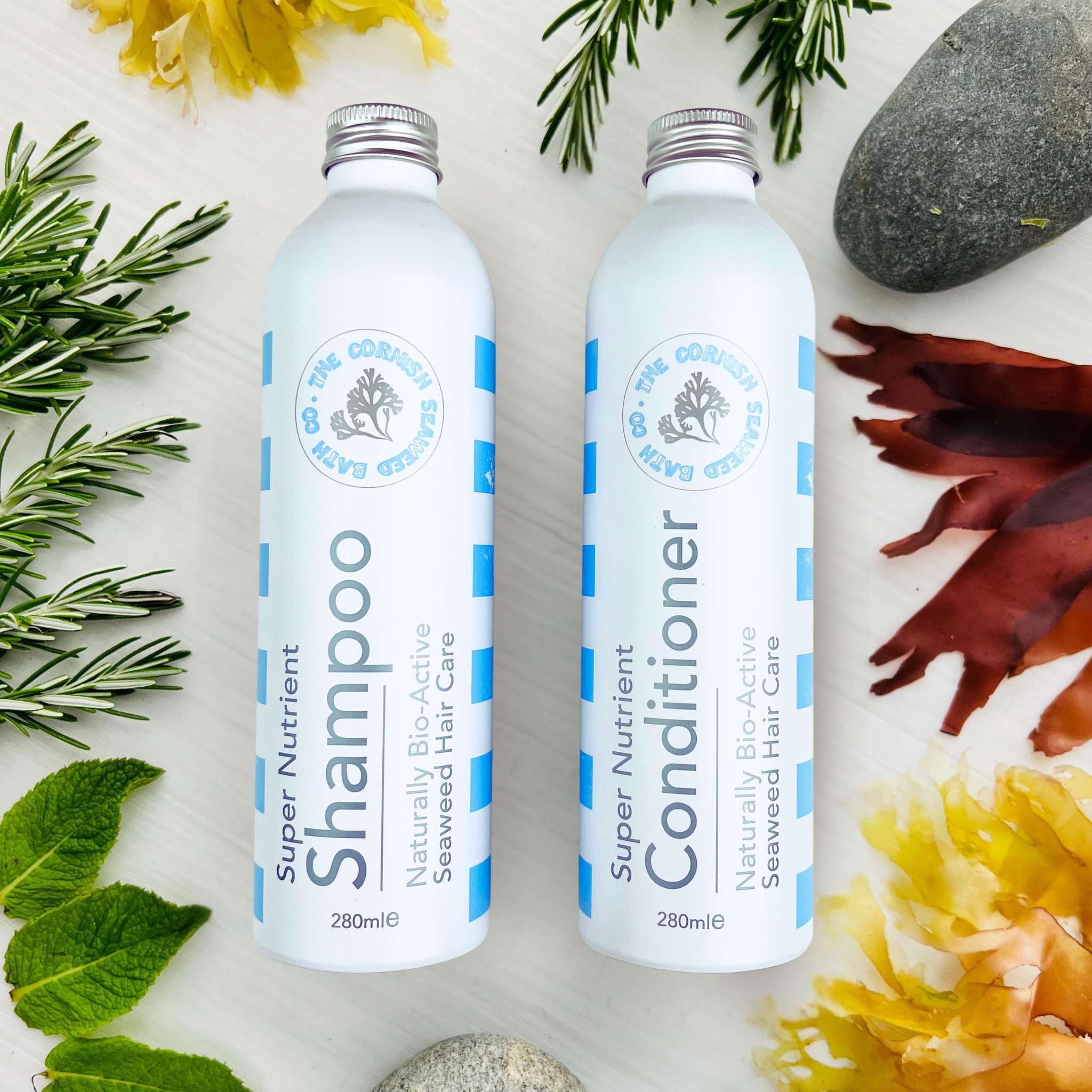
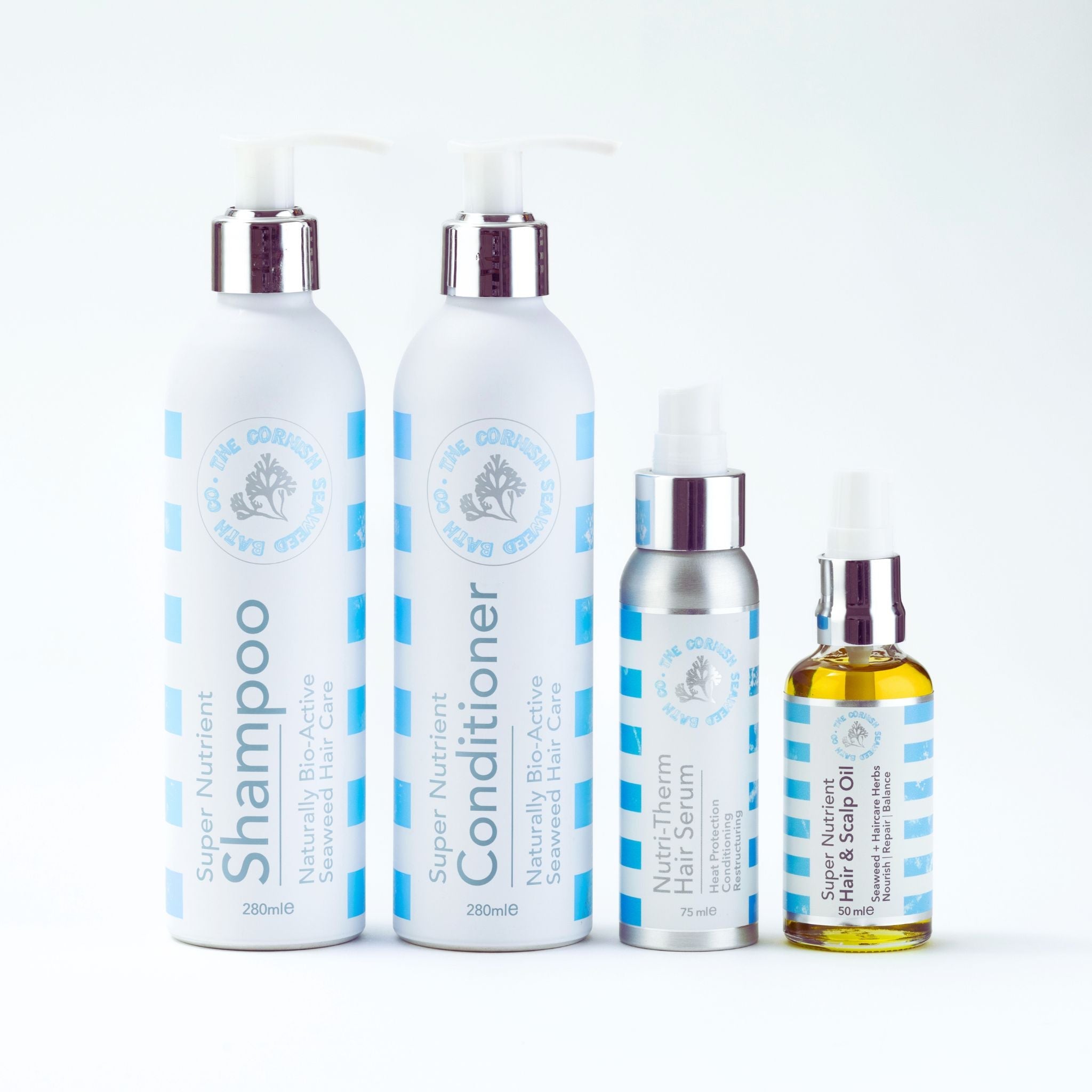
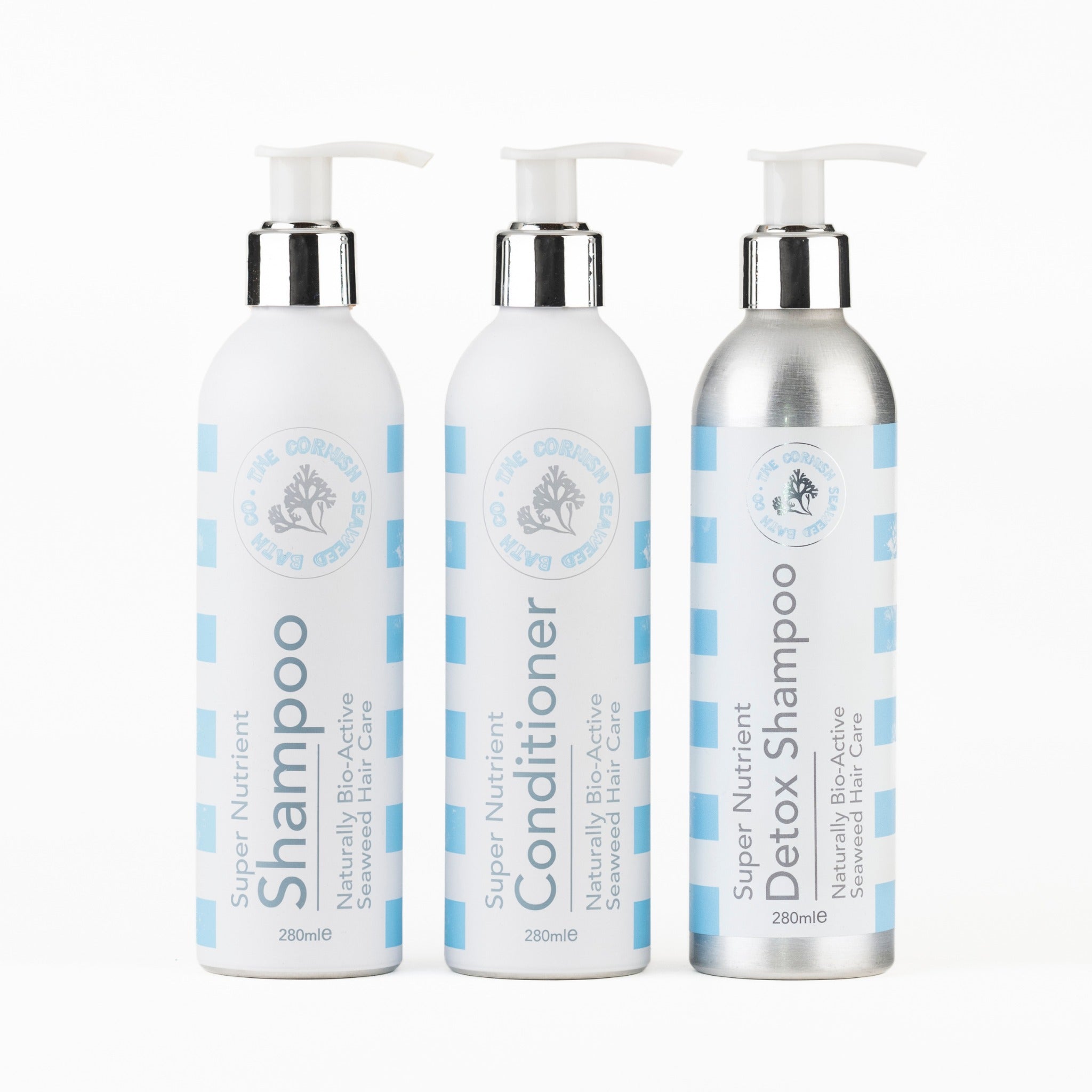
Ingredient spotlight: Our Super Nutrient Shampoo combines Cornish seaweed with frankincense and tuber fleeceflower root to support the complex scalp changes experienced during menopause, offering gentle cleansing without disruption.
Beyond the Flakes: Managing Scalp Sensitivity
When Everything Seems to Irritate Your Scalp
Menopausal scalp irritation can extend far beyond simple flaking. You might find that products you've used for years suddenly cause reactions, or that your scalp feels persistently tight and uncomfortable. This heightened sensitivity happens because your compromised barrier allows irritants to penetrate more easily.
Our Skin Repair Balm contains seaweed alongside calming botanicals and is formulated to support dry, irritated areas without overwhelming sensitive skin. It can be applied directly to particularly troublesome patches.
The Connection Between Scalp Comfort and Hair Health
A comfortable scalp environment supports hair follicle function and overall hair quality. During menopause, when your hair may already be experiencing changes in texture and growth patterns, maintaining good scalp conditions becomes even more important for the healthy-looking hair you want to maintain.
Building Your Scalp Care Routine
Selecting the Right Shampoo
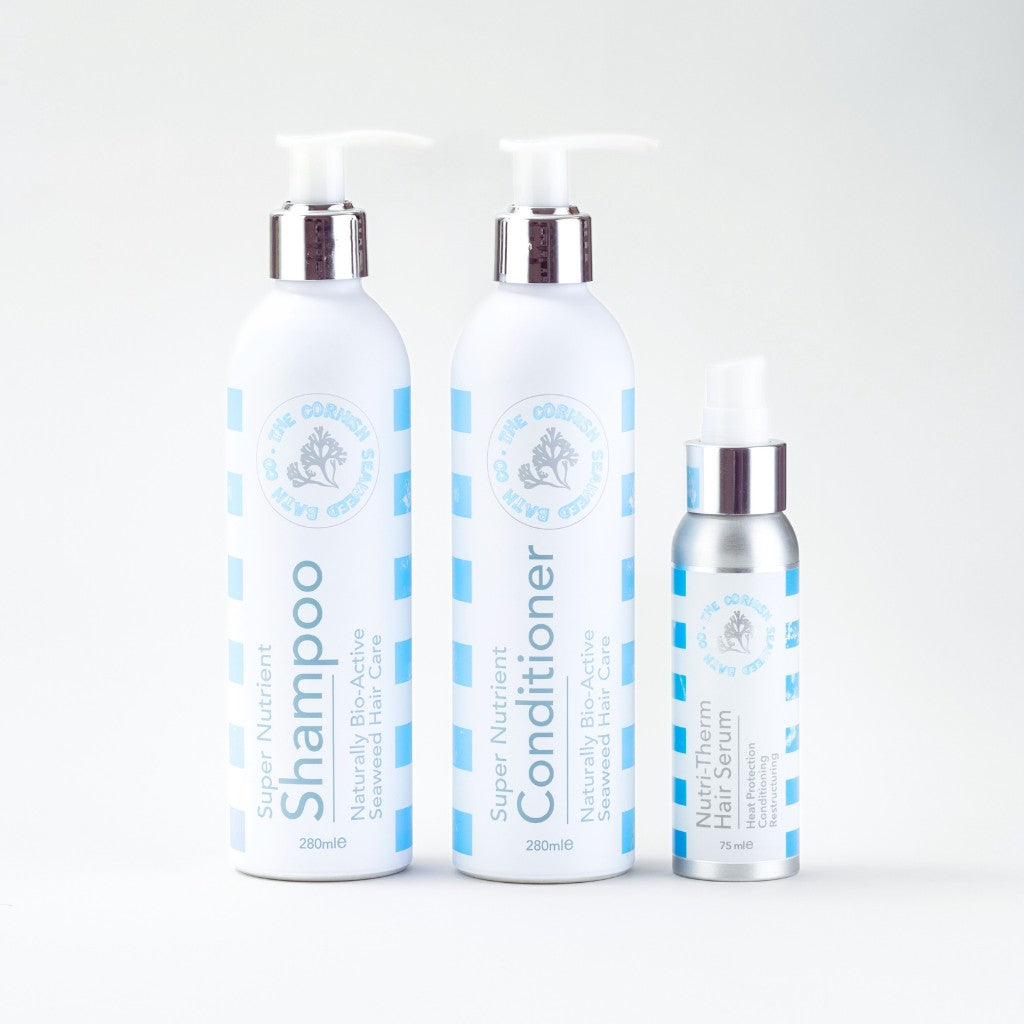
Choose shampoos that cleanse without stripping your scalp's already limited natural oils. Our Super Nutrient Shampoo contains Cornish seaweed alongside frankincense, providing gentle cleansing whilst supporting your scalp's changing needs. For more persistent flaking, our Super Nutrient Detox Shampoo offers stronger, sulphate-free cleansers that address stubborn build-up without harsh chemicals.
Avoid shampoos containing sodium lauryl sulphate or artificial fragrance. These can worsen sensitivity that's already heightened during menopause.
Don't Skip Conditioner on Your Scalp
Here's something many women don't realise: our Super Nutrient Conditioner can safely contact your scalp. It delivers moisture through oat kernel oil whilst tuber fleeceflower root provides targeted scalp support. This approach helps address the dryness that contributes to flaking and irritation.
Weekly Intensive Treatments
Once or twice weekly, treat your scalp to something special. Our Super Nutrient Hair & Scalp Oil combines oat kernel oil, jojoba oil, and Cornish seaweed with eucommia bark and tuber fleeceflower root. A concentrated treatment that addresses multiple menopausal scalp concerns at once.
Treatment guide: Apply scalp treatments to slightly damp hair, massage gently into problem areas, and leave for 20-30 minutes before shampooing. This gives ingredients proper time to work without over-manipulating sensitive tissue.
How Often Should You Wash?
Menopausal scalps often benefit from less frequent washing than you might expect. Over-cleansing strips away the limited natural oils your scalp still produces, which can actually trigger more flaking.
Pay attention to your individual patterns. Some areas may need more frequent attention whilst others prefer gentler, less frequent care. Your scalp is unique, especially during this transitional time.
What to Expect Going Forward
The best scalp treatment for menopausal dandruff supports both immediate symptoms and the underlying hormonal shifts, using consistent, gentle care rather than harsh quick fixes. Natural ingredients like Cornish seaweed work with your body's changing needs rather than masking symptoms.
Be patient with yourself. Results typically appear within 4-6 weeks of consistent natural care, though everyone's journey is different. Your level of sensitivity, previous product use, and individual hormone fluctuations all play a role.
Remember, menopausal scalp changes often ease as your hormones settle into their new patterns. Supporting this transition with nourishing treatments helps maintain comfort whilst your body adapts, setting you up for healthier scalp conditions ahead.
Frequently Asked Questions
How do you get rid of dandruff during menopause?
During menopause, finding a gentle scalp treatment that supports your scalp's changing needs is key. Look for formulations with nourishing ingredients like Cornish seaweed and soothing botanicals that help restore moisture and balance. Our Super Nutrient Shampoo, for example, combines Cornish seaweed with frankincense to offer gentle cleansing while supporting your scalp's unique environment. For more persistent flaking, our Super Nutrient Detox Shampoo provides stronger, sulphate-free cleansers.
What causes dandruff during menopause?
Dandruff during menopause often stems from declining oestrogen levels, which can reduce your scalp's natural oil production and compromise its protective barrier. This creates an environment where naturally occurring yeasts, like Malassezia, can flourish more easily. It's not just about dryness, but also an altered scalp microbiome and barrier function needing gentle support.
Does low estrogen cause an itchy scalp?
Yes, declining oestrogen levels during menopause can certainly contribute to an itchy scalp. This hormonal shift often reduces the scalp's natural oil production and weakens its protective barrier. A compromised barrier makes your scalp more susceptible to irritation and dryness, which can manifest as persistent itching.
What kind of scalp treatment is best for menopausal dandruff?
The best scalp treatment for menopausal dandruff focuses on gentle, nourishing ingredients that address both flaking and the underlying hormonal changes. We find Cornish seaweed particularly beneficial for its rich mineral content and humectant properties, helping to support the scalp's moisture barrier. Look for products that also include soothing botanicals like frankincense or nourishing oils such as oat kernel oil to support comfortable skin.
How is menopausal dandruff different from regular dry scalp?
While dry scalp typically presents with small, fine flakes and a feeling of tightness, menopausal dandruff often involves larger, oilier flakes accompanied by more persistent itching. During menopause, your scalp might even experience both conditions simultaneously due to varying hormonal impacts across different areas. Nuanced care that moisturises and supports balance is often most helpful.
Can specific ingredients help soothe an irritated menopausal scalp?
Absolutely. Ingredients like Cornish seaweed are wonderful for supporting the scalp's compromised moisture barrier and providing nutrients. Frankincense resin offers soothing properties that can calm irritated scalp tissue, while oat kernel and jojoba oils provide moisture to support the skin's surface. For particularly dry or irritated patches, our Skin Repair Balm, containing seaweed and calming botanicals, can offer targeted support.