 It's Early Summer!





hair thinning during menopause
Hair Thinning During Menopause: Natural Solutions That Work
As oestrogen levels shift, you may notice more strands on your pillow, a wider parting, or hair that feels less full than before. Hair thinning during menopause affects around 40% of women, yet the conversation often stays quiet. This guide walks you through the reasons behind these changes and offers research-backed, natural ways to nourish your scalp and support healthier-looking hair during this transition.
The main driver is falling oestrogen and rising androgens, which shorten the growth phase and shrink follicles. You can support your hair through gentle, nutrient-rich cleansing, targeted scalp oils, and lifestyle adjustments that prioritise rest, balanced nutrition, and stress management. While regrowth timelines vary, consistent care may help restore thickness and texture over several months.
Understanding Hair Thinning During Menopause
Hormonal Changes and Their Effect on Hair Growth
Oestrogen prolongs the anagen (growth) phase of your hair cycle. When levels drop during perimenopause and menopause, follicles spend less time growing and more time resting, leading to shorter, finer strands. At the same time, the relative increase in androgens can miniaturise follicles--a process similar to androgenetic alopecia. Research suggests this hormonal shift doesn't cause permanent follicle death; it alters the cycle, which means regrowth may remain possible with supportive care.
Common Symptoms and How They Appear
Diffuse thinning across the crown and temples is typical, rather than distinct bald patches. Shedding often increases during washing or brushing, and the parting may widen gradually over months. Unlike sudden hair loss after illness or acute stress, menopausal thinning tends to progress slowly, making it easy to dismiss until the change becomes more pronounced.
Factors Beyond Hormones That Contribute
Thyroid imbalances, iron deficiency, and prolonged stress compound hormonal effects. Sleep disruption and hot flushes, common during menopause, raise cortisol, which further shortens the growth phase. Nutritional gaps--particularly in protein, iron, zinc, and B vitamins--weaken strand integrity and slow keratin production. Addressing these factors alongside hormonal change offers a more complete approach.
Key Insight: Hair follicles remain viable even when thinning is noticeable. Consistent, gentle nourishment can coax dormant follicles back into a healthier growth pattern over time.
Nourishing Your Scalp and Hair Naturally
Why Scalp Health Matters During This Time
A calm, well-nourished scalp provides the foundation for stronger hair. Declining oestrogen can reduce sebum production, leaving the scalp dry and prone to irritation. Inflammation and poor circulation hinder follicle function, so maintaining a balanced scalp environment becomes especially important.
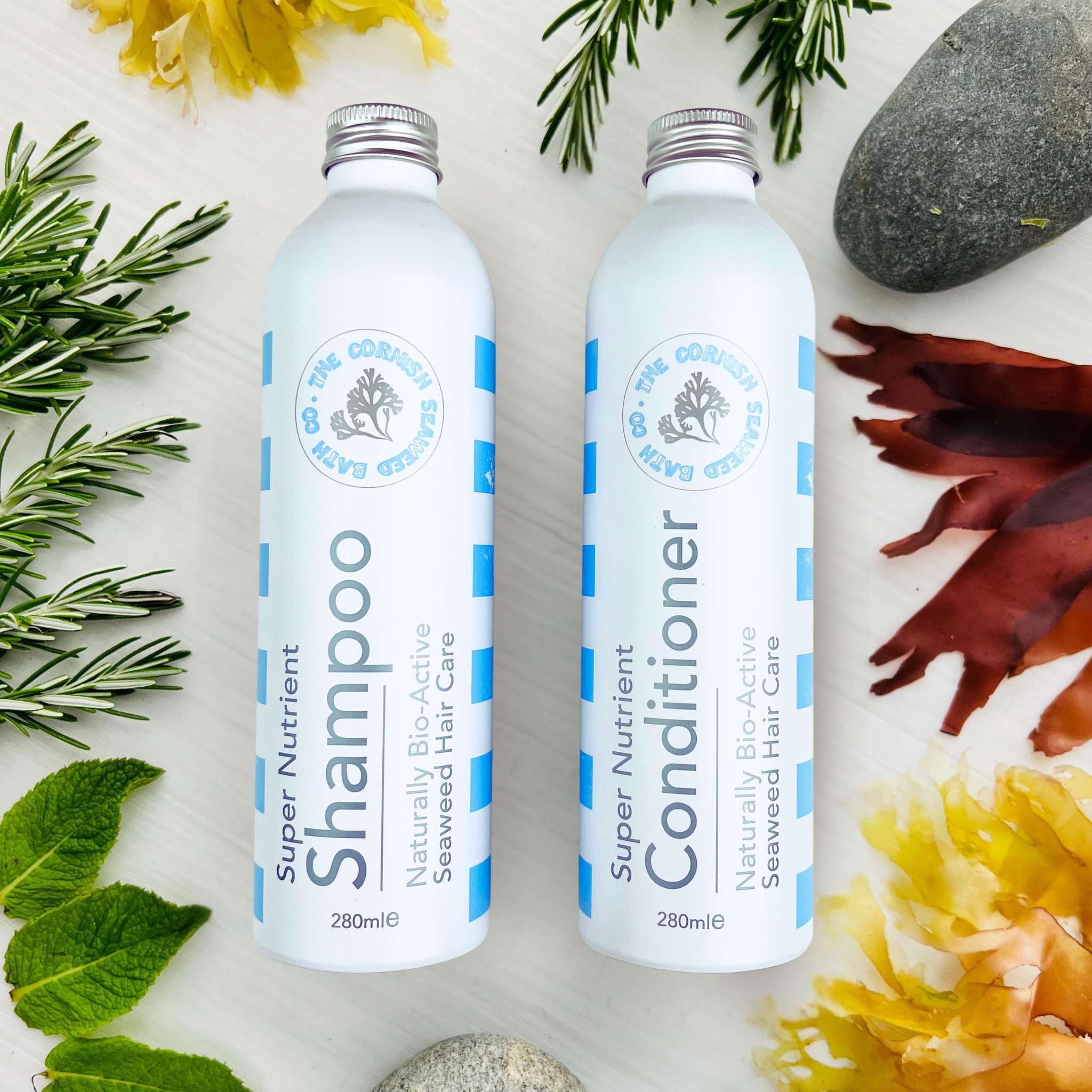
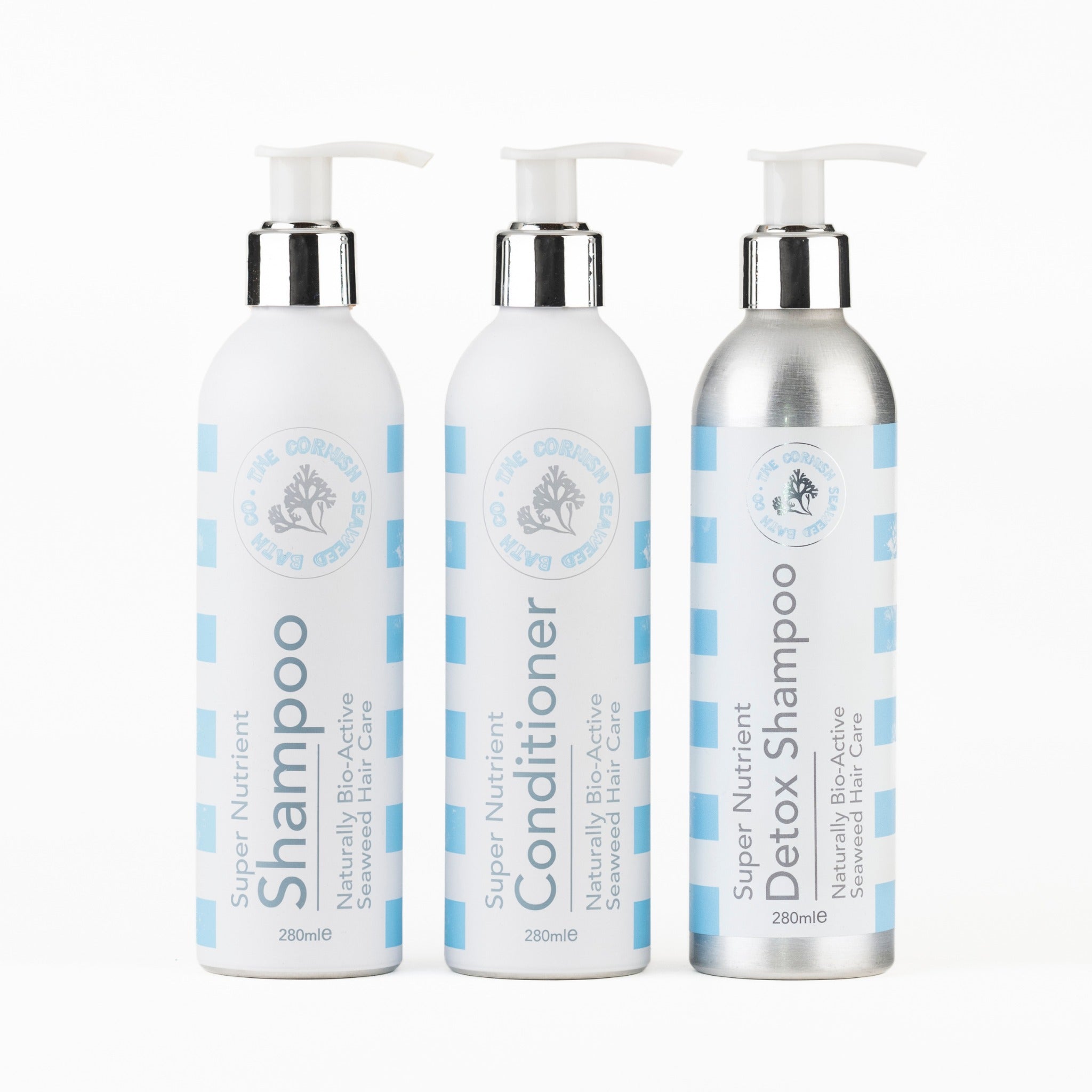
Our Super Nutrient Shampoo and Conditioner for Gentle Care
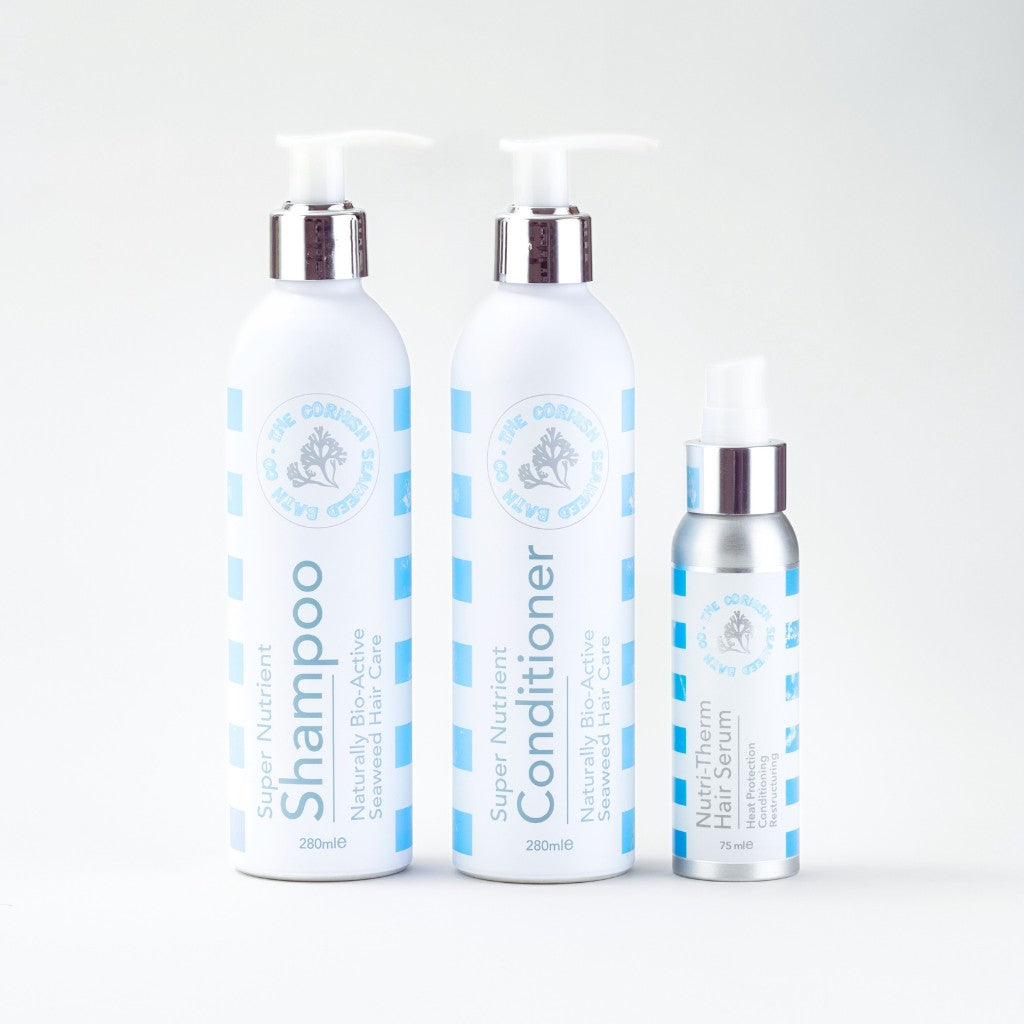
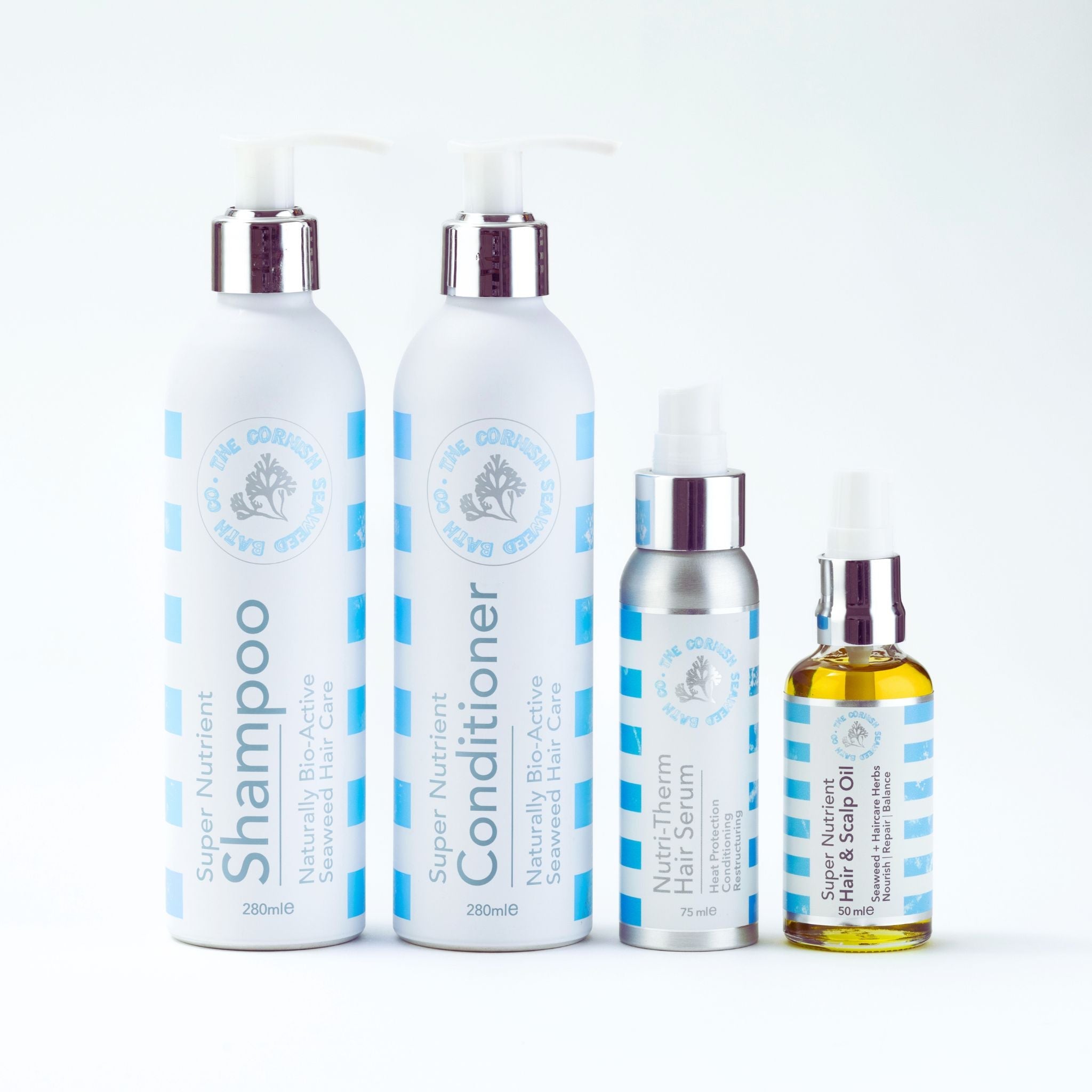
Our Super Nutrient Shampoo combines Fucus Serratus seaweed with Angelica sinensis, tuber fleeceflower root, argan, and oat kernel oils to cleanse without stripping natural moisture. Frankincense and mint soothe the scalp, while D-panthenol supports strand flexibility. Apply a small amount to wet scalp, massage gently with fingertips, and rinse thoroughly.
Pair it with our Super Nutrient Conditioner, which uses seaweed, tuber fleeceflower root, Angelica sinensis, frankincense, argan oil, and oat oil with clary sage, mint, and rosemary. After shampooing, apply to wet hair, focusing on mid-lengths and ends, leave for 1-3 minutes, then rinse. This lightweight, sulphate- and silicone-free formula hydrates without weighing hair down.
Super Nutrient Hair & Scalp Oil to Support Strength
Our Super Nutrient Hair & Scalp Oil delivers eucommia bark, tuber fleeceflower root, lovage root, and Fucus Serratus seaweed in a base of Eco Silk, jojoba, oat kernel, broccoli seed, and castor seed oils.
Use as a pre-wash treatment: pump onto the scalp and gently massage in using your fingertips (not nails) to encourage absorption, then comb through the lengths. Leave on for a minimum of 20 minutes before shampooing out. For a deeper treatment, apply before bed and leave on overnight.
This treatment may help restore scalp balance, soften dry hair, and support healthy hair appearance.
When to Seek Further Advice and Next Steps
Recognising When Changes Warrant Professional Input
If thinning accelerates suddenly, appears in patches, or accompanies scalp soreness or a rash, consult your GP or a trichologist. Blood tests can rule out thyroid disorders, anaemia, or nutrient deficiencies that require specific treatment.
haircare-range-for-ongoing-support">Discovering Our Haircare Range for Ongoing Support
Explore our full haircare collection to build a routine that suits your needs. From our Light Hold Hair Mousse for volume to our Nutri-Therm Hair Serum for heat protection, each product is formulated to work gently alongside your scalp's natural rhythms.
Signs Your Hair Is Changing with the Menopause
Diffuse Thinning and Widening Parts
The most common sign is a gradual reduction in overall density rather than isolated bald spots. Your parting may widen slowly, revealing more scalp when you pull your hair back or style it in certain ways. This diffuse pattern reflects how hormonal shifts affect follicles across the entire scalp, rather than targeting specific zones. You might find yourself adjusting hairstyles or using different partings to compensate for the change in volume. Research confirms that widening parts are a recognized hallmark in postmenopausal hair loss.
Increased Shedding and Dryness
Losing 50 to 100 strands daily is normal, but during menopause that number can climb noticeably. You may see more hair in the shower drain, on your brush, or on your pillow. Strands often become drier and more brittle because sebum production declines alongside oestrogen. Hair that once felt soft may now tangle easily or snap when brushed, signalling a need for gentler handling and deeper nourishment.
Texture Shifts and Brittle Strands
Many women report that their hair feels coarser, wiry, or less manageable. Natural waves may flatten, or straight hair may develop unexpected kinks. These texture changes stem from alterations in the hair shaft's structure as follicles produce thinner, weaker strands. Brittleness increases the risk of breakage, particularly at the mid-lengths and ends, making regular trims and protective care more important.
What to Monitor
- Gradual widening of your parting over several months
- More shedding during washing or brushing than usual
- Dryness, brittleness, or unexpected texture changes
- Reduced volume when styling, especially at the crown
When to Act Quickly
- Sudden, patchy hair loss rather than gradual thinning
- Scalp redness, soreness, or persistent itching
- Hair loss accompanied by fatigue or unexplained weight changes
- No improvement after six months of consistent care
Daily Practices to Support Thicker-Looking Hair
Gentle Washing Routines That Suit Your Needs
Wash frequency depends on your scalp's oiliness, activity level, and product use. Some women find that every other day works well, while others prefer twice weekly to avoid stripping natural oils. Use lukewarm water to prevent drying out the scalp, and massage our Super Nutrient Shampoo gently with your fingertips rather than scrubbing vigorously. Rinse thoroughly to remove all residue, which can weigh hair down and make thinning more apparent. Follow with our Super Nutrient Conditioner, applying it to mid-lengths and ends for 1-3 minutes to nourish strands.
Incorporating Targeted Hair Serums and Mousses
Our Nutri-Therm Hair Serum contains Fucus Serratus seaweed, bamboo leaf, eclipta, broccoli seed oil, and plant proteins with clary sage, lavender, ho wood, and rose geranium. Apply a small amount to damp or towel-dried hair before heat styling, distributing through mid-lengths and ends. This lightweight serum can also be used as a leave-in to hydrate, smooth, and reduce frizz.
For added volume, our Light Hold Hair Mousse blends Fucus Serratus seaweed, broccoli seed oil, bamboo, eclipta, aloe vera, panthenol, and hydrolysed wheat protein with clary sage, lavender, ho wood, and rose geranium. Dispense 1-2 pumps into your palm and apply through damp hair--at roots for lift or through mid-lengths and ends for definition--then style as usual. This non-aerosol, non-sticky formula offers natural hold and volume without stiffness.
Nutrition, Sleep, and Stress Management
Hair is primarily keratin, a protein that requires adequate dietary amino acids to maintain strength. Prioritise protein-rich foods such as eggs, fish, lentils, and nuts. Include iron sources like spinach and lean meat, and consider a B-complex supplement if your diet lacks variety. Iron and zinc deficiencies often accompany menopause and can affect hair growth, so blood tests can identify whether supplementation is warranted.
Stress management plays a direct role. Chronic cortisol elevation shortens the anagen phase and pushes more follicles into telogen (resting) simultaneously, resulting in noticeable shedding several months later. Practices such as gentle yoga, daily walks, or even ten minutes of focused breathing can lower cortisol and create a more favourable environment for regrowth.
Aim for seven to eight hours of sleep nightly to allow your body to repair and regenerate tissues, including hair follicles. Maintain consistent bedtimes and keep your room cool and dark to support the body's repair processes overnight.
Practical Tip: Keep a soft-bristle brush or wide-tooth comb handy to detangle gently, starting from the ends and working upwards. Avoid tight hairstyles that pull on the scalp, which can worsen thinning along the hairline.
Combining Natural Care with Broader Wellness
Hair thinning during menopause responds best when you address both external nourishment and internal balance. The botanical ingredients in our haircare range support your scalp and strands, and their effectiveness increases when paired with attention to overall wellbeing during this transition.
Hydration affects scalp health and strand flexibility. Drinking enough water throughout the day keeps the scalp supple and helps nutrients reach follicles efficiently. Pair this with our Super Nutrient Body Oil if you enjoy a post-bath ritual that extends nourishment beyond your scalp. The seaweed-infused blend moisturises skin while offering a moment of calm.
| Approach | How It Supports Hair | Practical Implementation |
|---|---|---|
| Nutrient-rich diet | Provides protein, iron, zinc, and B vitamins for keratin production and follicle function | Include eggs, fish, lentils, leafy greens, and nuts daily; consider targeted supplements after blood tests |
| Stress reduction | Lowers cortisol to extend the growth phase and reduce telogen shedding | Establish a daily practice: yoga, walking, breathwork, or journalling for 10-20 minutes |
| Quality sleep | Enables cellular repair and hormone regulation overnight | Maintain consistent bedtimes; keep your room cool and dark; limit screens before sleep |
| Scalp and strand care | Nourishes follicles directly and protects existing hair from breakage | Use our Super Nutrient Shampoo, Conditioner, and Hair & Scalp Oil; apply Nutri-Therm Serum before heat styling |
Patience remains essential. Follicles cycle slowly, and visible improvements typically emerge after three to six months of consistent care. Some women notice reduced shedding first, followed by finer regrowth that gradually thickens. Others see texture improvements before density changes. Track your progress with monthly photos rather than daily mirror checks, which can amplify anxiety and obscure gradual gains.
If six months pass without improvement, or if thinning accelerates unexpectedly, consult your GP or a trichologist. Blood tests can reveal thyroid imbalances, anaemia, or autoimmune conditions that require specific treatment. A specialist may also discuss hormone replacement therapy or other medical interventions alongside your natural care routine. Clinical evidence confirms the hormonal impact on hair cycles.
Our haircare range is designed to work gently within your body's rhythms, offering nourishment without harsh intervention. Whether you begin with our Super Nutrient Shampoo and Conditioner, add the Hair & Scalp Oil for targeted support, or explore our Light Hold Hair Mousse for volume, each product complements the others and fits into a sustainable, long-term approach. Hair thinning during menopause need not define this chapter: with informed care and realistic expectations, you can support healthier, fuller-looking hair as your body adjusts. Studies on regrowth potential highlight this encouraging outlook.
Frequently Asked Questions
Will hair loss due to menopause grow back?
While hormonal shifts during menopause can alter your hair's growth cycle, research suggests that hair follicles often remain viable. With consistent, gentle nourishment and supportive care, it is possible to encourage dormant follicles back into a healthier growth pattern over several months. Our Super Nutrient Hair & Scalp Oil, for example, is crafted to support scalp balance and healthy hair appearance.
How can I support my hair to avoid thinning during menopause?
Supporting your hair during menopause involves a holistic approach, focusing on gentle, nutrient-rich cleansing and targeted scalp care. Prioritising lifestyle adjustments like balanced nutrition, adequate rest, and stress management can also make a meaningful difference. Our Super Nutrient Shampoo and Conditioner offer a gentle, nourishing foundation for your hair's wellbeing.
Does estrogen affect hair growth during menopause?
Yes, oestrogen plays a significant part in your hair's growth cycle, helping to prolong its active phase. As oestrogen levels naturally decline during menopause, follicles spend less time growing and more time resting, which can lead to hair that feels shorter and finer. This hormonal shift is a primary reason many women notice changes in their hair's density.
What nutrients are good for supporting hair health during menopause?
A balanced diet rich in specific nutrients is truly beneficial for hair health during this transition. The article highlights that nutritional gaps, particularly in protein, zinc, and B vitamins, can weaken strand integrity. Ensuring you receive enough of these through your diet can help support stronger, healthier-looking hair.
When should I consult a doctor about menopausal hair thinning?
While some hair thinning is a common part of menopause, it's wise to consult your GP or a trichologist if you notice sudden acceleration, distinct bald patches, or if you experience scalp soreness or a rash. They can help rule out other underlying conditions like thyroid imbalances, anaemia, or specific nutrient deficiencies that may require targeted medical support.