 February Favourites




Key Takeaways
- The 7 year skin rule is the belief that your skin completely renews itself every seven years.
- This belief is a myth and not scientifically accurate.
- Your skin renews continuously on much shorter cycles, typically every 28-40 days for the surface layers.
- The skin renewal process slows down as you age.
Table of Contents
Clearing Up the 7 Year Skin Rule
What is the 7 year skin rule? It's the widespread belief that your skin (or entire body) completely renews itself every seven years. While appealing, this is a myth. Your skin renews continuously on much shorter cycles, typically every 28-40 days for the surface layers, with this process gradually slowing as you age.
The idea that what the 7 year skin rule represents has captured imaginations for decades, suggesting we get a fresh start with our skin every seven years. This notion likely stems from averaged cell renewal rates across different body tissues, but it oversimplifies how your skin actually works. Rather than dramatic seven-year resets, your skin undergoes constant, gradual renewal that responds to your age, environment, and daily care choices.
At The Cornish Seaweed Bath Co., we understand skin as a living, dynamic organ that changes continuously throughout your life. Instead of waiting for mythical seven-year cycles, we focus on supporting your skin's natural renewal processes with nutrient-rich seaweed formulations that adapt to your evolving needs. The Seaweed Bath Ritual is a perfect example of this approach, helping to nourish and revitalise your skin as part of your regular self-care routine.
Understanding the reality behind skin renewal empowers you to make informed decisions about your skincare routine. By working with your skin's actual biology rather than following wellness myths, you can develop a more effective approach to maintaining comfort, resilience, and vitality in your skin throughout all of life's chapters.
What Is the 7 Year Skin Rule? Origins, Myths & Misunderstandings

Where the 7 Year Skin Rule Comes From
The seven-year skin rule appears in various forms across wellness culture: "Every cell in your body is new every seven years," "Your skin completely changes every seven years," or "You have an entirely different body every seven years." These claims likely emerged from early attempts to average cellular renewal rates across different tissues and organs, creating a tidy but inaccurate generalisation.
In reality, different cells throughout your body renew at vastly different rates. Your gut lining replaces itself within days, red blood cells last about 120 days, while some neurons may never fully replace themselves during your lifetime. Averaging these diverse timescales into a single seven-year figure creates a misleading picture of how biological renewal actually works. For a deeper dive into the science, see this resource on how quickly different cells in the body replace themselves.
The appeal of this myth lies in its simplicity, it suggests a predictable, universal timeline that applies to everyone. However, skin renewal operates on individual schedules influenced by genetics, lifestyle, environment, and age, making the seven-year rule both scientifically inaccurate and practically unhelpful for skincare decisions.
Why 7 Years Sounds So Convincing
Round numbers like seven hold particular appeal in wellness culture, offering the comfort of predictable cycles and fresh starts. The seven-year timeframe feels substantial enough to explain noticeable changes while remaining comprehensible and hopeful, suggesting that transformation is both inevitable and manageable.
We do experience roughly decade-based shifts in our skin during our late teens, mid-twenties, early thirties, and beyond. These natural transitions can make the seven-year concept feel intuitively correct, even though the actual changes happen gradually rather than in sudden cycles. When you notice increased dryness, fine lines, or sensitivity around these life stages, it's tempting to attribute them to completing a seven-year renewal cycle.
The myth also appeals because it implies that past skin damage or neglect becomes irrelevant after seven years, an attractive but false promise. In reality, cumulative factors like sun exposure, lifestyle choices, and skincare habits create lasting effects that influence how your skin ages and functions over time.
Skin Changes Every 7 Years: Fact or Fiction?
The seven-year skin reset is definitively fiction, but your skin does renew constantly on much shorter timescales. Healthy adult skin typically completes its surface renewal cycle every 28-40 days, with this process gradually lengthening as you age. This means you get genuinely new surface skin roughly 9-13 times per year, not once every seven years.
The confusion arises from conflating surface renewal with deeper structural changes. While your epidermis (outer layer) regenerates relatively quickly, deeper changes to collagen, elastin, and barrier function occur over many years through accumulated daily influences. These longer-term changes don't follow seven-year patterns either, they respond to genetics, environment, and care practices in highly individual ways.
Key takeaway: Your skin is renewing all the time, not in seven-year jumps. Focus on supporting this continuous process rather than waiting for mythical reset periods.
How Skin Cell Turnover Really Works (and How Long It Takes)
A Gentle Tour of Your Skin's Layers
Your skin consists of several layers working together to protect and renew themselves. The epidermis (outer layer) contains cells that begin life in the deepest part and gradually migrate upward over several weeks. As they travel, these cells flatten and fill with protective proteins, eventually reaching the surface as part of the stratum corneum, your skin's barrier.
The dermis lies beneath the epidermis and houses collagen, elastin, blood vessels, and other structures that give skin its strength and elasticity. While the epidermis renews regularly, the dermis changes much more slowly, which explains why deeper skin concerns develop gradually over years rather than weeks.
If you're curious about how natural ingredients support this process, you may enjoy reading about how seaweed is harvested for skincare and its benefits for skin renewal.
The 7 Year Skin Rule vs Real Skin Biology (Point-by-Point Comparison)
Side-by-Side: Myth Claims vs Evidence
When examining what the 7 year skin rule is against established dermatological research, clear discrepancies emerge. The myth suggests dramatic, timed transformations whilst science reveals gradual, continuous processes that vary significantly between individuals and life circumstances.
| 7 Year Skin Rule Claim | What Science Shows | What This Means for You |
|---|---|---|
| All skin is completely new every 7 years | Epidermis renews every 28-40+ days continuously | Daily care matters more than waiting for arbitrary cycles |
| Skin concerns reset automatically every 7 years | Deeper skin changes accumulate gradually over decades | Consistent prevention and support yield better results |
| You can ignore skincare until each 7-year 'reset' | Barrier health depends on regular, gentle maintenance | Small daily actions compound into significant benefits |
| Nothing from before matters after 7 years | Environmental damage and care habits have lasting effects | Past choices influence current skin, but improvement remains possible |
Short Cycles, Long Stories: Daily Care vs Long-Term Patterns
Understanding what the 7 year skin rule is versus reality reveals the interplay between different timeframes affecting your skin. Short-term cycles include daily cleansing and moisturising rituals that support immediate comfort. Medium-term cycles encompass monthly hormonal fluctuations that might temporarily affect oiliness or sensitivity. Long-term patterns develop over decades through cumulative sun exposure, lifestyle choices, and consistent care habits.
This layered approach proves far more useful than thinking in arbitrary seven-year blocks. Your skin responds to yesterday's cleansing routine, last month's stress levels, and years of environmental exposure simultaneously. Each timeframe offers opportunities for positive influence through thoughtful choices.
Rather than waiting for imaginary seven-year resets, we recommend "check-ins at life chapters", natural transition points like changing jobs, moving homes, or noticing your skin feels different. These organic moments provide better cues for routine adjustments than calendar-based rules.
Why the 7 Year Idea Can Still Be Helpful (With Adjustments)
Whilst the biological basis lacks merit, the seven-year concept can serve as a useful reminder to pause and assess your skin's evolving needs. Reframe it as a prompt for reflection rather than a scientific fact, an opportunity to notice subtle changes that might otherwise go unaddressed.
Consider these reflective questions every few years: "Does my skin feel tighter or drier than it used to?" "Do I feel more sensitive to products or weather changes?" "Has my lifestyle shifted significantly through work, location, or stress levels?" These inquiries help you stay attuned to genuine changes rather than following arbitrary timelines.
This gentler approach naturally leads to re-assessing routines and products as skin needs evolve. Perhaps your twenties routine of basic cleansing no longer provides adequate moisture, or your favourite products suddenly feel too heavy or too light. These signals indicate real biological shifts worth addressing through seaweed-based care that adapts to your skin's changing requirements.
For more on the importance of moisturising, see our guide on moisturiser and how it supports your skin's barrier function.
If you want to explore the science behind skin structure and renewal further, check out this comprehensive overview of skin structure and function.
How Your Skin Changes Through the Decades (Without Rigid Rules)

Your 20s: Foundation Years for Future Skin
During your twenties, skin typically maintains relatively faster turnover rates and natural resilience, though lifestyle factors like irregular sleep, stress, and environmental exposure begin leaving their mark. You might notice occasional blemishes alongside early signs of dehydration, particularly if your routine lacks consistent moisture support.
Three foundational habits serve you well during this decade: gentle cleansing that removes impurities without stripping natural oils, basic barrier support through appropriate moisturising, and consistent protection from environmental stressors including harsh weather, pollution, and excessive UV exposure. These practices establish patterns that benefit skin health for decades ahead.
Seaweed-based cleansers and facial oils provide excellent support during these formative years. Our Renewal Facial Cleanser removes daily impurities whilst respecting your skin's protective barrier, avoiding the harsh stripping action of conventional foaming cleansers. Following cleansing, Sea Organic Facial Oil offers lightweight nourishment with sweet orange and mandarin, or Organic Super-Nutrient Facial Oil provides comprehensive botanical support with lavender and grapefruit.
The key lies in establishing consistency rather than complexity. A simple routine performed daily yields better results than elaborate regimens attempted sporadically. Your twenties skin often forgives occasional lapses, but developing good habits now prevents more challenging issues later. To learn more about the basics, read our post on what is cleanser for face and how to choose the right one for your skin type.
Your 30s: Watching for Subtle Shifts
The thirties often bring the first noticeable changes in skin behaviour: slightly slower turnover, early fine lines around expressive areas, and more pronounced dehydration or uneven tone. These shifts reflect natural biological changes rather than sudden deterioration, making this an ideal time for gentle routine adjustments.
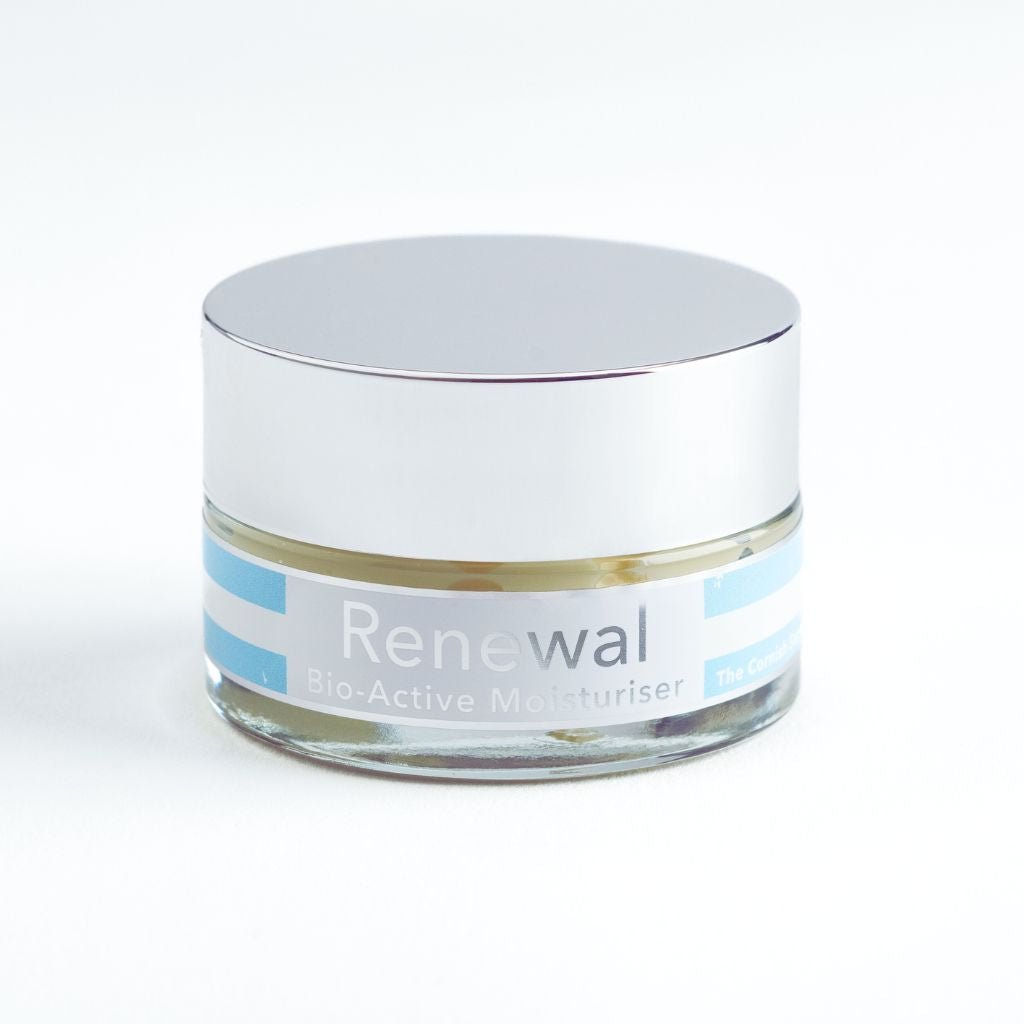
Introduce more deliberate night-time nourishment through richer moisturisers or facial oils like our Renewal Bio-Active Moisturiser, which combines seaweed with frankincense and ling zhi mushroom for enhanced comfort and smoothness. Pay closer attention to texture changes, adjusting exfoliation frequency based on how your skin responds rather than following rigid schedules.
Stress and sleep patterns often become more irregular during this decade due to career demands and life changes. These factors directly influence skin renewal cycles, making stress management and adequate rest increasingly important for maintaining comfort and resilience.
Frequently Asked Questions
What is the scientific truth behind how often skin actually renews itself?
Skin renews itself continuously, with the surface layers typically replacing every 28 to 40 days. This ongoing process involves gradual shedding and regeneration rather than a complete renewal at long intervals.
Why is the 7 year skin renewal rule considered a myth?
The 7 year skin renewal rule is a myth because it oversimplifies and inaccurately generalises cell renewal across the body. In reality, skin cells renew much more frequently, and different tissues regenerate at varying rates, making a fixed seven-year cycle incorrect.
How does the skin renewal process change as we age?
As we age, the skin's renewal process gradually slows down, leading to longer cycles of cell turnover. This change affects how the skin responds to environmental factors and care, requiring more attentive support to maintain its vitality.
How can understanding real skin biology improve my skincare routine?
By recognising that skin renews continuously and changes over time, you can tailor your skincare to support its natural rhythms. This approach encourages consistent nourishment and care that adapts to your skin’s evolving needs, rather than relying on outdated myths.
A picture tells a thousand words: out of necessity, some images in this blog post have been created using artificial intelligence models. This is to help us bring to life & more comprehensively express the written content within this post. We only using artificially generated images when we don’t have a suitable image available to us.