 January Sale!



Key Takeaways
- The question assumes beauty can be categorized by skin types such as oily, dry, combination, normal, or sensitive.
- Years of studying skin health reveal a deeper understanding beyond these categories.
- The most beautiful skin type is healthy skin.
- Healthy skin is beautiful regardless of natural oil production or sensitivity level.
Table of Contents
- Redefining Beauty in Your Skin
- What Makes Skin Truly Beautiful? Key Markers Beyond Type
- Understanding Your Skin Type: The Foundation of Beauty
- Cultural and Global Perspectives on Beautiful Skin
- Internal Factors Shaping Your Skin's Beauty Potential
- Long-Term Habits for Lifelong Skin Beauty
- Product Guide: Nurturing Your Skin with Our Seaweed Range
- Embracing Your Unique Skin Beauty
Redefining Beauty in Your Skin
The question "what is the most beautiful skin type?" assumes beauty exists in categories, oily, dry, combination, normal, or sensitive. Yet after years of studying skin health and working with natural formulations, we've discovered something more profound: the most beautiful skin type is healthy skin, regardless of its natural oil production or sensitivity level.
Beautiful skin reveals itself through five unmistakable markers: clarity that speaks of a strong barrier, natural radiance from deep hydration, smooth texture that feels as good as it looks, even tone that glows without makeup, and resilient elasticity that bounces back from daily stresses. These qualities transcend skin type, emerging when you nurture your unique skin with ingredients that support rather than fight its natural processes. Facial care products formulated with seaweed can help provide these essential nutrients and support for all skin types.
We'll guide you through understanding what makes skin truly radiant, how to work with your natural type rather than against it, and why Cornish seaweed-infused care offers a particularly effective path to skin that looks and feels genuinely beautiful. From recognising your skin's potential to building routines that enhance rather than mask, this exploration grounds beauty in health and vitality. For more on what it means to use truly natural skincare, read about what 100% natural skincare means.
What Makes Skin Truly Beautiful? Key Markers Beyond Type

Beautiful skin announces itself through five core markers that transcend any particular type. Clarity means minimal congestion and a clean, fresh appearance. Glow describes that natural radiance that comes from optimal hydration and healthy cell turnover. Smoothness refers to refined texture that feels soft and even. Even tone indicates balanced pigmentation without pronounced dark spots or redness. Elasticity shows in skin that feels plump and springs back when gently pressed.
Understanding the difference between skin type, condition, and concerns proves crucial for achieving these markers. Your type, whether naturally oily, dry, or combination, remains relatively constant throughout your life, determined by genetics and oil production. Your skin's condition, however, changes with factors like dehydration, stress, or seasonal shifts. Concerns such as sensitivity or reactivity can be managed and often improved with appropriate care. To learn more about the role of moisturisers in maintaining skin health, explore our guide to moisturisers.
These markers signal a strong skin barrier, your first line of defence against environmental stressors and moisture loss. A healthy barrier retains water effectively, creating that coveted natural glow while protecting against irritation and premature ageing. Internal factors like adequate hydration and quality sleep support this barrier function, while external care with nourishing ingredients helps maintain its integrity and appearance.
Understanding Your Skin Type: The Foundation of Beauty
Normal skin feels comfortable throughout the day with minimal shine or tightness. Dry skin often feels tight, especially after cleansing, and may show flaking or rough patches. Oily skin develops noticeable shine, particularly in the T-zone, and may be prone to enlarged pores. Combination skin exhibits oily areas (usually forehead, nose, chin) alongside dry or normal cheeks. Sensitive skin reacts easily to products or environmental factors with redness, stinging, or irritation.
Your skin type emerges from a complex interplay of genetics, hormones, age, and environment. Genetics largely determine your baseline oil production and pore size, while hormonal fluctuations, particularly during puberty, menstruation, pregnancy, or menopause, can temporarily shift your skin's behaviour. Age naturally reduces oil production and collagen synthesis, while environmental factors like humidity, temperature, and pollution influence daily skin function.
Undertone and skin tone contribute to perceived beauty, though true radiance transcends any particular shade. Cool undertones carry hints of pink or blue, warm undertones lean yellow or golden, and neutral undertones blend both. Each undertone can look equally stunning when the skin is healthy and well-cared for, challenging any narrow beauty ideals. For more on how skin tones are classified, see the Fitzpatrick scale.
To determine your type accurately, cleanse your face with a gentle cleanser, pat dry, and wait thirty minutes without applying any products. Observe how your skin feels and looks: shine across your entire face suggests oily skin, tightness indicates dry skin, mixed sensations point to combination skin, and any stinging or redness during this process suggests sensitivity. Repeat this assessment three times over a week for the most accurate picture, as daily variations can mislead single observations.
Cultural and Global Perspectives on Beautiful Skin
Historical beauty ideals reveal how cultural context shapes our perception of what is the most beautiful skin type. Traditional Asian and European cultures often prized pale, porcelain-like skin as a symbol of refinement and protection from manual labour, while many African and Mediterranean traditions celebrated rich, glowing skin tones as signs of vitality and health. These preferences reflected social structures and environmental adaptations rather than inherent beauty hierarchies.
Modern digital culture has created fascinating shifts in these ideals. Internet searches and social media trends show a growing global preference for even-toned, hydrated skin with a natural glow, regardless of depth or undertone. However, research indicates that lighter skin tones still dominate beauty searches in diverse countries like Brazil and India, suggesting persistent colonial influences on beauty standards despite increasing awareness of representation.
The reality remains that no single skin type or tone claims universal beauty. Health consistently trumps arbitrary ideals, resilient, well-maintained skin ages gracefully and radiates attractiveness across all tones and types. Studies in dermatology and psychology consistently show that markers of health, such as even texture and natural radiance, register as more attractive than any specific type or shade. For a deeper dive into the science of skin health and attractiveness, read this peer-reviewed article.
Rather than pursuing someone else's skin ideal, embrace your natural tone while focusing on health-based markers like clarity, hydration, and resilience. These qualities transcend any single type and create lasting beauty from within.
Internal Factors Shaping Your Skin's Beauty Potential

Your skin's beauty potential develops from within through lifestyle choices that directly impact those crucial markers of healthy skin. Diet plays a fundamental role, omega-rich foods like wild salmon, walnuts, and seaweed support skin elasticity and reduce inflammation that dulls your natural glow. Sleep provides essential repair time; during seven to nine hours of quality rest, your skin regenerates cells and produces collagen that maintains plumpness and resilience.
Stress management significantly affects skin beauty through cortisol regulation. Chronic stress elevates cortisol levels, which breaks down collagen, reduces skin barrier function, and creates that tired, lacklustre appearance many people struggle to address with topical products alone. Hormones like oestrogen support skin thickness and moisture retention, explaining why hormonal fluctuations during menstruation, pregnancy, or menopause can influence your skin's appearance. While topical care is important, these internal factors play a vital role in supporting your skin's natural beauty.
Long-Term Habits for Lifelong Skin Beauty
Beautiful skin evolves with age, requiring different approaches at each life stage. In your twenties, focus on prevention through consistent sun protection and gentle cleansing routines that preserve your skin's natural barrier. Your thirties call for enhanced hydration as collagen production begins to slow, this is when incorporating nourishing oils becomes particularly beneficial. To understand more about the importance of cleansing, read our article on what cleanser is for the face.
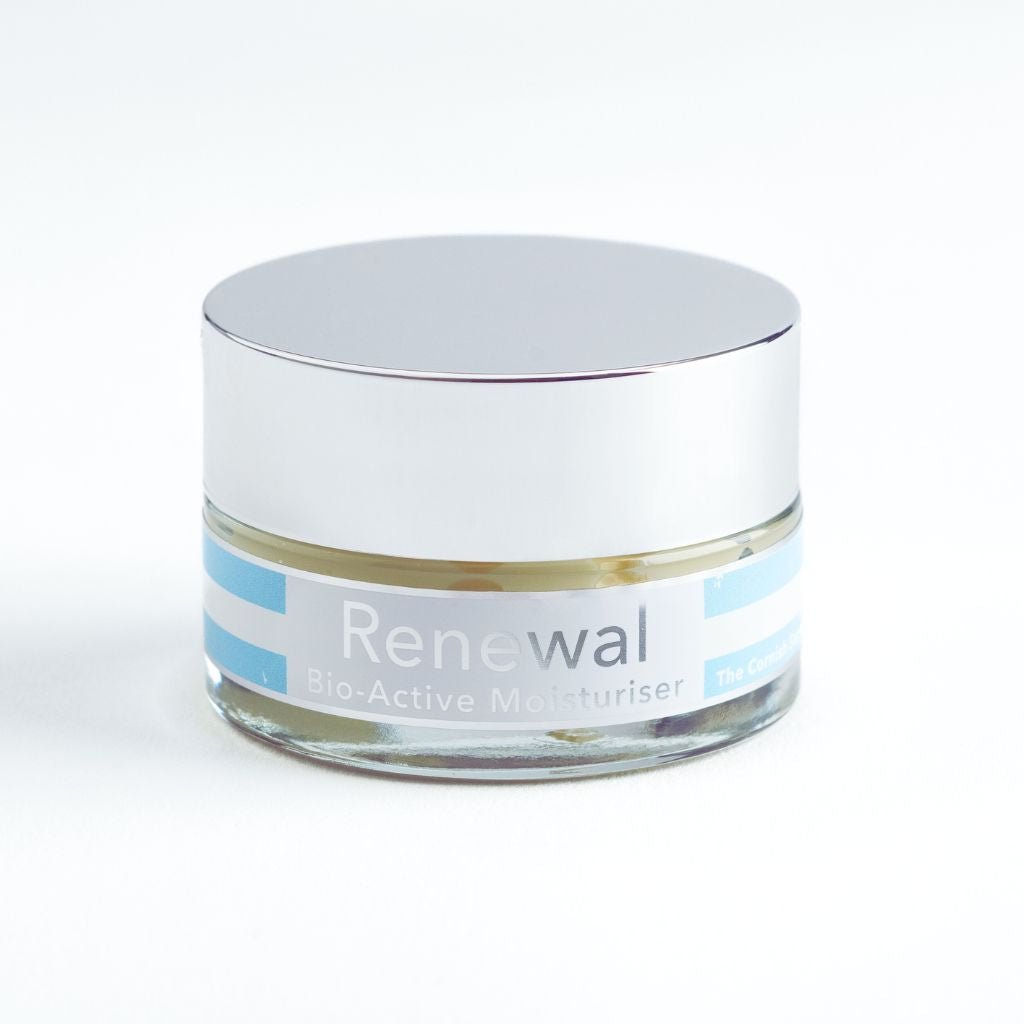
From your forties onwards, restoration takes priority. The frankincense resin in our Renewal Bio-Active Moisturiser supports skin elasticity, whilst the ling zhi mushroom provides antioxidant protection against environmental stressors. These ingredients work synergistically with seaweed to maintain the plumpness and resilience that characterise beautiful mature skin. Explore our facial care collection for products that support skin at every age.
Weekly skin assessments help you track changes and adjust your routine accordingly. Perform a gentle pinch test on your cheek to monitor elasticity, healthy skin should bounce back immediately. Consider an annual routine audit to ensure your products still serve your skin's evolving needs. Remember, consistency trumps complexity: three well-chosen products used faithfully will outperform an elaborate routine followed sporadically.
Sustainable practices support both your skin and the environment. Shorter showers preserve your skin's natural oils whilst conserving water, and using appropriate product amounts, typically pea-sized for moisturisers, ensures optimal absorption without waste.
Product Guide: Nurturing Your Skin with Our Seaweed Range
Our collection harnesses the mineral-rich properties of Cornish seaweed to support every skin type's journey towards natural beauty. Each formulation respects your skin's inherent wisdom whilst providing targeted nourishment. Discover facial care solutions for every skin type.
For dry skin seeking deep nourishment, our Wild Cornish Seaweed Bath delivers essential minerals through a relaxing soak, whilst the Sand Organic Facial Oil combines seaweed with sea buckthorn oil for intensive hydration. Those with oily or combination skin benefit from our Renewal Facial Cleanser, which removes impurities without disrupting the skin barrier.
Sensitive skin types find comfort in our Fragrance Free Seaweed Soap, formulated with only essential ingredients to minimise reactivity. For comprehensive daily care, the Organic Super-Nutrient Facial Oil suits all skin types, providing balanced nourishment that enhances your skin's natural radiance.
| Skin Type | Recommended Product | Key Benefits |
|---|---|---|
| Dry | Sand Organic Facial Oil | Deep hydration with sea buckthorn |
| Oily/Combination | Renewal Facial Cleanser | Gentle cleansing without stripping |
| Sensitive | Fragrance Free Seaweed Soap | Minimal ingredients, maximum gentleness |
| Normal | Organic Super-Nutrient Facial Oil | Balanced nourishment for daily use |
| Mature | Renewal Bio-Active Moisturiser | Supports elasticity and firmness |
What is the most beautiful skin type? It's the one that's been consistently cared for with products that work in harmony with your skin's natural processes. Our seaweed-infused formulations provide this gentle yet effective support, helping you achieve the healthy glow that transcends any single skin type classification.
Embracing Your Unique Skin Beauty

The question "what is the most beautiful skin type?" ultimately leads us to a profound truth: beauty lies not in conforming to a single ideal, but in nurturing your skin to its healthiest potential. Whether you have dry, oily, combination, sensitive, or normal skin, the markers of true beauty, clarity, hydration, evenness, and resilience, remain achievable through thoughtful care. For further reading on the power of natural botanicals, discover the simple power of angelica sinensis.
Your skin's beauty journey is uniquely yours, influenced by genetics, lifestyle, and the choices you make daily. The most beautiful skin type is simply healthy skin, supported by consistent routines that honour your individual needs whilst drawing on nature's most effective ingredients. Find the right facial care for your unique skin.
As you move forward, remember that beautiful skin is a reflection of overall wellbeing. The minerals and nutrients in Cornish seaweed support this holistic approach, working with your skin's natural processes rather than against them. Trust in your skin's inherent wisdom, provide it with gentle, effective care, and watch as your natural radiance emerges, regardless of which category your skin type falls into.
The most beautiful skin type is the one you're in right now, cared for with intention, respect, and the finest that nature has to offer.
Frequently Asked Questions
What defines healthy skin and why is it considered the most beautiful skin type?
Healthy skin is defined by balanced hydration, a strong protective barrier, and resilience to environmental factors. It is considered the most beautiful skin type because it reflects vitality and well-being, regardless of whether the skin is naturally oily, dry, or sensitive.
How do the five key markers of beautiful skin, clarity, glow, smoothness, even tone, and elasticity, transcend traditional skin type categories?
These markers focus on the overall condition and appearance of the skin rather than its classification. Clarity, glow, smoothness, even tone, and elasticity indicate skin that is well-nourished and cared for, qualities that can be achieved across all skin types with appropriate support.
How can understanding the difference between skin type, skin condition, and skin concerns improve my skincare routine?
Recognising that skin type is your natural baseline, while skin condition and concerns can change over time, helps you choose products that respond to your skin’s current needs. This approach encourages nurturing your skin’s health rather than simply addressing temporary issues or fitting into fixed categories.
What role do natural ingredients like Cornish seaweed play in supporting skin health across different skin types?
Cornish seaweed provides essential nutrients that help support the skin’s natural barrier and hydration. Its inclusion in our formulations offers gentle nourishment suitable for a variety of skin types, helping to maintain the markers of healthy, beautiful skin without disrupting its balance.
A picture tells a thousand words: out of necessity, some images in this blog post have been created using artificial intelligence models. This is to help us bring to life & more comprehensively express the written content within this post. We only using artificially generated images when we don’t have a suitable image available to us.