 January Sale!



Key Takeaways
- Approximately 60–70% of the skin's total weight is water, similar to the rest of the body.
- When all water is removed, collagen makes up about 70–80% of the skin's dry weight.
- Collagen primarily constitutes the dermis, which is the structural middle layer of the skin.
- The 70% figure can refer either to water content by total weight or collagen content by dry weight, causing confusion.
Table of Contents
- Quick Answer – What Makes Up 70% of the Skin?
- What Your Skin Is Really Made Of – A Simple Breakdown
- The Water-Rich Side of Skin – Hydration, NMF and the Barrier
- Collagen – The "70% of Dry Skin" Framework
- Water vs. Collagen – Which Matters More for Skin Health?
- How Skin's 70% Water Content Shifts Through Life
- Supporting Skin's Natural Composition with Our Seaweed Rituals
- Water vs. Collagen – Which Matters More for Daily Care?
What Makes Up 70% of the Skin? A Calm Guide to Your Skin's True Composition
Quick Answer at a Glance:
- By total weight: skin is mostly water (about 60–70%)
- By dry weight: skin is mostly collagen (about 70–80% of the dermis)
- Healthy skin needs both stable water content and a strong collagen network
The 70% Story in Two Parts: Water vs. Collagen
The confusion around "what makes up 70% of the skin?" stems from two different measurements. By total weight, your skin is roughly 60–70% water, similar to the rest of your body. However, when scientists remove all water and examine the skin's dry weight, collagen accounts for about 70–80% of the dermis, your skin's structural middle layer.
Both statements are accurate within their specific contexts. Water provides the plumpness and comfort you feel daily, while collagen creates the underlying framework that gives your skin its resilience and form. Moisturisers play a key role in supporting both hydration and skin structure for optimal comfort.
Why This 70% Matters for How Your Skin Feels
When your skin's water content drops, you'll notice tightness, fine lines that appear after cleansing, and a general feeling of discomfort. This surface-level hydration affects how your skin responds to products and environmental changes throughout the day.
Collagen influences the deeper sensations, how firm your skin feels when you press it, how quickly it bounces back, and that underlying sense of structural support. Rather than chasing quick fixes, we focus on daily rituals that honour both your skin's water-rich barrier and its protein-rich foundation. If you struggle with persistent dryness, explore our dry skin collection for targeted solutions.
What Your Skin Is Really Made Of – A Simple Breakdown

The Three Main Layers: Epidermis, Dermis, Hypodermis
Your epidermis forms the protective outer barrier, rich in specialised cells and natural moisturising factors that help retain water. The dermis beneath contains most of your skin's collagen, elastin, and blood vessels within a water-rich gel matrix. The deepest hypodermis provides cushioning through fat cells and connects your skin to underlying structures.
The "70% figure" typically refers to the combined water content across these layers, though the distribution varies, your dermis holds significantly more water than the outer epidermis.
What Skin Is Made Of by Type – Water, Proteins, Fats, Minerals
Understanding what makes up 70% of the skin becomes clearer when you consider the different molecular components working together.
At a Glance: What's in Your Skin?
- Water: About two-thirds by total weight
- Proteins: Collagen, elastin, and keratin form most of the dry mass
- Lipids: Essential fats in the barrier and deeper layers
- Minerals and small molecules: Support cellular functions
This natural composition guides our approach to skincare, gentle cleansers that respect your skin's lipid balance, and moisturisers that support both immediate comfort and long-term resilience. For more on choosing the right cleanser, see our cleanser guide.
The Water-Rich Side of Skin – Hydration, NMF and the Barrier
Is Skin Really 70% Water?
Your skin does hold a substantial proportion of water, particularly in the dermis where it forms a gel-like matrix around collagen fibres. However, the outermost stratum corneum contains less water, typically around 10–30%, yet this layer determines how comfortable your skin feels moment to moment.
The key lies in balance. Skin functions optimally when it maintains adequate hydration without becoming waterlogged, which is why both water content and the mechanisms that regulate it matter equally.
Natural Moisturising Factor (NMF) – Skin's Built-In Humectant System
Your skin produces its own collection of water-attracting molecules, amino acids, urea, and lactic acid, that help maintain flexibility and comfort. This natural moisturising factor works like a built-in humectant system, drawing moisture from the environment and deeper skin layers.
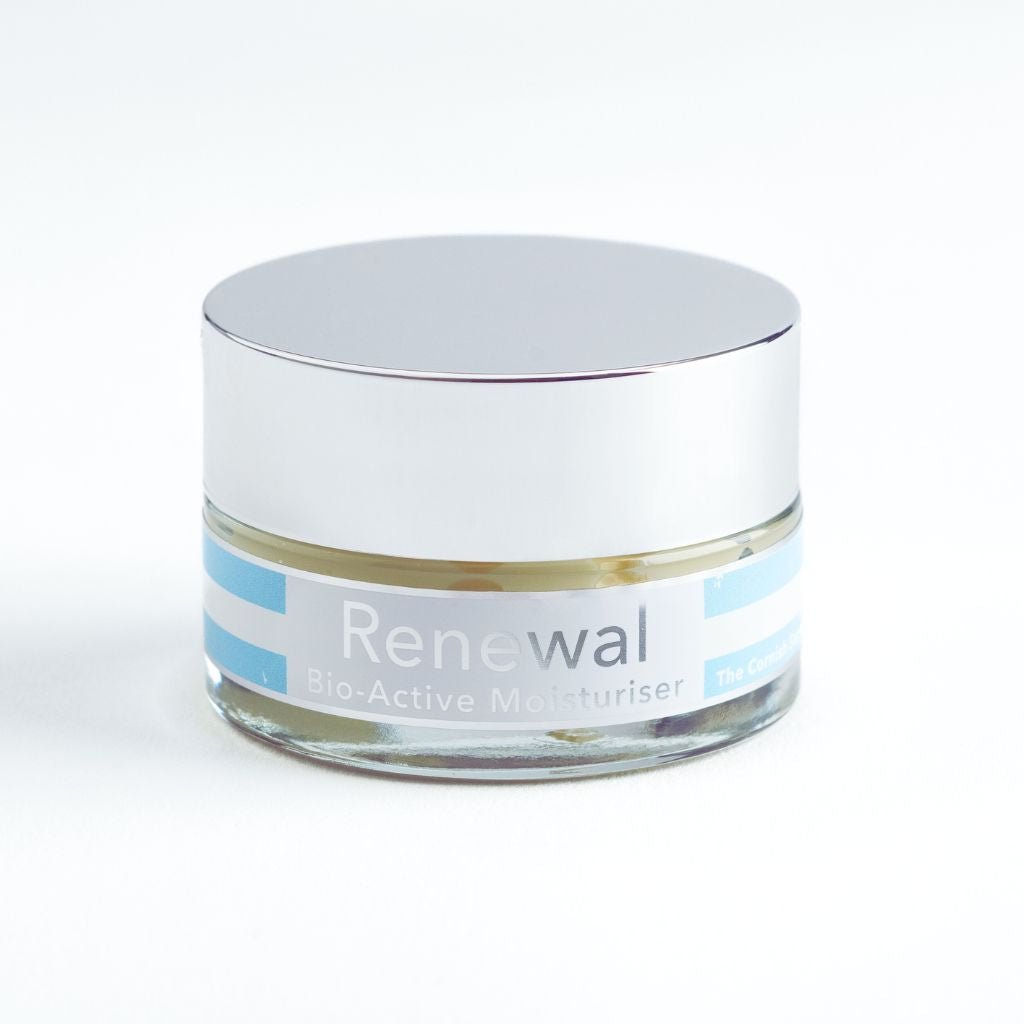
Harsh cleansing or over-washing can disrupt this delicate system. After cleansing with our Renewal Facial Cleanser, apply our Renewal Bio-Active Moisturiser within three minutes to support this natural process while your skin surface retains beneficial dampness.
Barrier Lipids – The Fats That Keep Water In
Think of your skin barrier as bricks and mortar, cells form the bricks while lipids create the mortar that seals gaps and prevents water loss. While we don't list ceramides in our formulations, the natural plant oils in our products supply supportive fatty acids that help your barrier feel more comfortable.
The jojoba oil in our Renewal Bio-Active Moisturiser, Sand Organic Facial Oil, and Organic Super Nutrient Body Oil provides lightweight nourishment that absorbs readily. Similarly, the sea buckthorn oil in our Sand Organic Facial Oil and Organic Super-Nutrient Facial Oil offers natural vitamin E and essential fatty acids that support barrier comfort.
After cleansing, apply your chosen product to slightly damp skin, this helps seal in surface moisture whilst the natural oils work to support your barrier's lipid layer. Use gentle, upward motions and allow a minute or two for full absorption.
Collagen – The "70% of Dry Skin" Framework
How Much of the Skin Is Collagen by Dry Weight?
When we examine what makes up 70% of the skin from a structural perspective, we're looking at the dermis, your skin's middle layer. Here, collagen forms approximately 70-80% of the dry weight, creating the scaffolding that gives skin its firmness and resilience. This figure specifically relates to structural proteins after water content is removed, which explains why you'll see both water and collagen cited as comprising "70% of skin."
What Collagen Does for Your Skin
Collagen functions as your skin's primary structural framework, forming strong fibres that support the tissue's shape and bounce-back quality. These fibres sit within a water-rich gel in the dermis, demonstrating how hydration and structure work together, neither functions optimally without the other.
Elastin fibres, though present in smaller quantities, partner with collagen to provide stretch and recoil. Together, they create the foundation that determines how your skin feels when you press it gently and release.
Ageing and Collagen – What Changes Over Time
Collagen production naturally slows as we age, and existing fibres gradually become less organised. This process manifests as softer facial contours, fine lines, and skin that feels thinner or less resilient to touch.
Consistent daily care supports your skin's comfort during these natural changes. Look for products that combine nourishing oils with supportive botanicals, our Organic Super-Nutrient Facial Oil provides jojoba, tamanu, and sea buckthorn oils alongside seaweed extract, whilst our Renewal Bio-Active Moisturiser includes frankincense resin and ling zhi mushroom for additional nourishment. For a comprehensive facial care routine, see the CSBCO facial care guide.
Water vs. Collagen – Which Matters More for Skin Health?

Side-by-Side Comparison
| Aspect | Water Content | Collagen Structure |
|---|---|---|
| Main Role | Maintains hydration, plumpness, barrier function | Provides structural support, firmness, resilience |
| Typical Proportion | 60-70% of total skin weight | 70-80% of dermis dry weight |
| Signs When Depleted | Tightness, dullness, fine dehydration lines | Loss of firmness, deeper lines, less bounce-back |
| Daily Care Focus | Barrier support, gentle cleansing, immediate comfort | Long-term nourishment, protective habits |
How Water and Collagen Work Together
Rather than competing, water and collagen function as partners. Well-hydrated tissue allows the collagen matrix to maintain its structure and flexibility, whilst strong collagen fibres help hydrated skin retain its shape and resilience. When you care for your barrier to hold water effectively, you're indirectly supporting the comfort of the collagen-rich dermis beneath.
Everyday Habits That Support Both
Adopt a gentle cleanse-nourish-protect routine morning and evening rather than skipping care entirely. Use comfortably warm water instead of very hot temperatures, which can compromise your barrier unnecessarily.
After cleansing, apply a pea-sized amount of Renewal Bio-Active Moisturiser or 2-3 drops of one of our facial oils whilst skin is still slightly damp. This simple timing helps seal in comfort and provides the lipids your barrier needs to function smoothly. For more on the science behind skin composition, see this authoritative review on skin structure.
How Skin's 70% Water Content Shifts Through Life
Changes in Hydration and Barrier with Age
The outer layer often becomes drier and more fragile over time, affecting how well your skin holds onto its natural water content. This can manifest as tightness within minutes of washing, makeup catching on dry patches, or visible flaking in areas that were previously smooth.
Recognising When Your Skin's Water Content Feels Low
Watch for skin that feels tight immediately after cleansing, fine temporary lines that soften after moisturising, or rough texture or visible flaking. These signs often indicate that your skin's natural water-holding mechanisms need gentle support.
Is Your Skin Thirsty? 3 Signs to Notice
- Tightness within minutes of cleansing
- Fine lines that disappear after moisturising
- Rough patches or flaking, especially on cheeks or forehead
Gentle Rituals to Support Changing Skin
If your face feels tight after washing, use our Renewal Facial Cleanser, rinse thoroughly, then apply Renewal Bio-Active Moisturiser within three minutes while your skin retains surface moisture.
For body skin that feels dry and rough, use Organic Body Scrub once or twice weekly on damp skin in the shower, followed by Organic Super Nutrient Body Oil applied to towel-dried skin. The jojoba oil and rosehip oil in our body oil provide fatty acids that help support your skin's natural barrier function. For additional reading on the benefits of seaweed in bath rituals, see the health benefits of taking a bath with seaweed.
For the delicate eye area, apply a rice-grain-sized amount of Revitalise Eye Gel with your ring finger, morning and night. The aloe vera and hyaluronic acid work together to provide lightweight hydration without heaviness. For more on age-related changes in skin composition, see this scientific article on skin proteins and aging.
Supporting Skin's Natural Composition with Our Seaweed Rituals
Seaweed and the Skin – A Nutrient-Rich Partner
Our Cornish seaweed naturally contains vitamins, minerals and antioxidants that help nourish and comfort skin. We carefully pair this seaweed with natural plant oils and gentle surfactants, never relying on seaweed alone for cleansing action but rather as a supportive botanical ingredient.
Understanding what makes up 70% of the skin – whether water by total weight or collagen by dry weight – guides how we formulate our products to work with your skin's natural composition rather than against it.
Facial Care – Respecting Water, Lipids and Structure
Begin with Renewal Facial Cleanser, massaging one pump into damp skin for 30-60 seconds. On still-damp skin, apply 2-3 drops of Sky Organic Facial Oil, Sand Organic Facial Oil, Sea Organic Facial Oil or Organic Super-Nutrient Facial Oil depending on your preference.
If desired, follow with a pea-sized amount of Renewal Bio-Active Moisturiser for additional comfort. This sequence helps maintain surface water, adds supportive lipids, and delivers botanicals like frankincense, sea buckthorn oil and tamanu oil to nurture your skin's appearance over time.
Body Care – Comforting the Water-Rich Barrier
In the shower, use Seaweed & Frankincense Body Wash or 140g Pure Seaweed Soap on wet skin, lathering for around 30 seconds per area before rinsing. Once or twice weekly, gently massage Organic Body Scrub into damp skin using small circles for 1-2 minutes per limb, then rinse thoroughly. For those with persistent dryness, our dry skin solutions can help restore comfort.
After bathing, apply Organic Super Nutrient Body Oil to towel-dried skin using 1-2 pumps per limb. Focus on naturally drier areas like shins and elbows, where the skin's water content often feels lower.
Targeted Comfort – Lips, Eyes and Areas Needing Extra Care
Apply Organic Lip Balm in a thin layer as often as needed to support the delicate barrier. The organic beeswax and cocoa butter help seal in moisture while peppermint provides gentle comfort.
For the eye area, Revitalise Eye Gel offers light, water-rich comfort. For dry or stressed patches anywhere on face or body, warm Wild Seaweed Skin Repair Balm between fingertips and press onto areas needing extra nourishment.
Water vs. Collagen – Which Matters More for Daily Care?

| Aspect | Water (60-70% by total weight) | Collagen (70-80% of dermis dry weight) |
|---|---|---|
| Primary Role | Maintains softness, plumpness, barrier function | Provides structural support, firmness, resilience |
| What You Feel When Low | Tightness, dullness, rough texture | Loss of bounce, fine lines, thinner feel |
| Daily Care Focus | Gentle cleansing, immediate moisturising | Long-term nourishment, antioxidant support |
Frequently Asked Questions
Why is there confusion about what makes up 70% of the skin?
The confusion arises because the 70% figure can refer to two different things: by total weight, skin is about 60–70% water, while by dry weight, collagen makes up around 70–80% of the dermis. Both are correct within their contexts but describe different aspects of skin composition.
How do water and collagen each contribute to the health and feel of the skin?
Water provides the skin with plumpness and surface comfort, influencing how it feels throughout the day. Collagen forms the structural framework beneath, giving skin firmness, resilience, and support when pressed or moved.
What are the main layers of the skin and how does their composition differ?
The skin consists of three main layers: the epidermis, dermis, and hypodermis. The epidermis acts as a protective barrier rich in cells and natural moisturising factors that retain water, while the dermis contains most of the skin’s collagen, providing structural strength.
How can daily skincare routines support both the water content and collagen structure of the skin?
Daily skincare can nurture hydration by supporting the skin’s natural moisture barrier and help maintain collagen through gentle nourishment. Choosing products that soothe and nourish without stripping moisture encourages both surface hydration and the skin’s underlying resilience.
A picture tells a thousand words: out of necessity, some images in this blog post have been created using artificial intelligence models. This is to help us bring to life & more comprehensively express the written content within this post. We only using artificially generated images when we don’t have a suitable image available to us.