 Spring Sale!



Key Takeaways
- Your scalp requires dedicated care to maintain overall hair health.
- Traditional conditioning often neglects the scalp, focusing mainly on hair lengths and ends.
- Seaweed conditioner provides a mineral-rich treatment that nourishes the scalp directly.
- Using seaweed conditioner helps address scalp imbalances at their root cause.
- Proper scalp care with seaweed conditioner promotes healthier hair growth.
Table of Contents
- Understanding Your Scalp: The Foundation for Healthy Hair
- Why Seaweed is Uniquely Suited to Scalp Care
- Our Seaweed Conditioner: What Makes It Different
- How to Use Seaweed Conditioner for Optimal Scalp Health
- Scalp Conditions: How Seaweed Conditioner Addresses Specific Concerns
- Seaweed Conditioner vs. Other Scalp-Care Approaches
Seaweed Conditioner for Scalp Health: Complete Guide
Your scalp deserves the same thoughtful care you give your hair, perhaps more so. Most conditioning routines focus on lengths and ends whilst overlooking the foundation where healthy hair begins. Seaweed conditioner for scalp health offers a mineral-rich approach that nourishes the scalp directly, addressing imbalances at their source rather than masking symptoms.
Seaweed's concentrated nutrient profile, minerals, amino acids, and natural polysaccharides, works differently than traditional conditioners. Where silicone-based formulas coat, seaweed nourishes. Where synthetic ingredients provide temporary smoothness, marine botanicals support long-term scalp vitality. This isn't about following trends; it's about understanding what your scalp actually needs to function optimally.
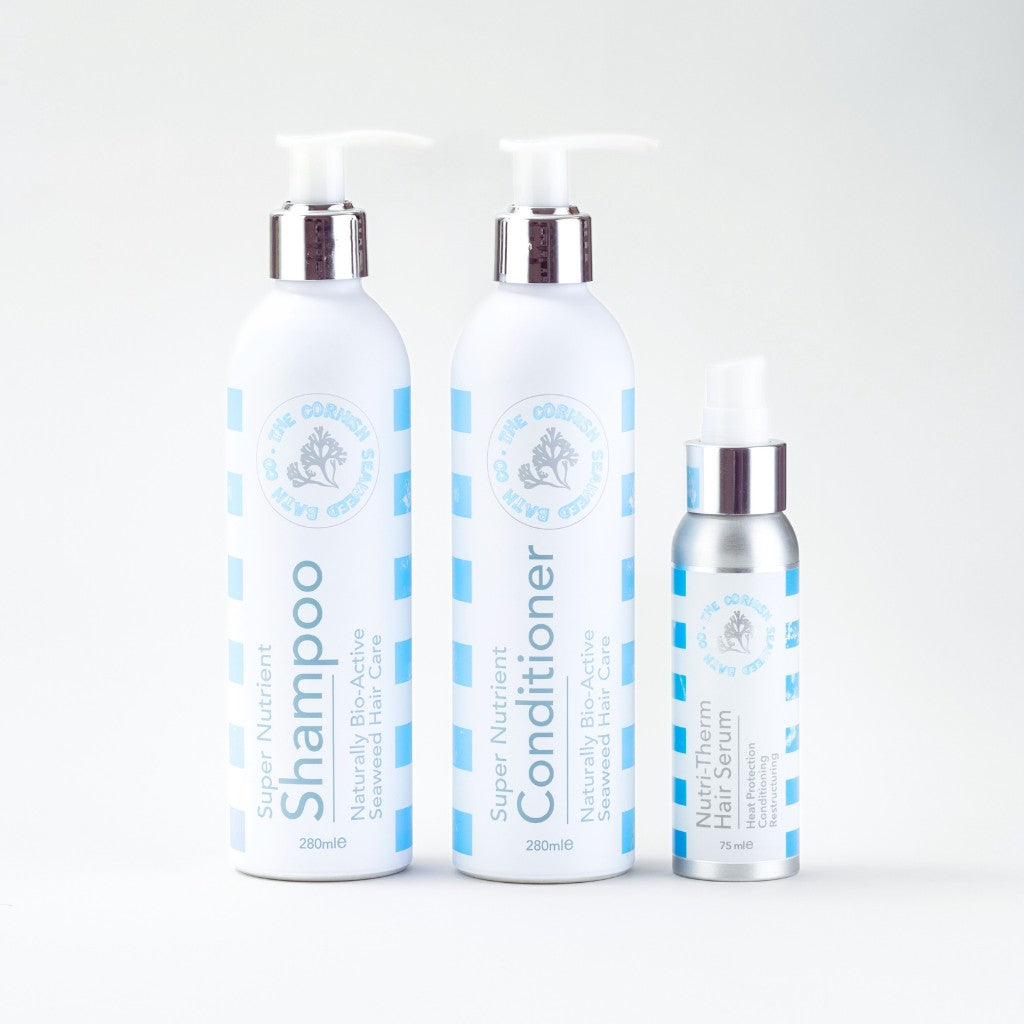
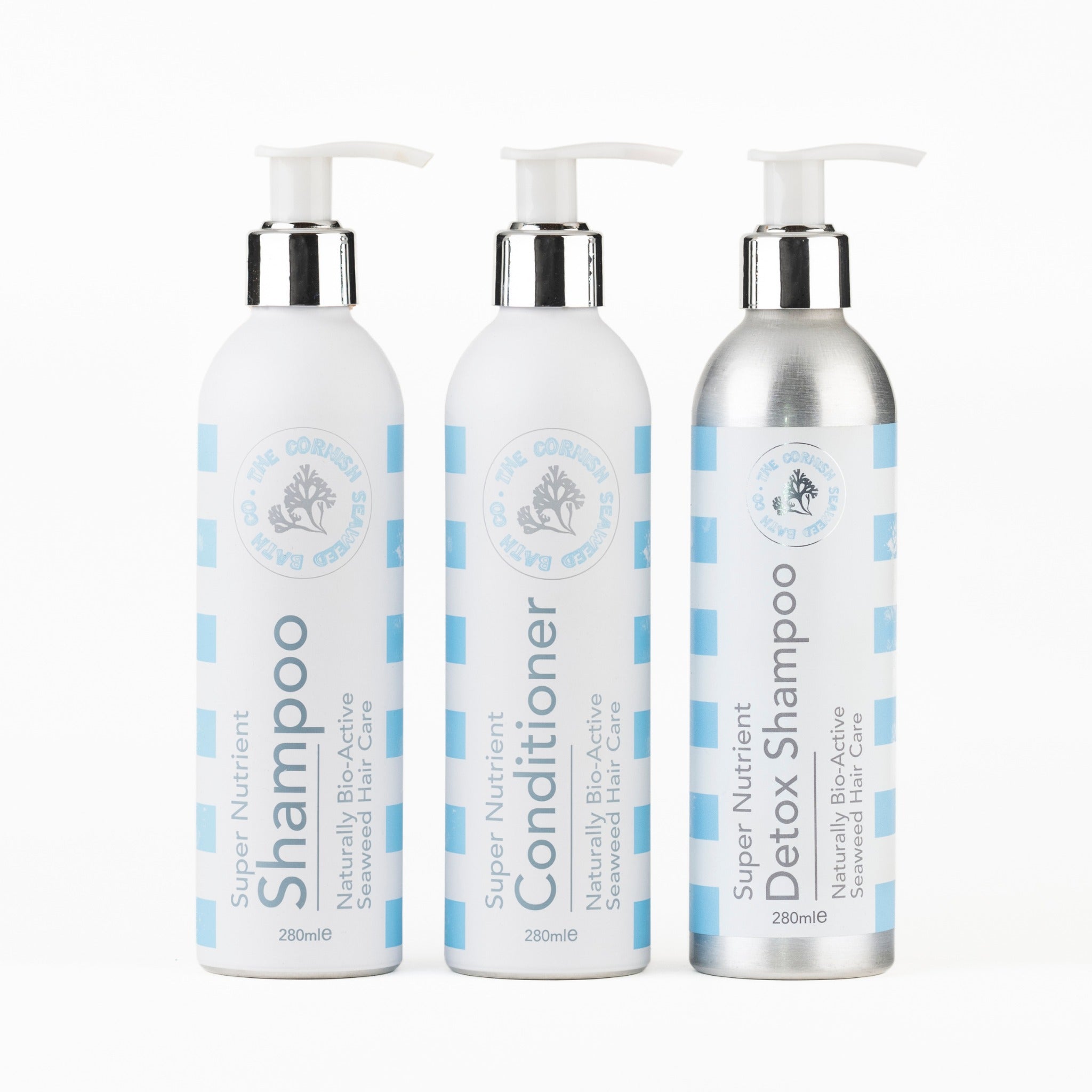
If you’re looking to elevate your scalp care routine, consider our Conditioner & Body Wash Set, which pairs perfectly with seaweed-based solutions for comprehensive nourishment.
Understanding Your Scalp: The Foundation for Healthy Hair
Your scalp is living skin, dynamic, responsive, and surprisingly complex. It produces sebum to protect and moisturise, sheds cells naturally, and hosts a delicate microbiome that influences everything from comfort to hair texture. When this ecosystem falls out of balance, you experience the familiar frustrations: dryness, excess oil, flaking, or sensitivity.
What Your Scalp Actually Needs
Scalp imbalances aren't personal failings, they're responses to environment, genetics, product choices, and daily stressors. Your scalp requires nourishment that supports its natural functions rather than overwhelming them. Effective conditioning provides minerals and moisture without creating a barrier that prevents the scalp from breathing.
Consider the scenarios that challenge scalp health: frequent washing strips natural oils, pollution deposits residue, climate changes affect hydration levels, and product buildup clogs follicles. Mineral deficiency, common in modern diets, can compromise your scalp's barrier function, leaving it vulnerable to irritation and imbalance.
A well-nourished scalp feels comfortable throughout the day, produces appropriate amounts of sebum, and supports hair that grows strong from the root. It shouldn't feel tight after washing, nor should it become noticeably oily within hours of cleansing.
Common Scalp Imbalances and Their Triggers
Dryness manifests as tightness, flaking, or itching, often the result of over-cleansing, harsh weather, or natural variation in sebum production. Many people respond by avoiding conditioner entirely, which typically worsens the problem by leaving the scalp undernourished.
Oiliness frequently develops when your scalp overproduces sebum to compensate for being stripped by harsh cleansers or environmental stress. The misconception that skipping conditioner reduces oiliness often backfires, leaving the scalp in a cycle of overproduction.
Sensitivity and inflammation, redness, persistent itching, or unusual flaking, suggest your scalp's barrier has been compromised. This might stem from product reactions, underlying skin conditions like eczema or psoriasis, or simply accumulated stress from unsuitable hair care routines. A balanced scalp feels calm, looks healthy, and responds predictably to gentle care.
Why Seaweed is Uniquely Suited to Scalp Care

Seaweed thrives in mineral-rich seawater, absorbing nutrients directly through its cell walls. This process creates one of nature's most concentrated sources of bioavailable minerals, the building blocks your scalp needs for optimal function.
The Nutrient Density of Seaweed
Marine plants contain significantly higher concentrations of essential minerals than their land-based counterparts. Seaweed absorbs potassium, magnesium, iron, calcium, zinc, and iodine directly from seawater, storing them in forms your skin can readily utilise. These minerals support cellular repair, barrier function, and the production of healthy sebum.
The amino acid profile in seaweed provides building blocks for keratin and collagen, proteins essential for scalp and hair health. Unlike synthetic amino acids added to commercial products, seaweed delivers these nutrients in their natural matrix, surrounded by complementary compounds that enhance absorption.
Antioxidants in seaweed help neutralise free radicals from pollution, UV exposure, and daily stress. These protective compounds work continuously, not just during application, supporting your scalp's resilience against environmental damage.
Polysaccharides, natural gel-forming compounds in seaweed, act as humectants, drawing moisture to the scalp without creating an occlusive barrier. This means hydration without heaviness, nourishment without suffocation.
How Seaweed Works on a Scalp Level
Minerals from seaweed support your scalp's barrier function by providing raw materials for lipid production and cell integrity. When your scalp has adequate mineral stores, it can maintain appropriate moisture levels and defend against irritants more effectively.
The anti-inflammatory compounds in seaweed help calm reactive scalp conditions. Rather than suppressing symptoms, these natural compounds support your scalp's own healing processes, reducing redness, itching, and flaking over time.
Seaweed's gelatinous texture allows nutrients to adhere to the scalp during conditioning, providing contact time for absorption. This is why seaweed conditioner for scalp health requires a different application approach than traditional formulas, direct scalp contact enhances the nourishing effect.
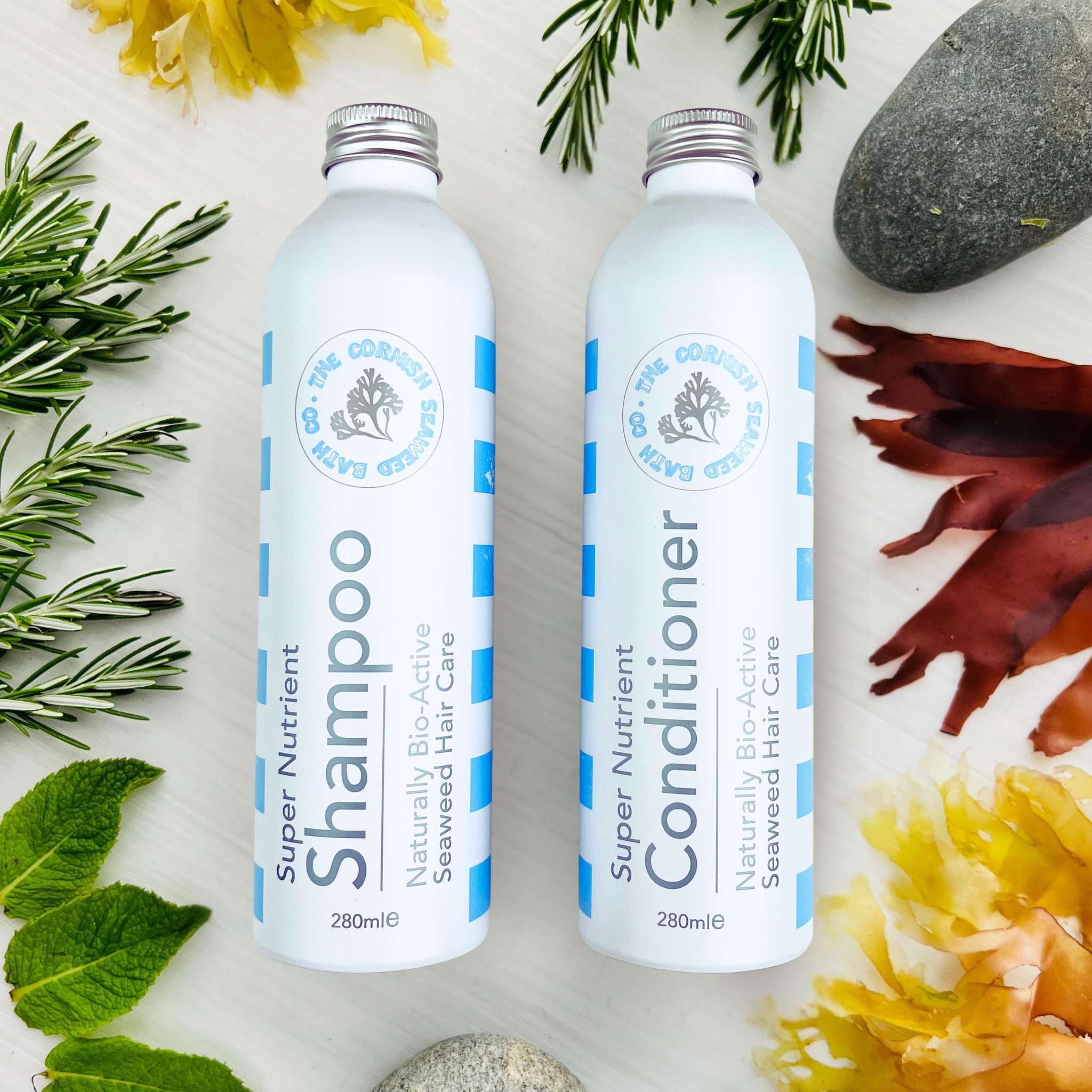
Our Super Nutrient Conditioner utilises this natural adhesion property. Its concentrated formula stays in place during application, allowing Fucus Serratus seaweed and complementary botanicals to deliver minerals exactly where they're needed. The formulation encourages scalp contact without feeling heavy or leaving residue.
Our Seaweed Conditioner: What Makes It Different
Our Super Nutrient Conditioner represents a departure from conventional conditioning philosophy. Rather than coating hair with synthetic polymers for temporary smoothness, we've formulated a mineral-rich treatment that nourishes both scalp and hair simultaneously.
Formulation Philosophy: Seaweed + Complementary Botanicals
Our Super Nutrient Conditioner combines Fucus Serratus seaweed with carefully selected botanicals: Tuber Fleeceflower Root, Angelica Sinensis, frankincense, argan oil, and oat kernel oil. Each ingredient addresses specific scalp needs rather than providing generic "nourishment."
Argan oil and oat kernel oil support barrier health whilst soothing sensitive scalps without creating heaviness. These oils absorb readily, leaving no greasy residue that might clog follicles or weigh down fine hair. Frankincense has been traditionally valued for supporting skin resilience, working synergistically with seaweed's mineral content.
Clary sage and rosemary support healthy circulation without overstimulating sebum production, a crucial balance for maintaining scalp comfort. This botanical synergy means each ingredient enhances the others' effectiveness rather than simply adding to an ingredient list.
Texture, Consistency, and Scalp Contact
Our conditioner maintains a thick, concentrated consistency that stays precisely where you apply it. This texture isn't accidental, it allows the mineral-rich formula to remain in contact with your scalp long enough for absorption whilst resisting immediate rinse-away.
Unlike watery conditioners that slide off before delivering benefits, our formulation can be massaged directly into the scalp without slipping. The concentrated nature means you need only a small amount, making each bottle economical whilst ensuring adequate nourishment.
For more insights on choosing the right product, you may want to read our best conditioner for scalp health guide.
How to Use Seaweed Conditioner for Optimal Scalp Health
Effective use of seaweed conditioner for scalp health requires adjusting traditional conditioning habits. The goal is nourishment, not just detangling, which means direct scalp application becomes beneficial rather than something to avoid.
Application Technique for Scalp Nourishment
Begin with freshly shampooed hair that's been rinsed thoroughly to remove any cleansing residue. Your hair should be damp but not dripping, excess water dilutes the conditioner and reduces its adherence to the scalp.
Dispense a pea-sized amount initially; you can always add more if needed. Warm the product between your fingertips to improve spreadability, then divide your scalp into quadrants for systematic application. Apply the conditioner to your roots and massage gently with fingertips, never nails, using small circular motions.
Contact time matters significantly. Allow the conditioner to remain on your scalp for 1–3 minutes minimum, longer if your scalp feels particularly tight or dry. This gives the minerals and botanicals time to interact with your scalp rather than simply coating the surface.
Rinse thoroughly with lukewarm water until no product residue remains. The optimal contact time varies by individual based on scalp oiliness, product tolerance, and personal preference, observe your scalp's response and adjust accordingly.
Finding Your Rhythm: Frequency That Works for You
Scalp oiliness, activity level, product buildup, and personal comfort all influence how often you'll benefit from conditioning. Most people find success with 2–3 applications weekly, though some prefer daily use whilst others need only weekly treatment.
Start with twice-weekly applications and observe your scalp's response over 2–3 weeks. A balanced scalp feels comfortable throughout the day, neither tight nor excessively oily, and hair maintains body without appearing limp or coated.
Signs you're using appropriate amounts: your scalp feels calm, any flaking subsides within a few days of consistent use, and your hair maintains natural movement. If hair becomes heavy or limp, reduce the amount per application rather than frequency, the minerals remain beneficial even in smaller quantities.
Trial and error is normal and expected. Your optimal routine may differ significantly from others based on your scalp's unique needs and responses.
Pairing Seaweed Conditioner with Complementary Practices
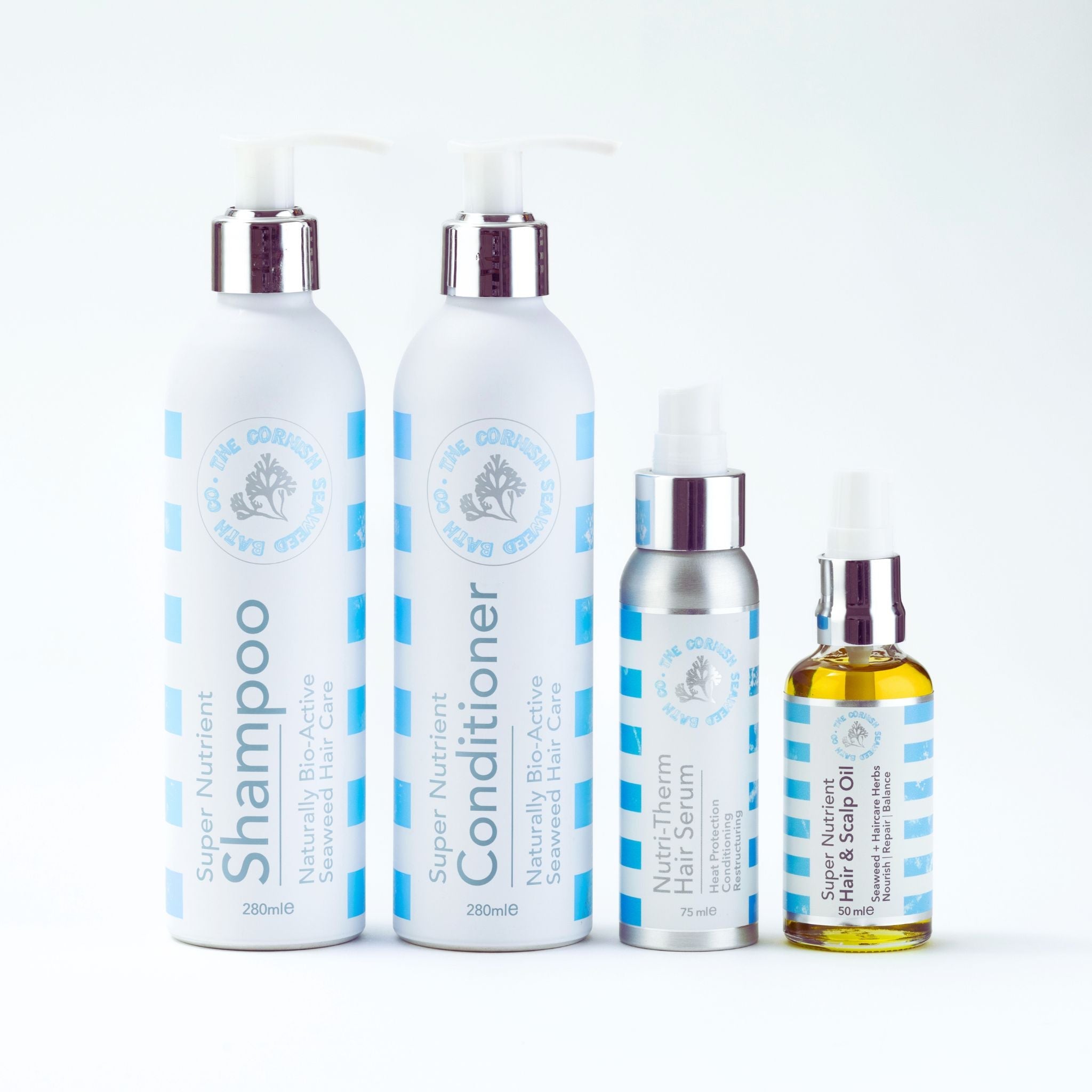
Our Super Nutrient Shampoo creates a mineral-rich cleansing and conditioning ritual when used together. Both products contain Fucus Serratus seaweed and complementary botanicals, providing consistent nourishment throughout your hair care routine.
For additional scalp support between washes, consider our Super Nutrient Hair & Scalp Oil during separate occasions, not as a layered treatment, but as intensive nourishment when your scalp needs extra attention. You might also find our article on best scalp oil for hair growth support helpful for further information.
Simple practices enhance seaweed conditioning: lukewarm rinse water reduces potential irritation, gentle scalp massage during application improves circulation naturally, and avoiding heavy styling products prevents scalp congestion that might interfere with the conditioner's benefits.
Scalp Conditions: How Seaweed Conditioner Addresses Specific Concerns

Real scalp problems require understanding, not quick fixes. Seaweed conditioner for scalp health offers supportive nourishment for various conditions, though results depend on consistency and realistic expectations.
Dry, Tight, or Flaky Scalp
Dryness often stems from barrier disruption caused by over-cleansing, environmental stress, or natural variation in oil production. Seaweed's mineral profile and natural polysaccharides support barrier repair by providing the building blocks your scalp needs for healthy cell function.
For particularly tight scalps, apply conditioner with slightly warmer water and allow extended contact time, 3–5 minutes rather than the standard 1–2 minutes. The minerals need adequate time to interact with compromised skin cells.
Consistent use over 2–3 weeks typically shows improvement in scalp texture before visible changes in flaking occur. Reduce your final rinse temperature to lukewarm rather than hot, which helps lock in the hydration the seaweed provides.
If flaking persists beyond 4 weeks of consistent use, or if accompanied by bleeding, oozing, or severe discomfort, professional dermatological input becomes valuable for identifying underlying conditions. For a broader look at holistic skin care, see our post on five ways to use seaweed to care for your skin health.
Oily or Congested Scalp
Excessive oiliness sometimes reflects your scalp's over-compensation for harsh treatment. When natural oils are stripped too aggressively, sebaceous glands respond by producing even more oil, creating a frustrating cycle.
Mineral-rich conditioning helps rebalance this response without adding silicone buildup that can clog follicles. The mint and rosemary in our Super Nutrient Conditioner support balanced sebum production without stimulating overactivity or causing excessive dryness.
Use smaller amounts initially, half a pea-sized portion, and focus application on the scalp rather than hair lengths. Many people mistakenly skip conditioning oily scalps entirely, which often worsens the problem by maintaining the stripping-overproduction cycle.
Rebalancing takes 4–6 weeks as your scalp adjusts its oil production to the gentler treatment. Initial weeks may show little change, but gradually you'll notice your scalp feels less itchy and your hair stays fresher longer between washes.
Sensitive, Inflamed, or Itchy Scalp
Inflammation indicates your scalp's barrier is under stress, whether from product sensitivity, environmental factors, or underlying skin conditions. Our formulation contains no sulfates, silicones, or synthetic fragrances, common irritants that can worsen sensitive scalps.
The frankincense and botanical oils in our conditioner have historically been valued for their calming properties, whilst seaweed provides minerals without harsh processing chemicals. However, even natural ingredients can cause reactions in sensitive individuals.
Patch Test Protocol
Apply a small amount to your inner wrist or behind your ear. Wait 24 hours for any reaction. If clear, test on a small scalp area near your hairline. Wait another 24 hours before full use.
If your scalp shows acute irritation, open wounds, severe pain, or widespread inflammation, allow it to calm before introducing any new products. Conditions like eczema or psoriasis may benefit from seaweed's supportive minerals, but professional dermatological guidance remains valuable for managing underlying causes.
Seaweed Conditioner vs. Other Scalp-Care Approaches
Understanding how seaweed conditioner for scalp health fits within the broader landscape of scalp treatments helps you make informed choices based on your specific needs and preferences.
Seaweed Conditioner vs. Traditional Silicone-Based Conditioners
| Aspect | Seaweed Conditioner | Traditional Conditioner |
|---|---|---|
| Mechanism | Nourishes via minerals and amino acids; supports barrier health | Coats hair shaft with polymers for immediate smoothness |
| Scalp Feel | Lightweight, breathable; scalp remains responsive | May feel heavier; potential buildup over time |
| Long-term Benefit | Improves scalp environment; sustainable improvement | Short-term smoothness; doesn't address scalp health |
| Best For | Scalp-health focus; environmentally conscious users | Immediate frizz control; heavily damaged hair |
Traditional conditioners work through coating mechanisms that provide instant results but don't address underlying scalp health. Seaweed conditioning works through nourishment, offering sustainable improvements that build over time. Neither approach is inherently wrong, your choice depends on whether you prioritise immediate cosmetic results or long-term scalp wellness.
For a scientific perspective on the benefits of marine botanicals, see this external resource on seaweed-derived compounds for skin and scalp health.
Seaweed Conditioner vs. Scalp-Specific Treatments
Intensive scalp oils, masks, and treatments serve different purposes and can be used alongside seaweed-based products for a comprehensive approach. For more on the science of seaweed, you can also refer to the Wikipedia entry on seaweed.
Frequently Asked Questions
How does seaweed conditioner differ from traditional conditioners in promoting scalp health?
Seaweed conditioner offers a mineral- and vitamin-rich treatment that supports the scalp’s natural balance rather than simply coating the hair. Unlike traditional conditioners that focus mainly on smoothing hair lengths and ends, seaweed-based formulas provide nourishing botanicals that help maintain scalp vitality over time without weighing hair down.
What specific scalp imbalances can seaweed conditioner help address and how?
Seaweed conditioner helps support a balanced scalp environment by delivering antioxidants and nutrients that soothe dryness, reduce sensitivity, and maintain comfort. Its natural mineral content works to nourish the scalp gently, assisting in managing common imbalances such as dryness or irritation without disrupting the scalp’s delicate ecosystem.
Why is it important to nourish the scalp directly rather than just conditioning hair lengths and ends?
The scalp is living skin that requires care to maintain its natural functions, including sebum production and cell renewal. Nourishing the scalp directly addresses imbalances at their source, promoting a healthier foundation for hair growth, whereas conditioning only the lengths and ends overlooks this vital area and may miss underlying scalp needs.
How should seaweed conditioner be used for optimal results in maintaining a healthy scalp?
For best results, apply seaweed conditioner to wet hair after shampooing, focusing on scalp, mid-lengths and ends, then leave it on for 1–3 minutes before rinsing. This approach ensures the hair receives hydration without interfering with the scalp, supporting overall hair health as part of your regular wash routine.
A picture tells a thousand words: out of necessity, some images in this blog post have been created using artificial intelligence models. This is to help us bring to life & more comprehensively express the written content within this post. We only using artificially generated images when we don’t have a suitable image available to us.