 January Sale!



Key Takeaways
- Understanding the four types of skin allows for more precise and effective skincare.
- Skin type is primarily determined by sebum production and the strength of the natural moisture barrier.
- Skin can feel balanced one day and tight the next, highlighting the importance of recognizing your skin type.
- Knowing your skin type forms the foundation for nurturing your skin properly.
Table of Contents
- Why Understanding Your Skin Type Matters for Everyday Care
- The 4 Types of Skin: Core Characteristics and What Sets Them Apart
- Factors That Shape and Shift Your Skin Type
- How to Identify Your Skin Type at Home
- Tailored Skincare Routines for Each Skin Type
- Choosing and Using Products for Your Skin Type
- Troubleshooting Skin Type Challenges and Changes
Why Understanding Your Skin Type Matters for Everyday Care
Imagine waking to a face that feels balanced one day, tight the next, recognising what are the 4 types of skin helps you nurture yours with precision rather than guesswork. Your skin type forms the foundation of effective care, determined by sebum production and your natural moisture barrier's strength.
The four established skin types in cosmetology are normal (balanced sebum), dry (insufficient sebum), oily (excess sebum), and combination (mixed zones). These classifications reflect your skin's innate behaviour, distinct from temporary concerns like sensitivity or breakouts that can affect any type. Understanding what are the 4 types of skin allows you to choose products that work with your natural patterns rather than against them.
For those seeking a gentle exfoliating solution suitable for all skin types, our Organic Body Scrub can help maintain smooth, healthy skin as part of your routine.
What are the 4 types of skin? Normal (balanced sebum and hydration), dry (low sebum production with compromised barrier), oily (excess sebum with enlarged pores), and combination (oily T-zone with normal or dry cheeks). Each type requires different care approaches based on sebum levels and barrier function.
The 4 Types of Skin: Core Characteristics and What Sets Them Apart

Each skin type reflects distinct sebum production patterns and barrier strength, creating recognisable textures and behaviours. These differences stem from genetic programming of sebaceous glands and natural moisturising factor production.
For a deeper dive into how to care for your complexion, see the CSBCO facial care guide for expert tips tailored to each skin type.
Normal Skin: The Balanced Foundation
Normal skin maintains optimal sebum levels, neither excess nor deficiency, creating what dermatologists term "eudermic" conditions. You'll recognise it by a smooth, velvety texture with small, barely visible pores and natural radiance. This type retains moisture efficiently due to well-functioning ceramide and lipid barriers.
The balanced sebum production prevents both dryness and excessive shine, whilst adequate natural moisturising factors like urea and lactic acid keep the surface supple. Normal skin typically feels comfortable throughout the day without tightness or greasiness.
Dry Skin: When Barriers Need Support
Dry skin produces insufficient sebum to maintain optimal barrier function, leading to increased transepidermal water loss. This manifests as tightness, rough patches, and visible flaking, particularly after cleansing. Fine lines may appear more pronounced due to dehydration.
The compromised barrier results from fewer natural moisturising factors and weakened lipid production. Environmental factors like wind or heating exacerbate the condition, making consistent nourishment essential for comfort.
Oily Skin: Managing Excess Production
Oily skin overproduces sebum due to enlarged, hyperactive sebaceous glands triggered by genetics, hormones, or external factors. This creates visible shine, enlarged pores, and increased tendency toward congestion. Despite excess oil, the skin often maintains strong barrier function.
The challenge lies in balancing sebum without triggering rebound production. Oily skin may feel thick or coarse to touch, with shine appearing within hours of cleansing, particularly across the forehead, nose, and chin.
Combination Skin: Zone-Specific Needs
Combination skin displays varying sebum production across facial zones, typically oily through the T-zone (forehead, nose, chin) whilst cheeks remain normal or dry. This creates inconsistent hydration needs within the same face.
The zonal differences reflect varying sebaceous gland density and activity. Managing combination skin requires recognising these distinct areas and treating them accordingly rather than applying uniform products.
| Skin Type | Sebum Level | Pore Size | Texture | Feel After Cleansing |
|---|---|---|---|---|
| Normal | Balanced | Small, refined | Smooth, velvety | Comfortable, soft |
| Dry | Insufficient | Barely visible | Rough, flaky patches | Tight, may sting |
| Oily | Excess | Enlarged, visible | Thick, coarse | Initially clean, shiny within hours |
| Combination | Mixed zones | Large on T-zone, small on cheeks | Varied by area | T-zone comfortable, cheeks may feel tight |
Factors That Shape and Shift Your Skin Type
Whilst your fundamental skin type remains largely stable, various influences can temporarily alter its behaviour or intensity. Understanding these factors helps you adapt your routine without abandoning your core type classification.
For more on the science behind skin types, see this comprehensive overview of skin types from the Cleveland Clinic.
Genetics and Ethnicity
Your genetic blueprint determines sebaceous gland size, distribution, and activity levels. Certain ethnicities show predispositions, those with Mediterranean heritage often display more robust sebum production, whilst Northern European genetics may lean toward drier tendencies. However, individual variation within ethnic groups remains significant.
Age and Hormones
Hormonal fluctuations significantly impact sebum production throughout life stages. Teenagers often experience increased oiliness due to androgens, whilst post-menopausal women may find previously normal skin becoming drier as oestrogen levels decline. Monthly cycles can temporarily shift combination skin toward increased T-zone activity.
Age naturally reduces sebaceous gland activity and collagen production, making even oily skin types appear less lustrous over time. These changes represent temporary shifts rather than permanent type alterations.
Climate and Environment
Environmental conditions directly influence skin behaviour patterns. High humidity can increase apparent oiliness across all types, whilst cold, dry air exacerbates tightness in normal and dry skin. Air conditioning and central heating create artificial desert conditions that challenge natural moisture retention.
Pollution and UV exposure can temporarily compromise barrier function, making skin appear more reactive or unbalanced. These external stressors require adaptive care rather than type reclassification.
Can Your Skin Type Change?
True skin type changes remain rare, most apparent shifts represent temporary adaptations to internal or external stressors. However, significant hormonal events like pregnancy, menopause, or medical treatments can create lasting modifications to sebum production patterns.
Consistent inappropriate product use may create temporary imbalances that mimic type changes. Returning to suitable care typically restores natural patterns within 4-6 weeks, confirming the original classification.
Adaptation Tips
- Track weekly changes through photos to identify patterns versus permanent shifts
- Adjust product textures seasonally, lighter oils in humid weather, richer formulations in dry conditions
- Allow 6-8 weeks when testing new routines to distinguish true improvement from temporary reactions
How to Identify Your Skin Type at Home
Accurate skin type identification requires observing your skin's natural behaviour without product interference. These simple tests reveal sebum production patterns and barrier function using timing and observation rather than expensive tools.
For more ways to support your skin health, explore five ways to use seaweed to care for your skin health for natural, science-backed ideas.
The Bare Face Test
Cleanse your face thoroughly in the evening using a gentle, non-stripping cleanser, then avoid applying any products. After 30 minutes, examine your skin in natural light. Shine across the entire face indicates oily skin, whilst tightness or visible flaking suggests dry skin. Comfortable, balanced appearance points to normal skin, and shine only in the T-zone with comfortable or tight cheeks reveals combination skin.
This method allows your natural sebum production to emerge without product interference, providing the most accurate baseline assessment.
Blotting Sheet Test
After morning cleansing, wait one hour without applying products. Press clean tissues or blotting papers against different facial zones for 10 seconds each. Heavy oil absorption across the entire face confirms oily skin, minimal oil indicates dry skin, moderate absorption suggests normal skin, and oil only from the T-zone reveals combination patterns.
This test quantifies sebum production more precisely than visual assessment alone, particularly useful for borderline cases.
Beyond Tests, Daily Clues
Your skin provides ongoing information through daily patterns. Notice pore visibility in natural light, how your skin feels 2-3 hours after cleansing, and how long makeup maintains its appearance. Oily skin often shows enlarged pores and requires powder touch-ups, whilst dry skin may feel tight and show makeup settling into fine lines.
Pay attention to seasonal consistency, true skin type maintains core characteristics year-round, though intensity may vary.
Tailored Skincare Routines for Each Skin Type

Understanding what are the 4 types of skin enables you to create targeted routines that support rather than fight your natural patterns. Our seaweed-based formulations provide barrier support across all types through gentle, nourishing approaches that respect your skin's individual needs.
For dry or compromised skin, our Wild Seaweed Skin Repair Balm offers intensive overnight nourishment and barrier protection.
Routine for Normal Skin
Normal skin thrives with consistent, gentle maintenance that preserves its natural balance. Our Renewal Facial Cleanser provides ideal cleansing through saponified olive oil, coconut oil, and seaweed that remove impurities without disrupting the lipid barrier. The frankincense and rose absolute offer gentle antiseptic properties whilst jojoba oil maintains moisture levels.
Follow cleansing with our Organic Super-Nutrient Facial Oil, applying 3-4 drops to damp skin. The combination of seaweed, jojoba oil, and tamanu oil absorbs within 2-3 minutes, providing balanced nourishment without heaviness. This routine maintains normal skin's natural equilibrium through morning and evening applications.
| Time | Step | Product | Application |
|---|---|---|---|
| Morning | Cleanse | Renewal Facial Cleanser | Massage 60 seconds, rinse thoroughly |
| Morning | Nourish | Organic Super-Nutrient Facial Oil | 3-4 drops on damp skin |
| Evening | Repeat | Renewal Facial Cleanser & Organic Super-Nutrient Facial Oil | As above |
Routine Summary
| Skin Type | AM Cleanse | Treatment | PM Care |
|---|---|---|---|
| Normal | Renewal Facial Cleanser (60 seconds) | Super-Nutrient Facial Oil (3-4 drops) | Same routine, focus consistency |
| Dry | Gentle cleanse (30 seconds) | Bio-Active Moisturiser (pea-sized) | Add Wild Seaweed Repair Balm |
| Oily | Thorough cleanse (90 seconds) | Sky Facial Oil (2-3 drops) | Focus T-zone attention |
| Combination | Zone-specific pressure | Sand Oil (T-zone), Sea Oil (cheeks) | Targeted application |
Routine for Dry Skin
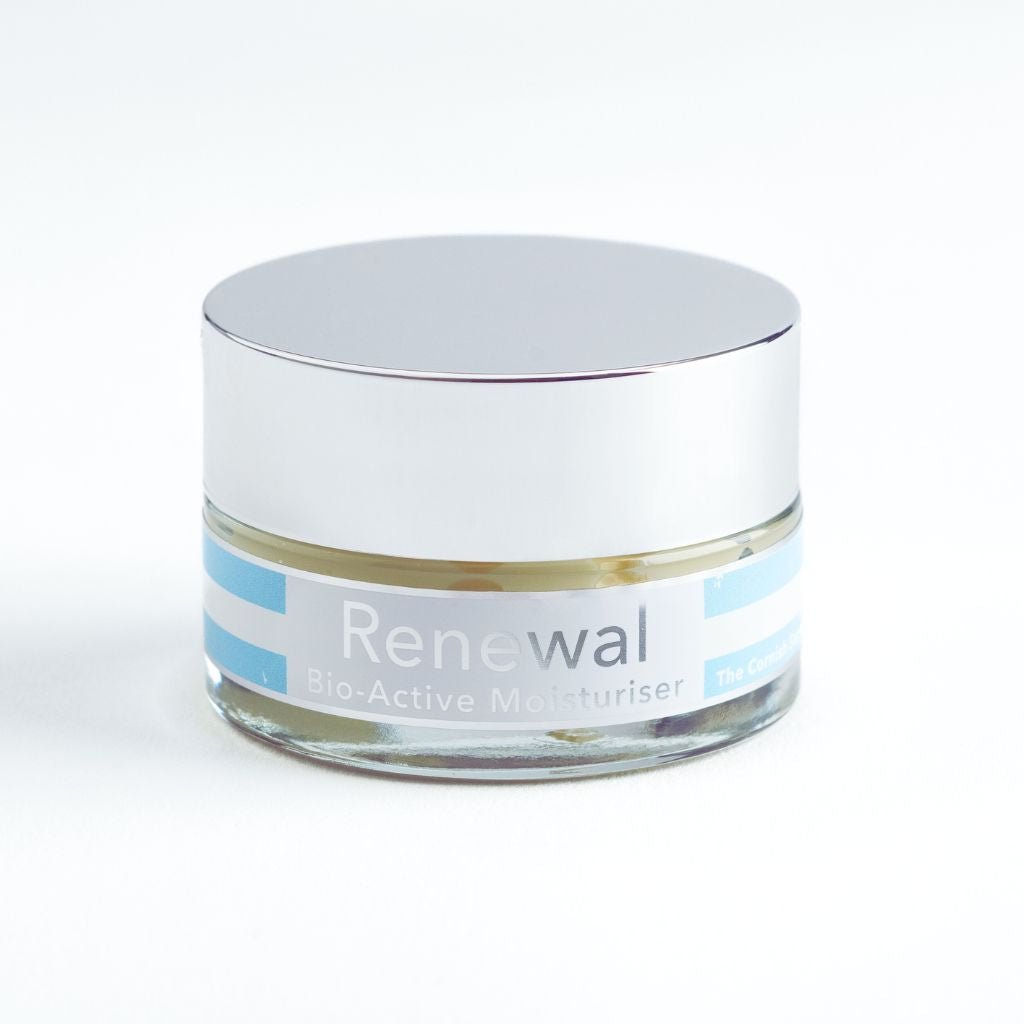
Dry skin requires immediate moisture replenishment and barrier repair through richer formulations. Our Renewal Bio-Active Moisturiser addresses dry skin's specific needs through ling zhi mushroom, which soothes irritated patches and reduces inflammation in this formula. Apply a pea-sized amount within three minutes of cleansing whilst skin remains slightly damp for optimal absorption.
For evening care, layer our Wild Seaweed Skin Repair Balm over areas prone to flaking. The combination of organic shea butter, beeswax, and seaweed creates an occlusive barrier that prevents overnight moisture loss whilst frankincense resin and red peony root calm irritation.
Routine for Oily Skin
Oily skin benefits from thorough cleansing followed by lightweight hydration that doesn't contribute to congestion. Our Sky Organic Facial Oil provides the ideal balance, seaweed and organic camellia oil absorb quickly without residue, whilst blue tansy offers natural antiseptic properties. Pat 2-3 drops into clean skin, allowing 1-2 minutes for complete absorption.
The key lies in avoiding over-cleansing, which triggers increased sebum production. Maintain twice-daily cleansing with our gentle formulations rather than harsh stripping agents that disrupt barrier function.
Routine for Combination Skin
Combination skin requires zone-specific treatment that addresses varying needs across facial areas. Apply our Sand Organic Facial Oil to the T-zone, where roman chamomile and manuka provide gentle antiseptic action without over-drying. For cheeks and outer areas, use our Sea Organic Facial Oil with its citrus blend that brightens whilst maintaining moisture balance.
Massage each zone for one minute, allowing the different formulations to address specific needs. This targeted approach prevents the common mistake of treating combination skin as uniformly oily or dry.
Choosing and Using Products for Your Skin Type
Selecting appropriate products requires understanding both your skin type characteristics and ingredient behaviour patterns. Our seaweed-based formulations offer unique advantages across all four types through their natural barrier-supporting properties and gentle delivery systems.
For a closer look at what "natural" really means in skincare, read what does 100% natural skincare mean to help guide your product choices.
Cleansers and Moisturisers by Type
Dry skin responds best to cream-based cleansers with nourishing oils, our Renewal Facial Cleanser combines olive oil and jojoba oil with gentle saponification that cleanses without stripping natural lipids. Oily skin requires thorough cleansing but benefits from the same gentle approach to avoid rebound sebum production.
Avoid products containing harsh sulphates, which disrupt barrier function regardless of skin type. Instead, seek cleansers with natural surfactants and moisturisers that match your absorption preferences, lighter textures for oily skin, richer formulations for dry conditions. For more on the effects of sulphates, see this guide to oily skin and cleansers from the American Academy of Dermatology.
Oils and Balms
Facial oils suit all skin types when properly selected for absorption rates and active ingredients. Our Organic Super-Nutrient Facial Oil absorbs within 1-2 minutes, making it suitable for normal and combination skin's varied needs. The tamanu oil and sea buckthorn oil provide barrier repair without heaviness.
For persistent dry patches or irritation, our Wild Seaweed Skin Repair Balm offers intensive treatment through its combination of sunflower oil, seaweed, and organic shea butter. Use sparingly on affected areas rather than full-face application.
Common Mistakes and Fixes
The most frequent error involves using products designed for different skin types, leading to congestion in oily skin or increased dryness in already compromised barriers. Start with patch testing new formulations on your inner arm for 24 hours before facial application.
If products cause irritation after three days of use, reduce frequency rather than immediately discontinuing. Many skin reactions represent adjustment periods rather than incompatibility, particularly when transitioning from harsh conventional products to gentler formulations.
Troubleshooting Skin Type Challenges and Changes
Understanding what the 4 types of skin are includes recognising when temporary imbalances occur and how to address them without abandoning your core routine. Most skin challenges represent treatable concerns rather than permanent changes. If you notice persistent discomfort, consider reviewing your product choices and application methods, and allow time for your skin to adjust to any new routine. We recommend a gentle, consistent approach and patience as your skin finds its balance.
Frequently Asked Questions
What are the key differences between the four main skin types: normal, dry, oily, and combination?
Normal skin has balanced sebum production and a strong moisture barrier, resulting in smooth texture and natural radiance. Dry skin produces less sebum and often has a compromised barrier, leading to tightness and flakiness. Oily skin generates excess sebum, which can cause enlarged pores and a shiny appearance. Combination skin features a mix, typically with an oily T-zone and drier or normal cheeks.
How can I accurately identify my skin type at home based on sebum production and moisture levels?
After gently cleansing, observe your skin over a few hours without applying products. If your skin feels comfortable and looks even, it is likely normal. Tightness or flaking suggests dryness, while noticeable shine and visible pores indicate oily skin. Combination skin shows oiliness mainly in the forehead, nose, and chin, with drier or balanced areas elsewhere.
Why is understanding my skin type important for choosing the right skincare products?
Knowing your skin type helps you select products that support your skin's natural balance rather than disrupt it. For example, dry skin benefits from nourishing, moisture-supporting formulations, while oily skin may require lighter textures that do not add excess oil. Tailoring your routine ensures your skin feels comfortable and cared for every day.
What factors can cause my skin type to change or shift over time?
Skin type can vary due to changes in hormones, environment, diet, stress, and ageing. Seasonal variations and lifestyle adjustments also influence sebum production and barrier strength. Recognising these shifts allows you to adapt your skincare approach to maintain healthy, balanced skin.
A picture tells a thousand words: out of necessity, some images in this blog post have been created using artificial intelligence models. This is to help us bring to life & more comprehensively express the written content within this post. We only use artificially generated images when we don’t have a suitable image available to us.