 February Favourites







Key Takeaways
- China produces over 60% of the world's farmed seaweed.
- China harvests more than 12 million tonnes of seaweed annually.
- China's seaweed production surpasses that of all other countries combined.
- The majority of China's seaweed is used in food industries and hydrocolloid extraction.
- Seaweed from China is increasingly utilized in skincare and wellness products.
Table of Contents
- Quick Answer – Which Country Has the Most Seaweed Right Now?
- How We Know: Reading the Global Seaweed Statistics
- Asia's Seaweed Powerhouses – Why One Region Dominates
- China vs the Rest of the World – The Largest Seaweed Producer Explained
- Farmed vs Wild Seaweed – Which Countries Lead Each Segment?
- Country-by-Country: Top Seaweed Producers and What They Grow
Which Country Has the Most Seaweed? A Calm Guide to Global Seaweed Hotspots
When you wonder "which country has the most seaweed," you're looking at a fascinating marine landscape where one nation dominates global production by an extraordinary margin. China currently produces over 60% of the world's farmed seaweed, harvesting more than 12 million tonnes annually, a figure that dwarfs all other countries combined. This vast production primarily serves food industries, hydrocolloid extraction, and increasingly, skincare and wellness applications.
The global seaweed story reveals striking contrasts between high-volume aquaculture in Asia and smaller-scale wild harvesting traditions found along coastlines like ours in Cornwall, where we hand-harvest Fucus serratus for our skincare and bathing range. If you're interested in experiencing the benefits of wild-harvested seaweed, our Wild Cornish Seaweed Bath offers a restorative soak, while the 140g Pure Seaweed Soap brings the nourishing properties of seaweed to your daily cleansing ritual.
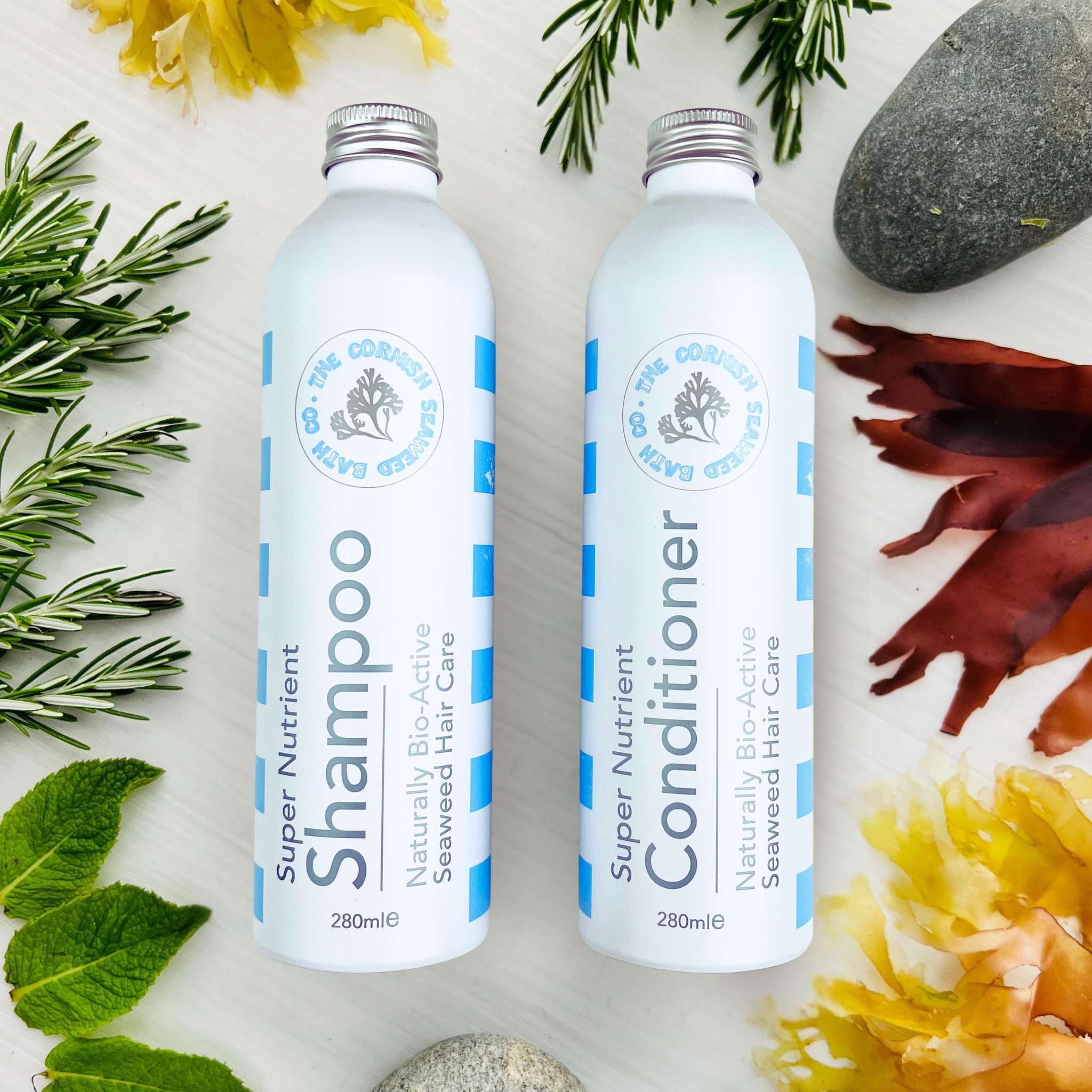
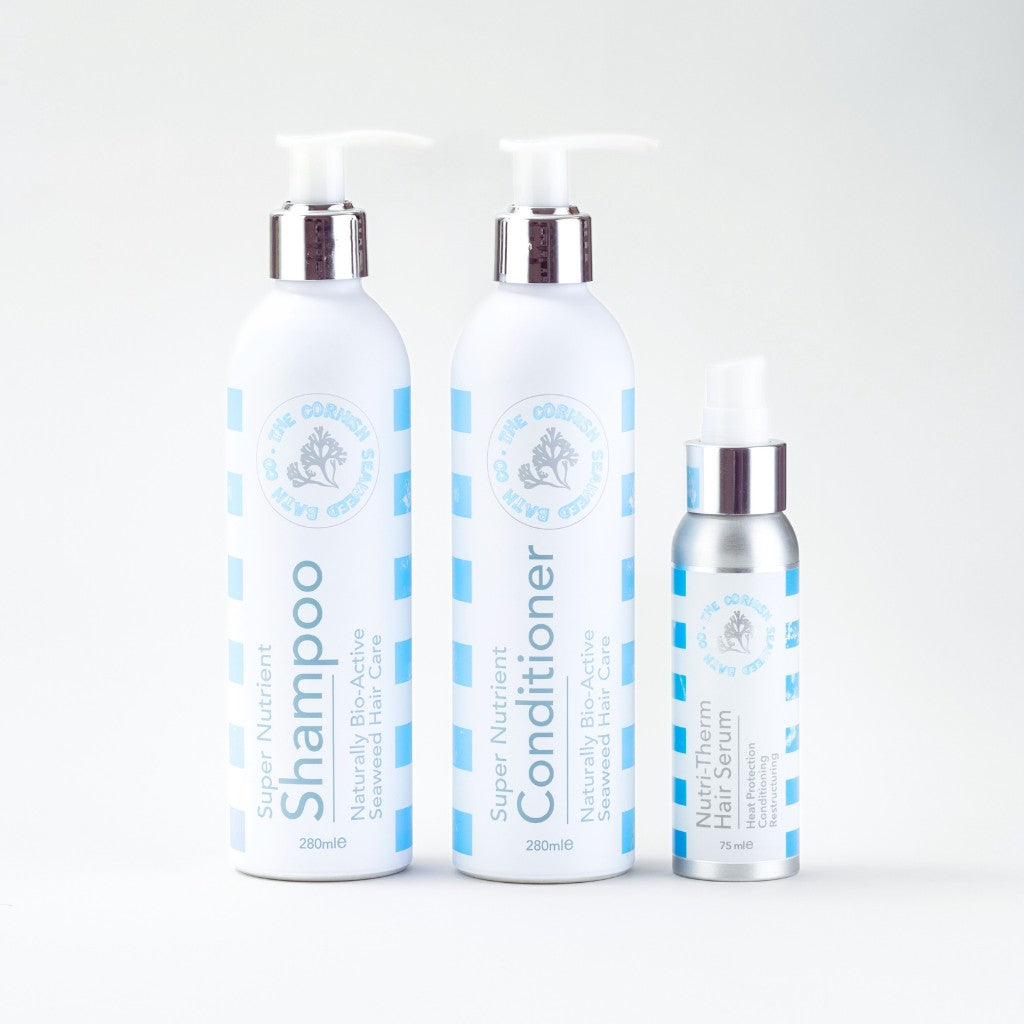
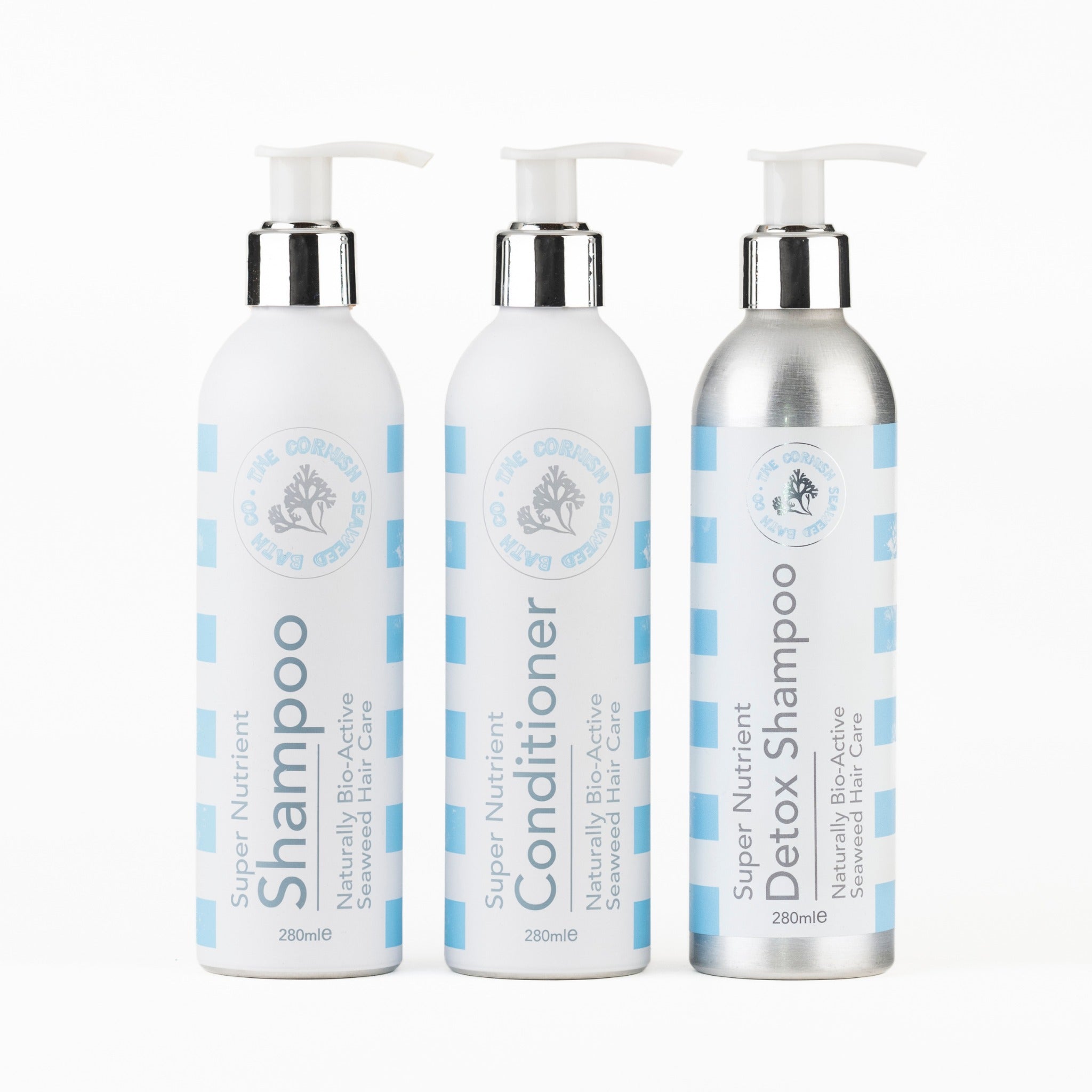
For those curious about integrating seaweed into their haircare, our Super Nutrient Shampoo is formulated to gently cleanse and revitalise, harnessing the natural minerals found in Cornish seaweed. You can learn more about the transition to natural haircare in our guide to transitioning to a natural shampoo.
The current global leader at a glance
China holds the undisputed position as the country with the most seaweed production, accounting for approximately 65% of global farmed seaweed output. Based on the latest FAO aquaculture statistics, China produces over 12 million tonnes of seaweed annually (wet weight), primarily kelps, Porphyra species, and Gracilaria.
Top 5–10 seaweed-producing countries
- China: 12+ million tonnes (65% of global production)
- Indonesia: 1.8 million tonnes (10% of global production)
- Philippines: 1.5 million tonnes (8% of global production)
- Republic of Korea: 600,000 tonnes (3% of global production)
- Japan: 350,000 tonnes (2% of global production)
- Malaysia: 200,000 tonnes (1% of global production)
- Tanzania: 150,000 tonnes (emerging producer)
Why "most seaweed" usually means "most farmed seaweed"
Global seaweed comparisons rely on aquaculture statistics because wild seaweed biomass is nearly impossible to measure comprehensively across different coastlines and ecosystems. Coastal wild seaweed, such as the Fucus serratus we use in Cornwall, appears in harvest data rather than total biomass calculations, representing smaller volumes but often higher-value applications in skincare and traditional wellness practices.
How We Know: Reading the Global Seaweed Statistics

Where the figures come from
The most reliable global seaweed production data comes from the FAO's Fisheries and Aquaculture Department, which compiles national statistics on aquatic plant cultivation. Complementary sources include national fisheries departments, peer-reviewed aquaculture journals, and regional trade organisations. The latest comprehensive global data typically reflects 2021-2022 production, with a 1-2 year reporting lag as countries compile and verify their statistics.
Farmed vs wild-harvested seaweed in the numbers
Farmed seaweed production is measured and reported in wet tonnes directly from harvest, making it straightforward to compare between countries. Wild harvest data tends to be smaller in volume but locally significant, for instance, traditional skincare and bathing applications where quality and careful harvesting methods matter more than total tonnage.
A simple step-by-step way to check which country leads
- Access the FAO Global Aquaculture Production database online
- Filter for "Aquatic plants" in the species category
- Select your preferred year range (2020-2023 for current data)
- Sort results by country to view production totals
- Compare figures, noting that weights are typically given in tonnes (wet weight)
Always verify the measurement unit (wet vs dry weight) and species groupings, as these affect direct comparisons between reports.
Why rankings can vary between reports
Different methodologies can produce varying results, some reports group territories with their parent countries, others separate them; some include freshwater algae while others focus solely on marine species. Cross-checking at least two independent sources provides a more reliable picture of which country truly has the most seaweed production.
Asia's Seaweed Powerhouses – Why One Region Dominates
How much of the world's seaweed comes from Asia?
Asia produces approximately 96-98% of the world's farmed seaweed, with East Asia (China, Japan, Korea) contributing roughly 75% and Southeast Asia (Indonesia, Philippines, Malaysia) adding another 20%. This overwhelming regional concentration reflects both favourable growing conditions and centuries of seaweed cultivation knowledge.
| Country | Approx. Annual Production (Million Tonnes) | Global Share (%) | Main Species Groups |
|---|---|---|---|
| China | 12.2 | 65% | Kelps, Porphyra, Gracilaria |
| Indonesia | 1.8 | 10% | Kappaphycus, Eucheuma (carrageenan) |
| Philippines | 1.5 | 8% | Kappaphycus, Eucheuma |
| Republic of Korea | 0.6 | 3% | Kelps, Porphyra, Undaria |
| Japan | 0.35 | 2% | Porphyra (nori), Saccharina, Undaria |
| Tanzania | 0.15 | 1% | Kappaphycus, Eucheuma |
Why Asia became the global centre of seaweed farming
Cultural traditions spanning millennia established seaweed as essential in East Asian cuisine and medicine, creating deep knowledge of species characteristics and growing cycles. Environmentally, Asia's extensive coastlines offer countless sheltered bays with optimal water temperatures and nutrient flows for large-scale cultivation. Government policies supporting aquaculture development, combined with established export infrastructure and proximity to processing facilities, transformed traditional knowledge into industrial-scale production.
Everyday uses that drive demand
Asian seaweed production primarily serves food markets, nori for sushi, kelp for broths, and carrageenan species for food thickening. Industrial applications include hydrocolloid extraction, animal feed supplements, agricultural fertilisers, and increasingly, cosmetic ingredients. This growing appreciation for seaweed's skin and hair benefits connects to our own approach in Cornwall, where we incorporate Fucus serratus into our Super Nutrient Shampoo, Super Nutrient Conditioner, Seaweed & Frankincense Body Wash, and 140g Pure Seaweed Soap for gentle, nourishing daily rituals.
For a deeper dive into facial care with seaweed, see our facial care guide for tips on natural routines and product recommendations.
China vs the Rest of the World – The Largest Seaweed Producer Explained
How much seaweed does China produce?
China produces approximately 12.2 million tonnes of farmed seaweed annually, representing roughly 65% of global farmed seaweed production based on 2022 FAO data. This figure refers specifically to farmed aquatic plants and demonstrates China's extraordinary dominance in answering which country has the most seaweed production worldwide.
What China grows – main species and uses
China cultivates primarily large kelps (Saccharina japonica), Porphyra species for dried laver, and Gracilaria for agar production. These serve massive domestic food markets and export industries focused on hydrocolloid extraction and processed seaweed products. This contrasts markedly with the Fucus serratus we hand-harvest in Cornwall, which we use specifically for skincare and bathing applications in our Renewal Facial Cleanser, Wild Seaweed Skin Repair Balm, and Seaweed & Frankincense Body Wash rather than large-scale industrial processing.
Key reasons China leads global seaweed production
China's leadership stems from decades of investment in rope-farming infrastructure along its 14,000-kilometre coastline, sophisticated hatchery systems that ensure consistent seed supply, and integrated processing facilities that handle everything from harvest to final products. Proximity to enormous domestic markets and established export channels to over 100 countries provides the economic foundation for this massive scale.
China vs Indonesia and the rest of Asia – by the numbers
- China: 12.2 million tonnes, dominated by kelps and Porphyra for food applications
- Indonesia: 1.8 million tonnes, focused on Kappaphycus and Eucheuma for carrageenan export
- Philippines: 1.5 million tonnes, community-based carrageenan seaweed farming
- Korea and Japan: Combined 950,000 tonnes, emphasising high-quality culinary species
Indonesia, the second-largest producer, produces less than 15% of China's total output, illustrating the vast gap between the leader and other nations in global seaweed production.
How this global picture relates back to Cornwall
While the UK doesn't appear among volume leaders when considering which country has the most seaweed production, coastal wild species like Fucus serratus play a vital role in regional skincare and bathing traditions. Our approach represents a different philosophy entirely, using locally abundant marine plants in carefully crafted, small-scale products that honour both the seaweed and the people who use it.
Farmed vs Wild Seaweed – Which Countries Lead Each Segment?

Farmed seaweed super-producers
The aquaculture giants, China, Indonesia, Philippines, Korea, and Japan, dominate through sophisticated long-line rope systems, floating rafts, and net cultivation methods. These countries have transformed seaweed farming into precision agriculture, with controlled seeding, optimised growing cycles, and mechanised harvesting that produces millions of tonnes annually.
Countries known for wild-harvest traditions
European nations including the UK, Ireland, France, and Nordic countries maintain significant wild-harvest practices, alongside North America, Chile, and several African coastal nations. Wild harvest volumes remain smaller but command higher value per kilogram, particularly for food delicacies, skincare applications, and wellness products that prize the untamed character of ocean-grown seaweed.
Farmed vs wild leaders
| Category | Leading Countries | Typical Uses | Key Species Examples |
|---|---|---|---|
| Farmed High-Volume | China, Indonesia, Philippines, Korea, Japan | Food, hydrocolloids, industrial applications | Kelps, Porphyra, Kappaphycus, Eucheuma |
| Wild Harvest Niche | UK, Ireland, France, Nordic nations, Chile | Skincare, bath products, gourmet food | Fucus serratus, Ascophyllum nodosum, various kelps |
The UK exemplifies the wild-harvest, skincare-focused approach through our use of Renewal Bio-Active Moisturiser and our complete range of facial oils.
Environmental and practical implications
Farmed seaweed requires extensive coastal space allocation, infrastructure investment, and coordinated labour forces, while wild harvesting demands intimate knowledge of seasonal cycles, sustainable cutting practices, and smaller-scale processing capabilities. For conscious buyers, we recommend checking whether products use farmed or wild-harvested seaweed, looking for clear information about harvesting practices and habitat protection measures, and considering how small-batch, wild-harvested seaweed products can complement rather than compete with large-scale farmed supply chains. For more on moisturising with seaweed, see our moisturiser blog.
For a global perspective on sustainable seaweed farming, explore the World Wildlife Fund's overview of farmed seaweed.
Country-by-Country: Top Seaweed Producers and What They Grow
China – kelp forests under cultivation
China's seaweed empire centres on massive kelp farms along the Yellow Sea and East China Sea, cultivating Saccharina japonica, Porphyra species, and Gracilaria through year-round operations. Primary applications span food processing, sodium alginate production for textiles and pharmaceuticals, and increasingly, export markets for dried seaweed products. Coastal farming hubs in Shandong, Fujian, and Liaoning provinces operate with industrial efficiency, processing millions of tonnes annually through integrated harvest-to-market systems.
Indonesia – tropical carrageenan specialist
Indonesia has built its seaweed industry around Kappaphycus alvarezii and Eucheuma species, which thrive in warm tropical waters and produce high-quality carrageenan for global food and cosmetics industries. The archipelago's 17,000 islands provide ideal growing conditions, with community-based farming operations spanning from Sulawesi to the Lesser Sunda Islands, making Indonesia the world's largest carrageenan seaweed exporter.
Philippines – long coastline, strong community farming
The Philippines combines extensive community-based tropical seaweed farming with strong local food traditions, cultivating primarily Kappaphycus and Eucheuma for both carrageenan export and domestic culinary use. Farming cooperatives across Mindanao, Palawan, and the Visayas have developed sustainable practices that balance international market demands with traditional seaweed preparation methods.
Republic of Korea – culinary and coastal culture
Korean seaweed production focuses on premium culinary varieties including Porphyra for gim (seasoned laver), Saccharina for miyeok soup, and Undaria for wakame, with meticulous quality grading that reflects seaweed's central role in Korean cuisine. Strong domestic demand drives innovation in processing techniques and flavour development, supporting both traditional dishes and modern convenience products.
For the latest global seaweed production data, you can consult the FAO's Fisheries and Aquaculture Department database.
Frequently Asked Questions
Why does China produce the majority of the world's farmed seaweed compared to other countries?
China's dominance in farmed seaweed production stems from its extensive coastal aquaculture infrastructure, favourable marine conditions, and long-standing investment in seaweed farming technologies. These factors enable China to cultivate vast quantities efficiently, resulting in production volumes that surpass all other countries combined.
What are the main uses of seaweed harvested in China, and how is it integrated into different industries?
Seaweed harvested in China is primarily used in the food industry and for extracting hydrocolloids, which serve as thickeners and stabilisers in various products. Additionally, this seaweed is increasingly incorporated into skincare and wellness products, reflecting a growing interest in its nourishing and supportive properties.
How does farmed seaweed production differ from wild seaweed harvesting, and which countries lead in each segment?
Farmed seaweed production involves controlled cultivation in marine farms, allowing for large-scale, consistent yields, with China leading this segment. Wild seaweed harvesting, by contrast, is typically smaller-scale and relies on natural coastal growth, with countries like the UK, including Cornwall, known for such traditional practices.
Why are global seaweed production statistics primarily based on farmed seaweed rather than wild seaweed biomass?
Global statistics focus on farmed seaweed because it represents the majority of commercial seaweed supply and is easier to quantify due to systematic aquaculture reporting. Wild seaweed biomass is more variable and less consistently measured, making it less prominent in official production figures.
A picture tells a thousand words: out of necessity, some images in this blog post have been created using artificial intelligence models. This is to help us bring to life & more comprehensively express the written content within this post. We only using artificially generated images when we don’t have a suitable image available to us.